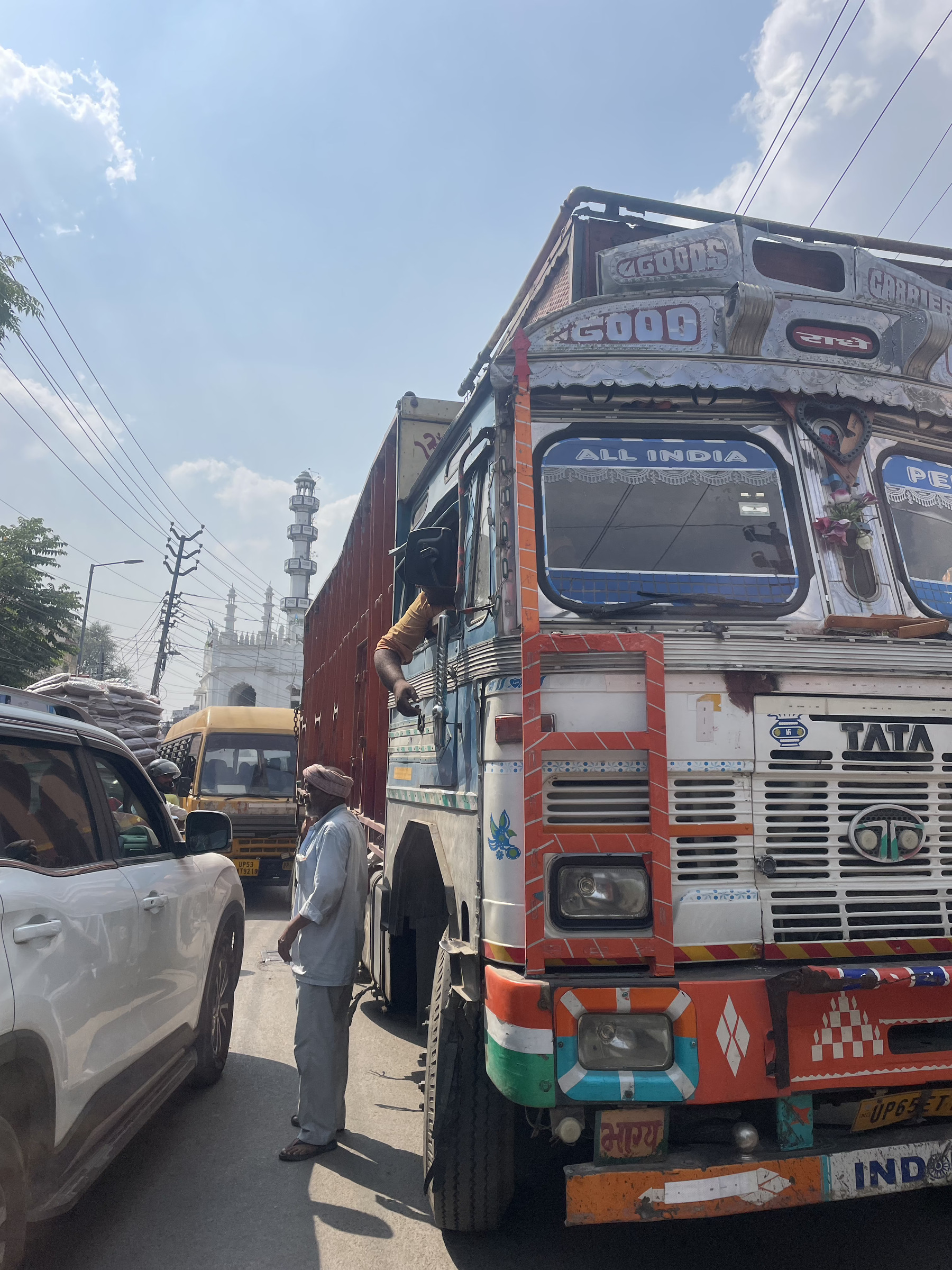
2025
Unearth Kāla #4, Egypt’s City of the Horizon and India’s City of Dawn
The similarities of sun worship, internationalism, and earth religion between the ancient Egyptian Akhet-Aten and Auroville have fueled speculation about a hidden, even occult, connection.
In the year 2000, Claire le Touzé was the first to put together all the information that linked these two cities in the minds of some Aurovilians. Ever since, there have been numerous booklets on the connection between Mirra Alfassa and Queen Tiye or Queen Hatshepsut, and between Akhet-Aten and Auroville.
To begin with the link between Mirra Alfassa and these two ancient Egyptian queens, we need to go back to some biographical aspects of Mirra in which she relates to both. Though not the first female ruler of Egypt, Hatshepsut was probably the first to hold full powers as a pharaoh. In many ways a child of French Egyptomania, Mirra Alfassa said she had encountered Hatshepsut’s toilet case in a museum at a young age and felt an immediate connection. Much later, when she was living in Pondicherry, she sometimes shared ideas and visions she had that related to ancient Egypt. She mentioned that she thought of ancient Egypt as an extremely occult age. Once, she had a dream in which her son was Akhenaten, or Amenhotep IV, making her Queen Tiye. The historical Akhenaten would become the ruler of Egypt who initiated one of the biggest and most intense periods of religious reform in human history. He attempted to change polytheistic Egypt into a culture devoted to the worship of the sun disk, also known as Aten. While Queen Tiye and Amenhotep III were already devoted to Aten, it was their son who implemented drastic religious change in ancient Egypt. Akhenaten, or “the one who is faithful to Aten,” wanted all of Egypt devoted to Aten.
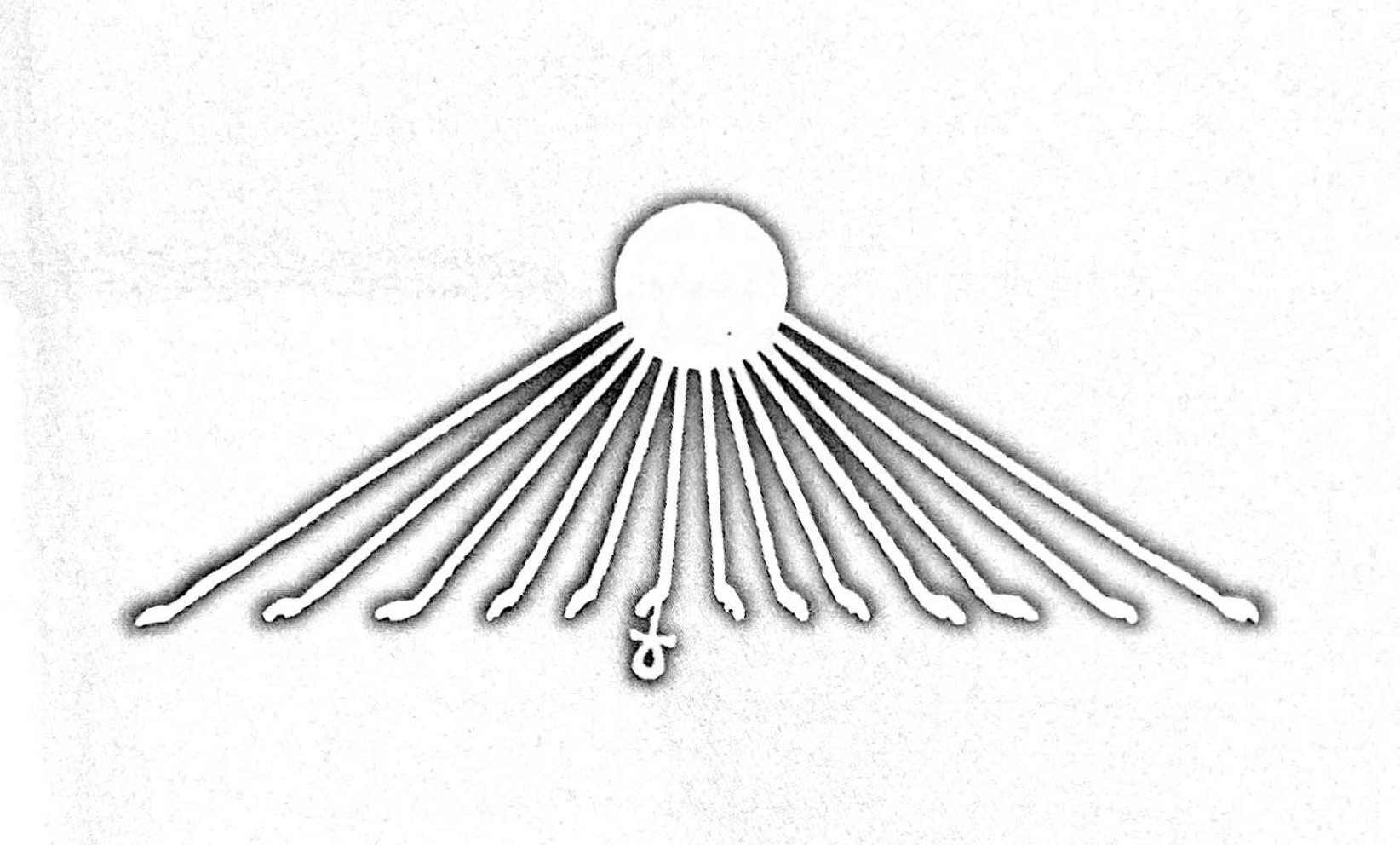
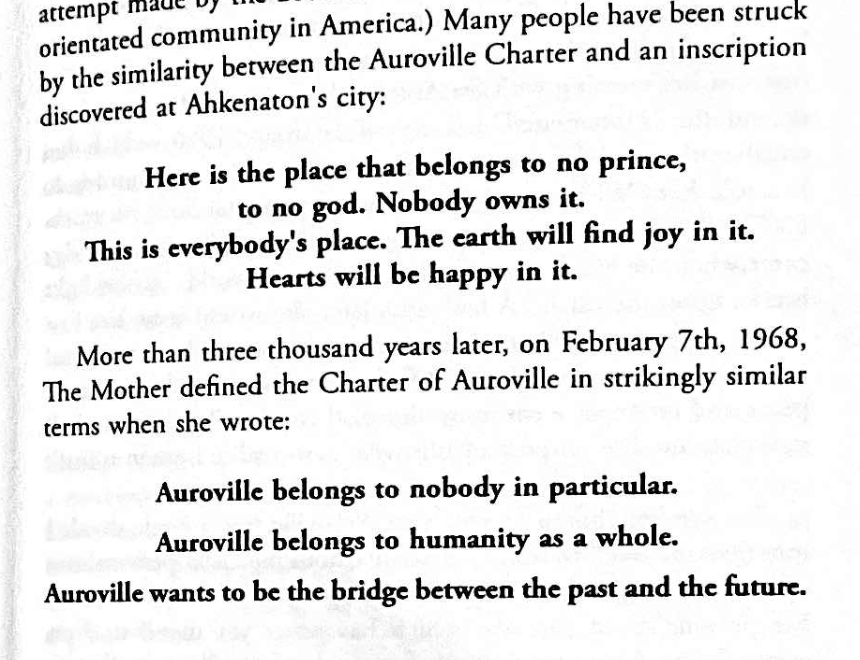
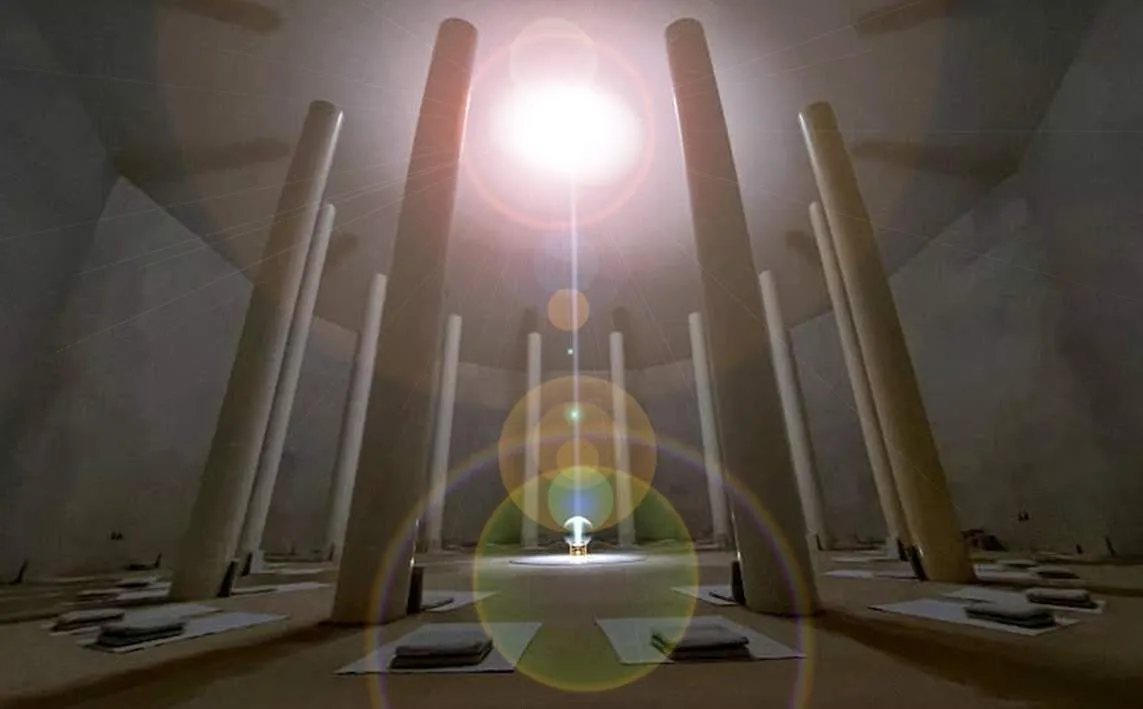
The young couple Akhenaten and Nefertiti would found an entirely new city called Akhet-Aten, Horizon of Aten, or City of the Horizon. This city was dedicated to Aten, represented as the sun disk with little hands reaching out to humanity. The new city of Amarna (Horizon) has been linked to Auroville by Aurovilians in various ways. For example, Aurovilian Gilbert Lachaux has argued that Akhet-Aten, like Auroville, was meant to be an international and, in some sense, pacifist city. This idea was thought to be reconfirmed by the similarity between the Auroville Charter and Akhenaten’s proclamation at Akhet-Aten (see picture below from booklet, reference still needed -> will get it soon when I’m back at the archive). The worship of Aten likely took place without the usual ritualistic ceremonies, consisting instead of devotional hymns such as the Great Hymn to the Aten. Both cities share a nuanced form of monotheistic earth-centered religion. The worship of the sun disk in the main temple of Akhet-Aten also corresponds somewhat to that of the “sun temple” of Auroville, the Matrimandir. Lastly, Mirra Alfassa claimed that “Akhenaten’s revelation aimed at revealing to the humanity of their time the Unity of the Divine with its manifestations.” Such claims and surface similarities between Akhet-Aten and Auroville have left Aurovilians questioning and will likely continue to fuel speculation about a hidden link between these two fascinating cities.
Peace Pasture #2, Sadhana Forest
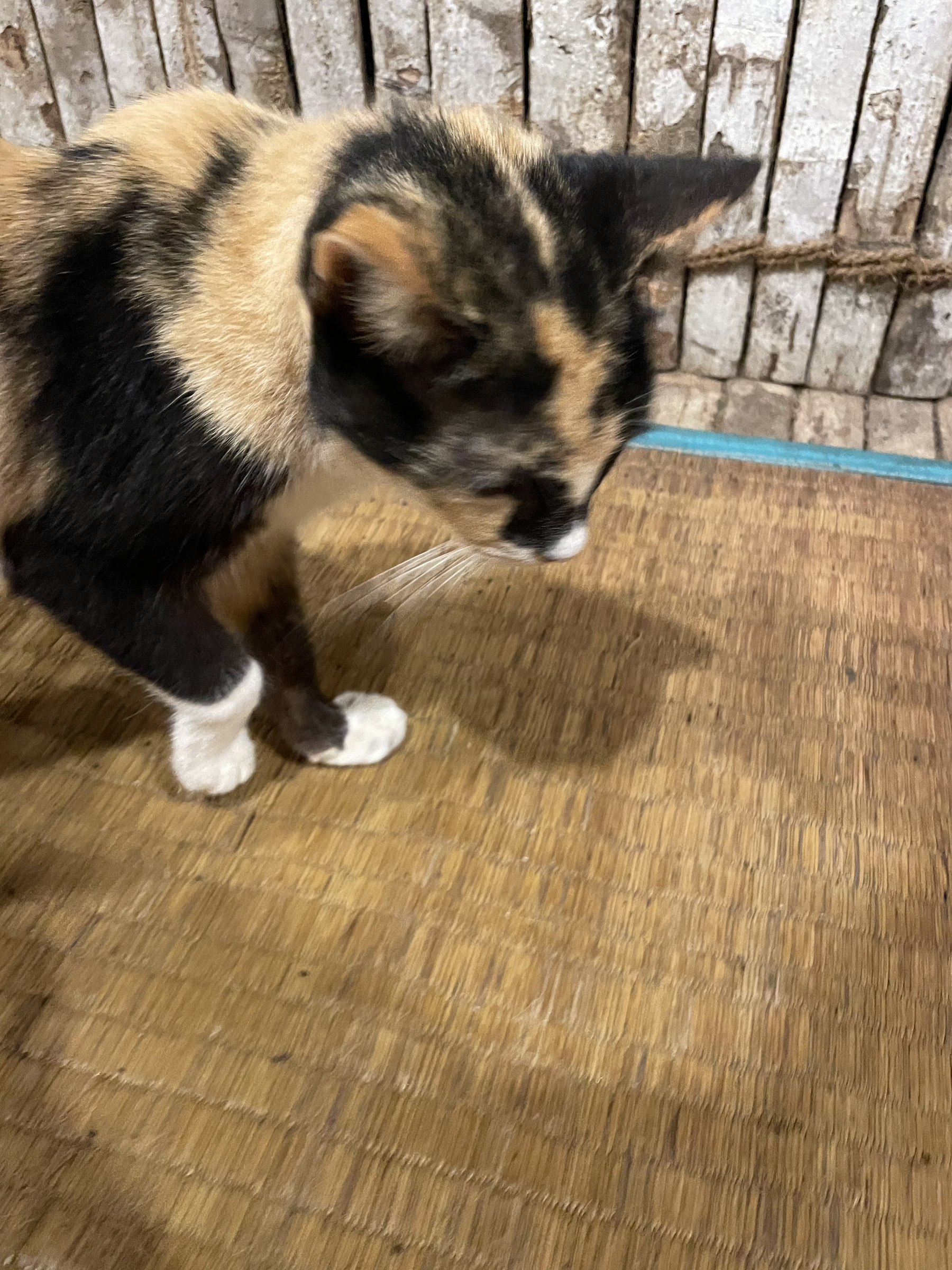
For this week’s Peace Pasture Series, I visited a food forest and reforestation community called Sadhana Forest.
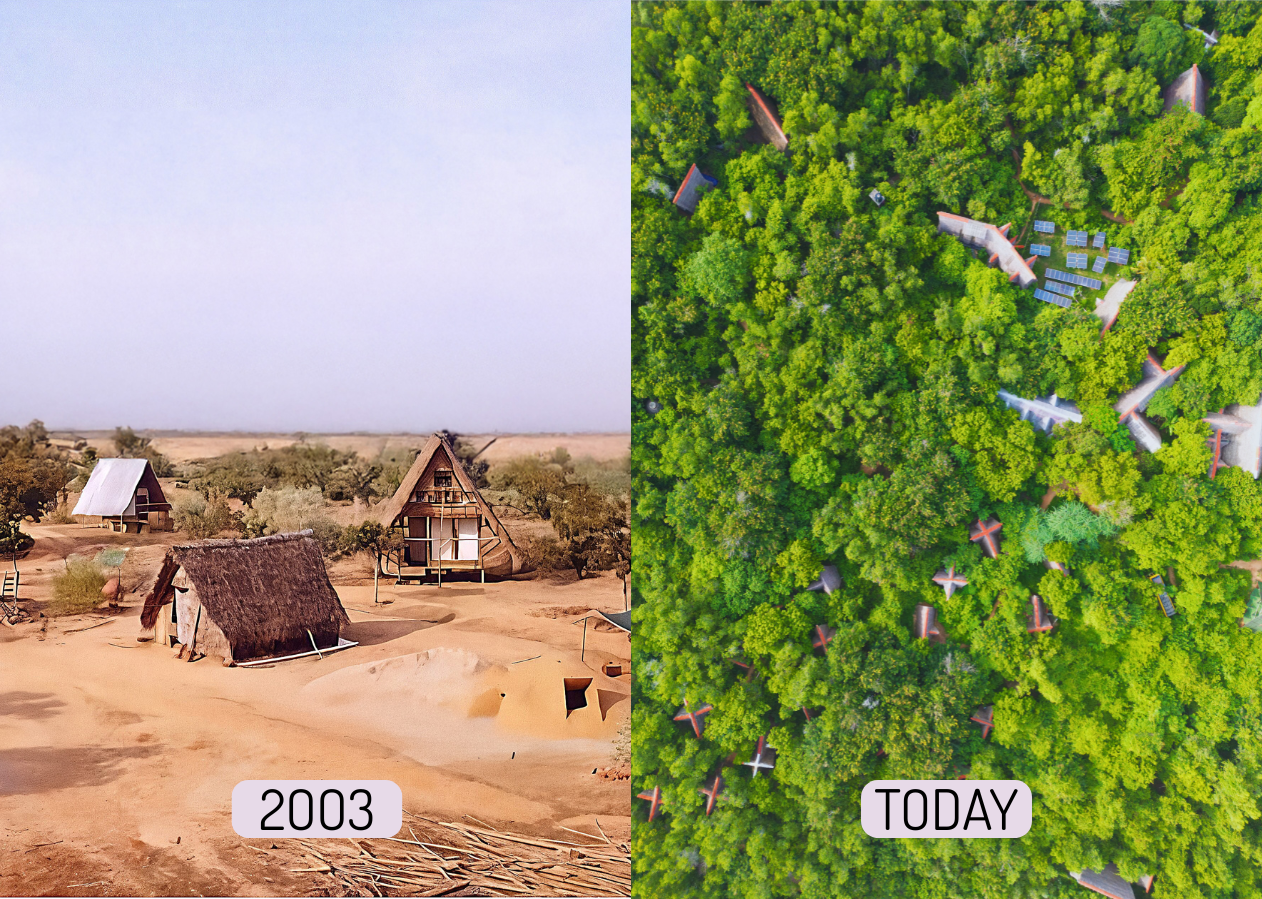
While it shares some aspects with other Auroville farms, such as Solitude or Terrasoul, Sadhana Forest felt exceptional in its thoroughness, breadth, and outreach. It was started by a family in 2003, not far outside of Auroville. More than 20 years later, the people of Sadhana Forest have managed to turn a plot of exhausted, barren land into a flourishing forest, practicing their motto of “putting compassion into action” for “world peace.”
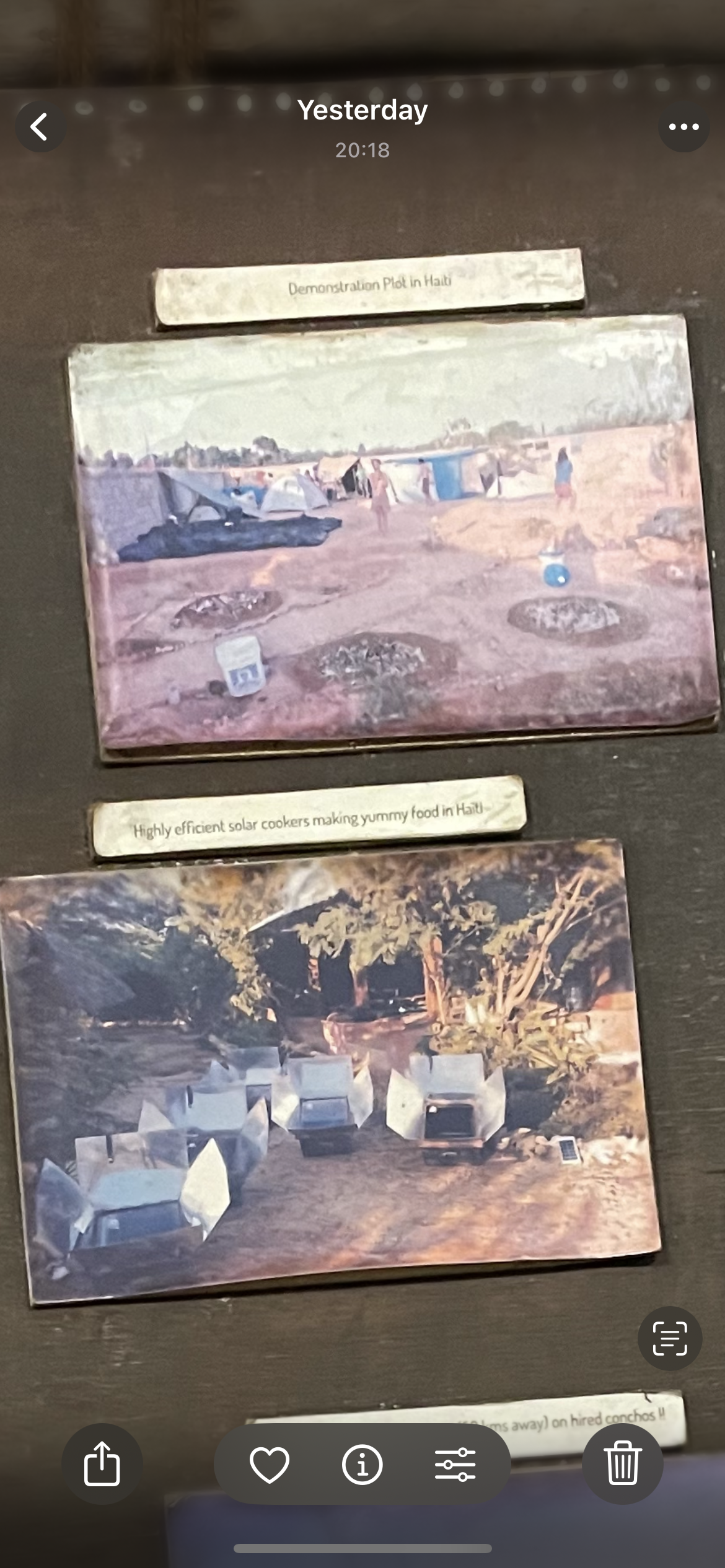
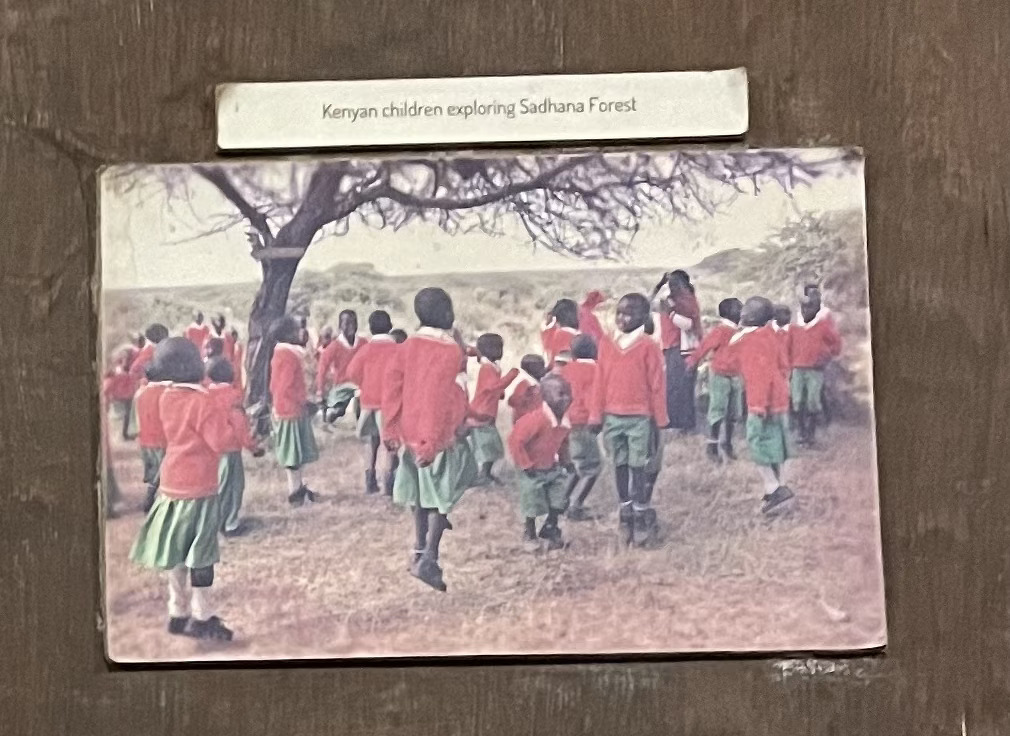
Because of its success, there are now numerous branching projects of Sadhana Forest that have turned barren land into lasting food forests. Sadhana Forest Auroville is the mothership of, for example, three branches in Meghalaya, one in Haiti, one in Kenya, one in Namibia, one near Madurai, and soon probably one in Romania. :)
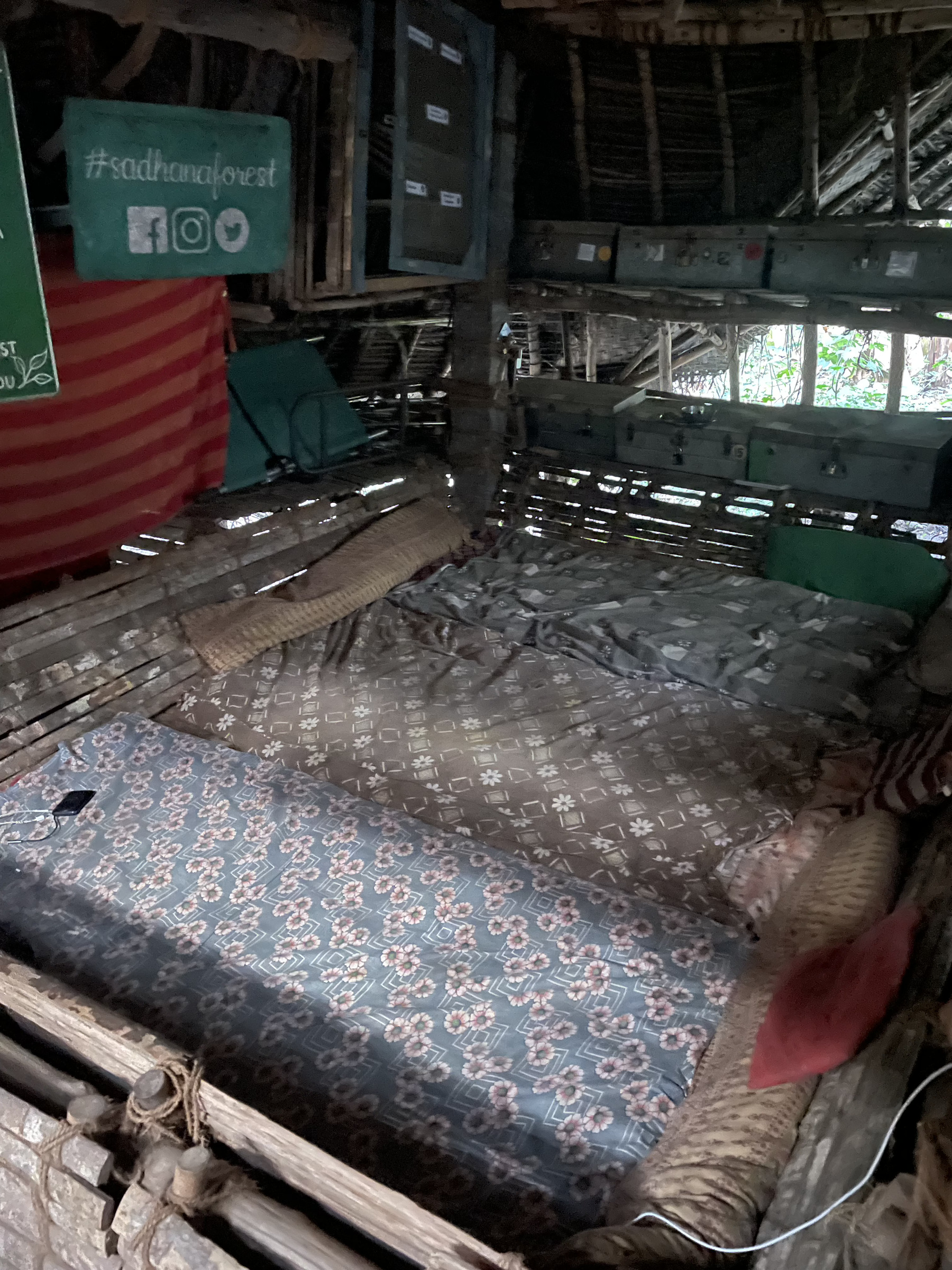
Although I usually leave such reforestation communes with my own thoughts, noticing many contradictions, I was impressed by the sincerity and upbuilding character of Sadhana Forest. While, of course, international long-term volunteers are running the place, they are provided for and foster genuine community. And, though many volunteers talk about the project in that hippie-esque, big-eyed fashion, it is pure enthusiasm, as there are no gurus and it is also a very strict substance-free community (two things that tend to create those Woodstock-type big eyes). The Sadhana community has also managed to nurture a strong bond with the local community through joint architectural projects and food sharing, which is tied to their giving philosophy of handing a free meal to any passerby at Sadhana Forest.
While being there, I learned about some of the key approaches to reforestation. Perhaps most crucially, the way the people of Sadhana Forest need to carefully “plant” water. Instead of thinking about where to plant trees, the real challenge with barren land is “planting” water, or making sure that rainwater does not run away. Since there are no roots to hold the water, barren land lets all water just run off, which keeps it barren. Although familiar with this issue, I had not made the connection that this meant reforestation projects were primarily about making small water dams and trenches. After the water is channeled correctly, trees come naturally.
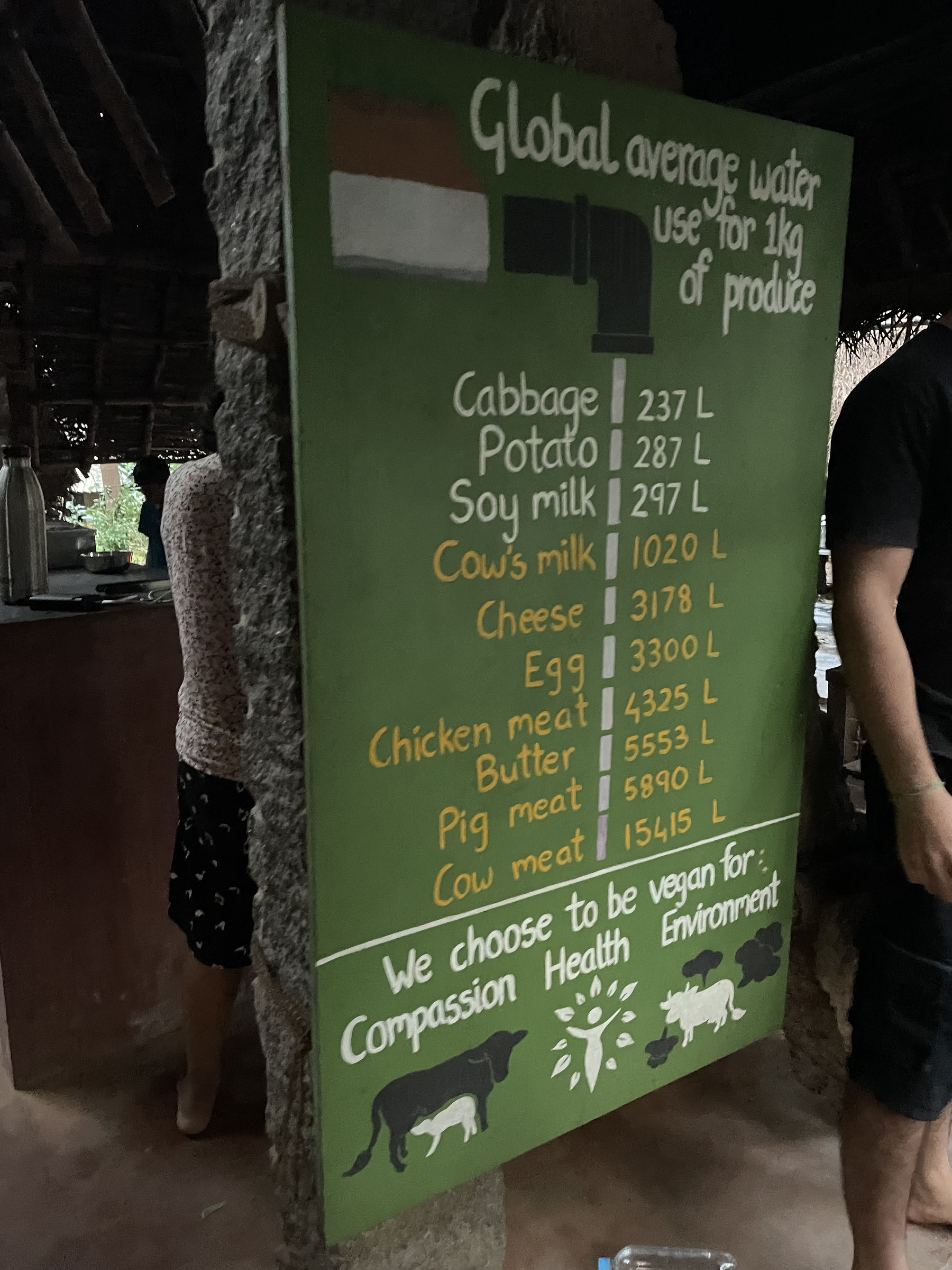
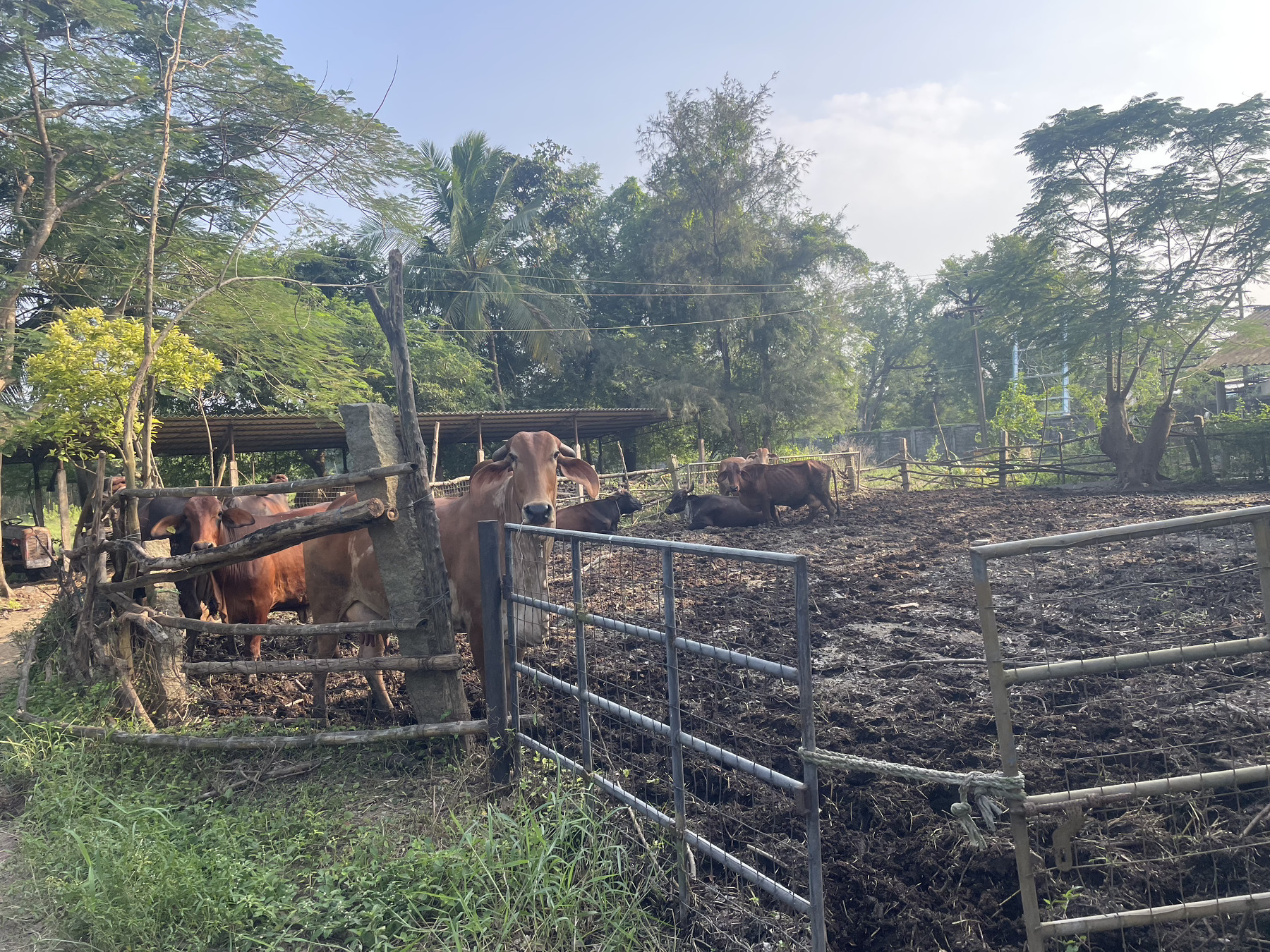
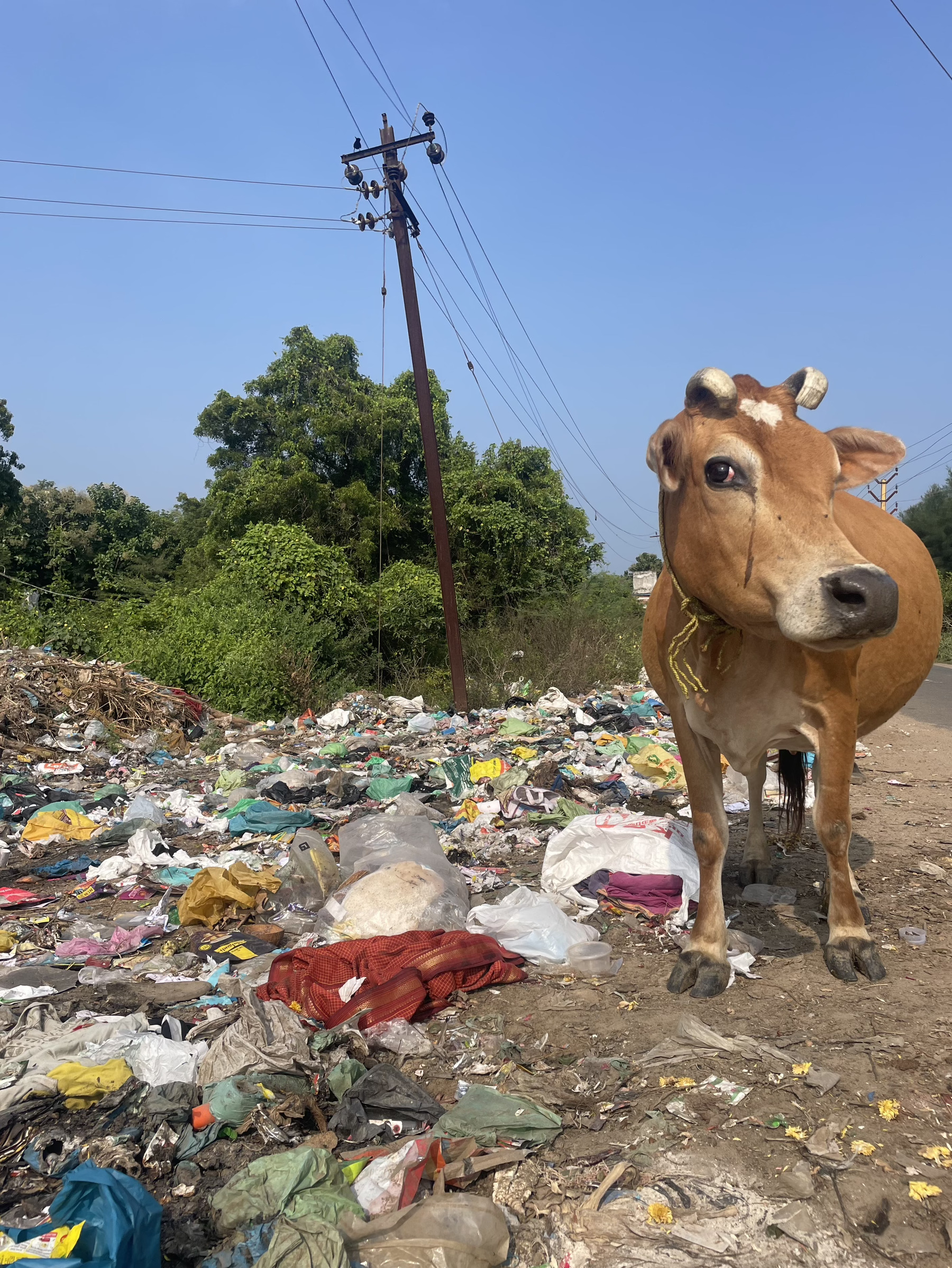
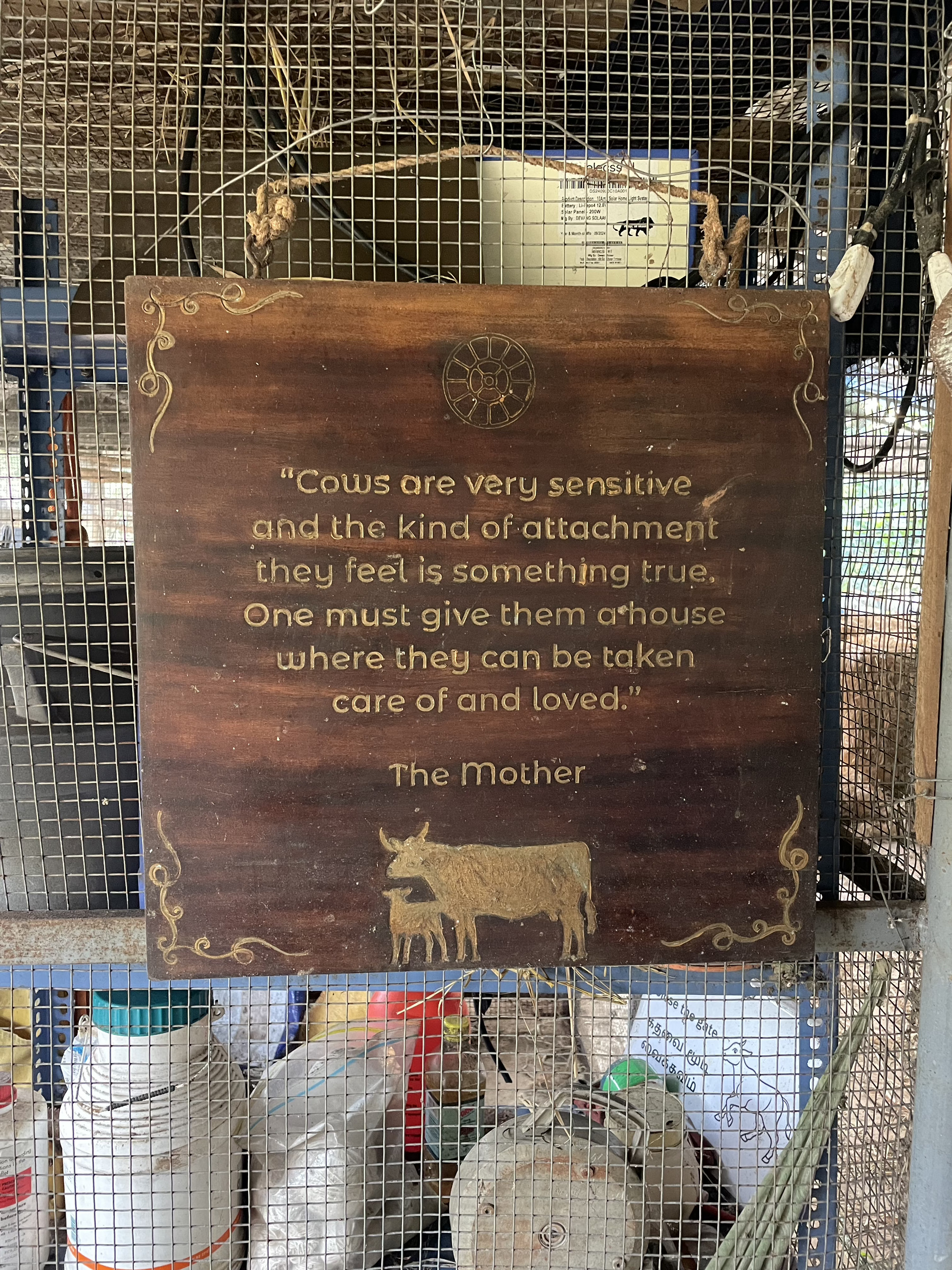
Sadhana Forest also hosts a Goshala. Since their community is strictly vegan, they decided to still take care of cows meant for slaughter, simply to give them a good end to their lives. I had an interesting conversation with the guy showing me around Sadhana Forest, he talked to me about the “amount of violence in our diet,” a topic that immediately made me think of A.K. Bhagwat’s World Peace through Correct Diet. We spoke about the current situation in which dairy cows are likely living even worse lives than other farm cows, because of the constant use of their reproductive organs and the broken maternal connection (this holds for most large farm dairy cows, less so for the rare family farm that lets the calf grow up alongside taking their milk).
After walking around the farm, I had a lovely dinner with some friends that had come along to Sadhana. Sadhana Forest had cooked free meals for 200 people that evening, including volunteers and passersby. Someone told me that on peak days they give free meals to 1,300 people in a single day!
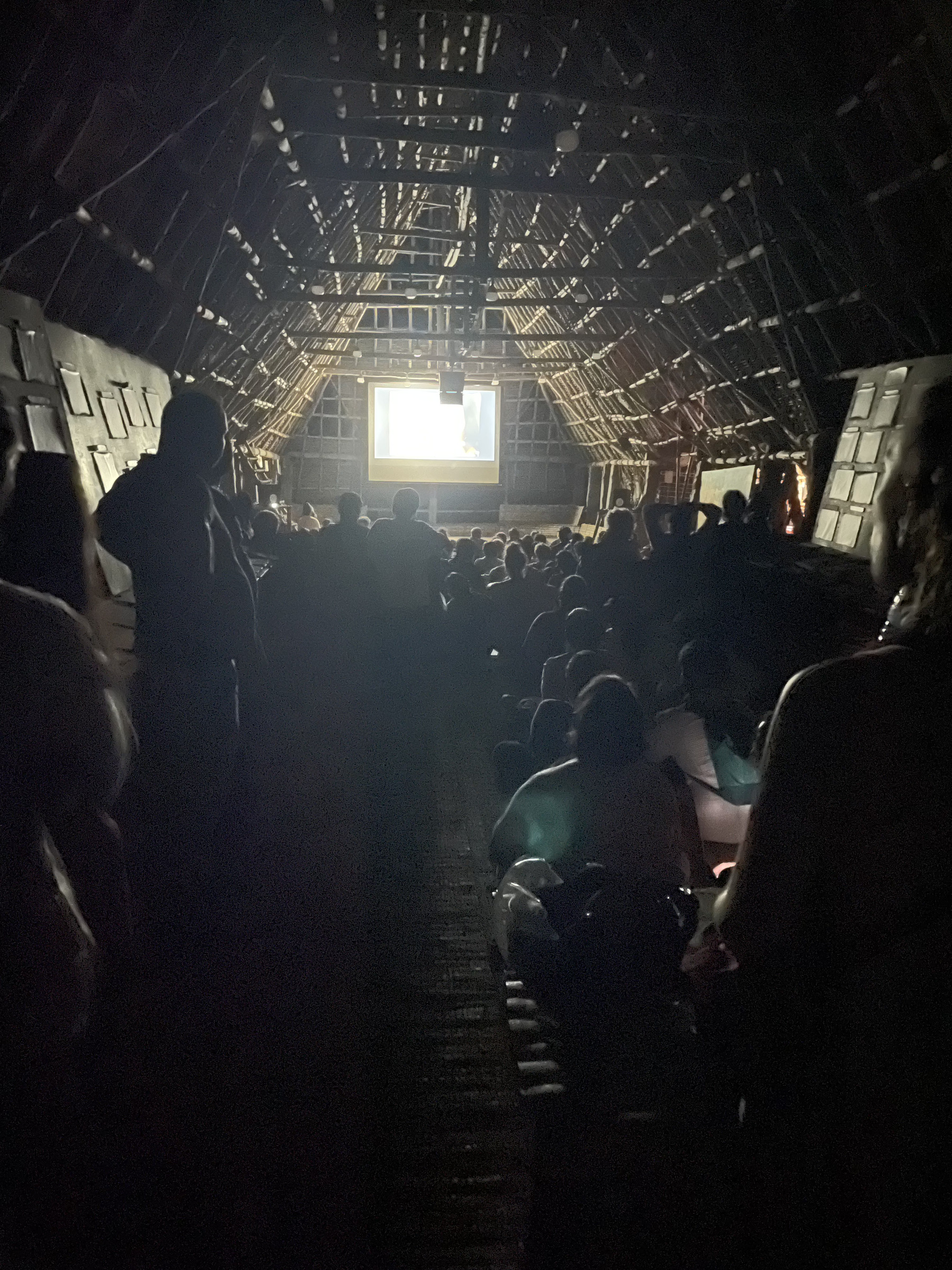
Goddag Letter #7, from the "City of Dawn": Solitude Farm, Dehashakti, and Tamil Class
Hei, god dag,
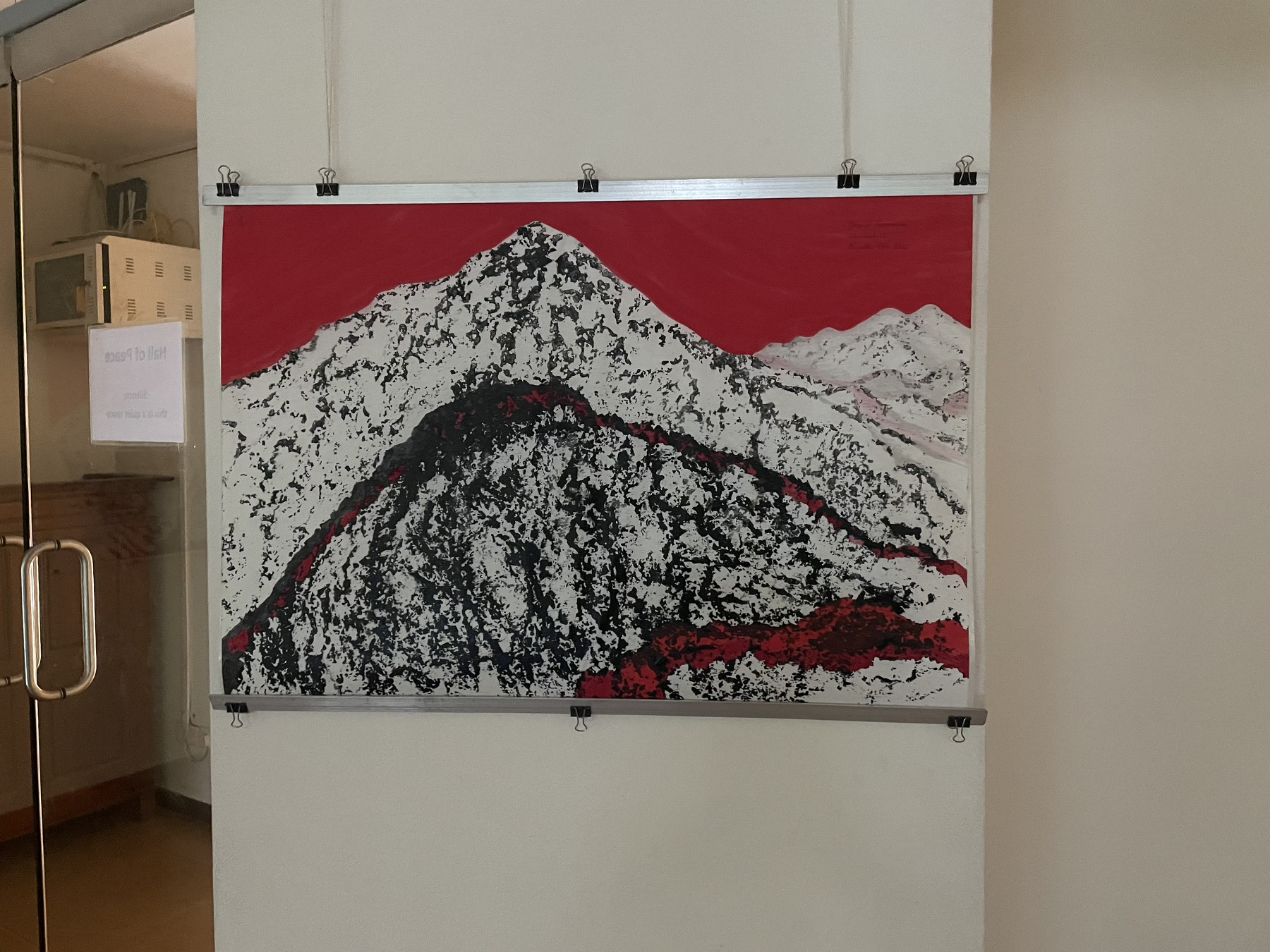
A weekly update. This week I mostly spent time in the archives at Auroville. The most surprising find was about Sri Surendra Nath Jauhar, who after attending a session in Amritsar, joined the Congress and later the Arya Kumar Sabha, the youth wing of the Arya Samaj. After years of nonviolent resistance he turned to the Aurobindo Ashram in 1939 after traveling there with Indra Sen. His “supreme discovery” of the life-affirming ashram of Aurobindo and Mirra Alfassa felt so true that, in his mid-fifties, he started the Delhi Branch of the Aurobindo Ashram and later a separate outpost in Nainital. He started the one in Nainital because people could learn trekking, mountaineering and get educated by the grandeur of the mountains! Speaking about mountains, the Unity Pavilion at Auroville had a wonderful art exhibition on mountains called “Wie im Großen, so im Kleinen” by Birgitta Volz. She made these artworks while in Pedvale Art Park, Latvia, and used oil colour to create the relief of the mountains on delicate Chinese paper.
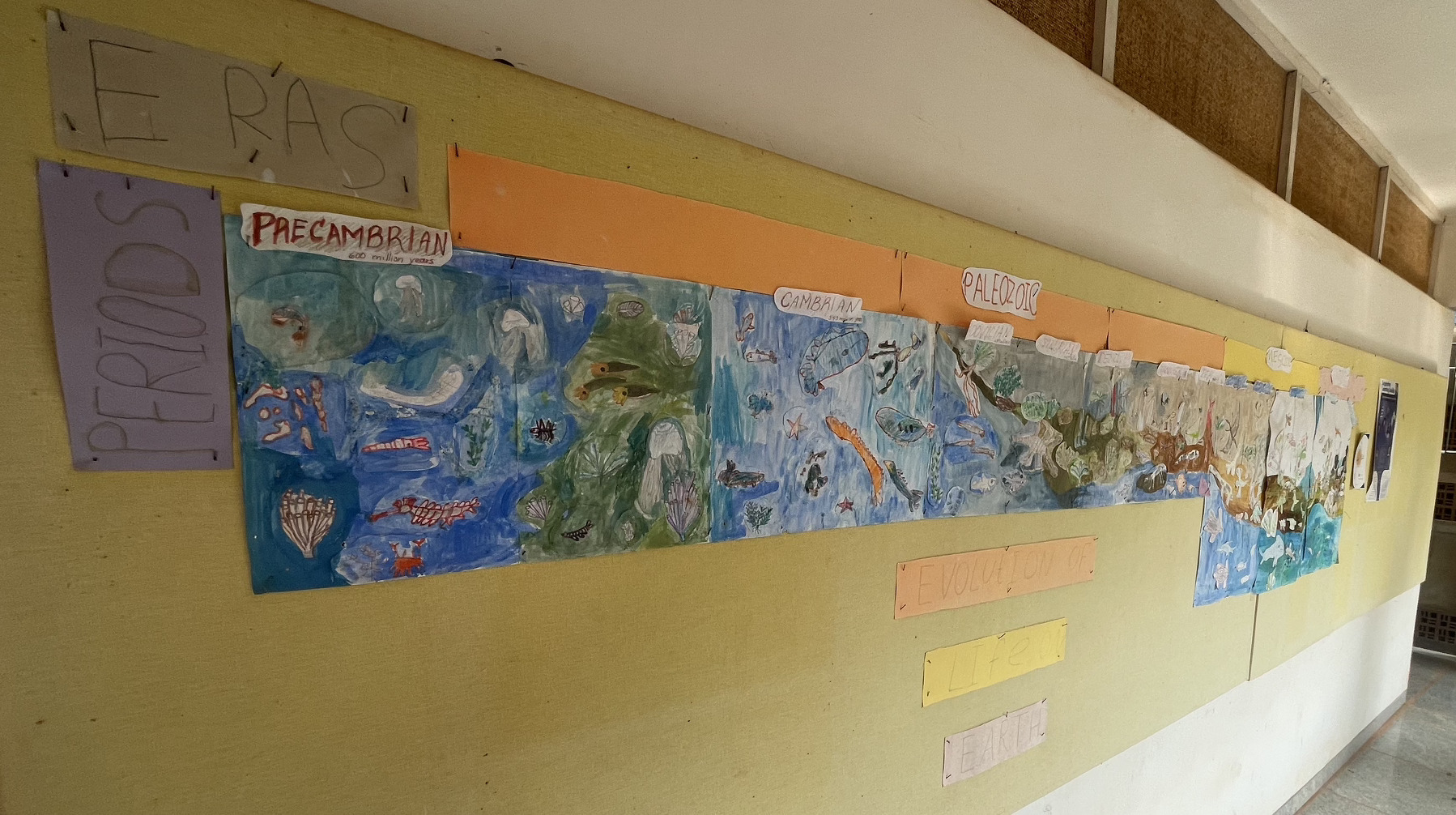
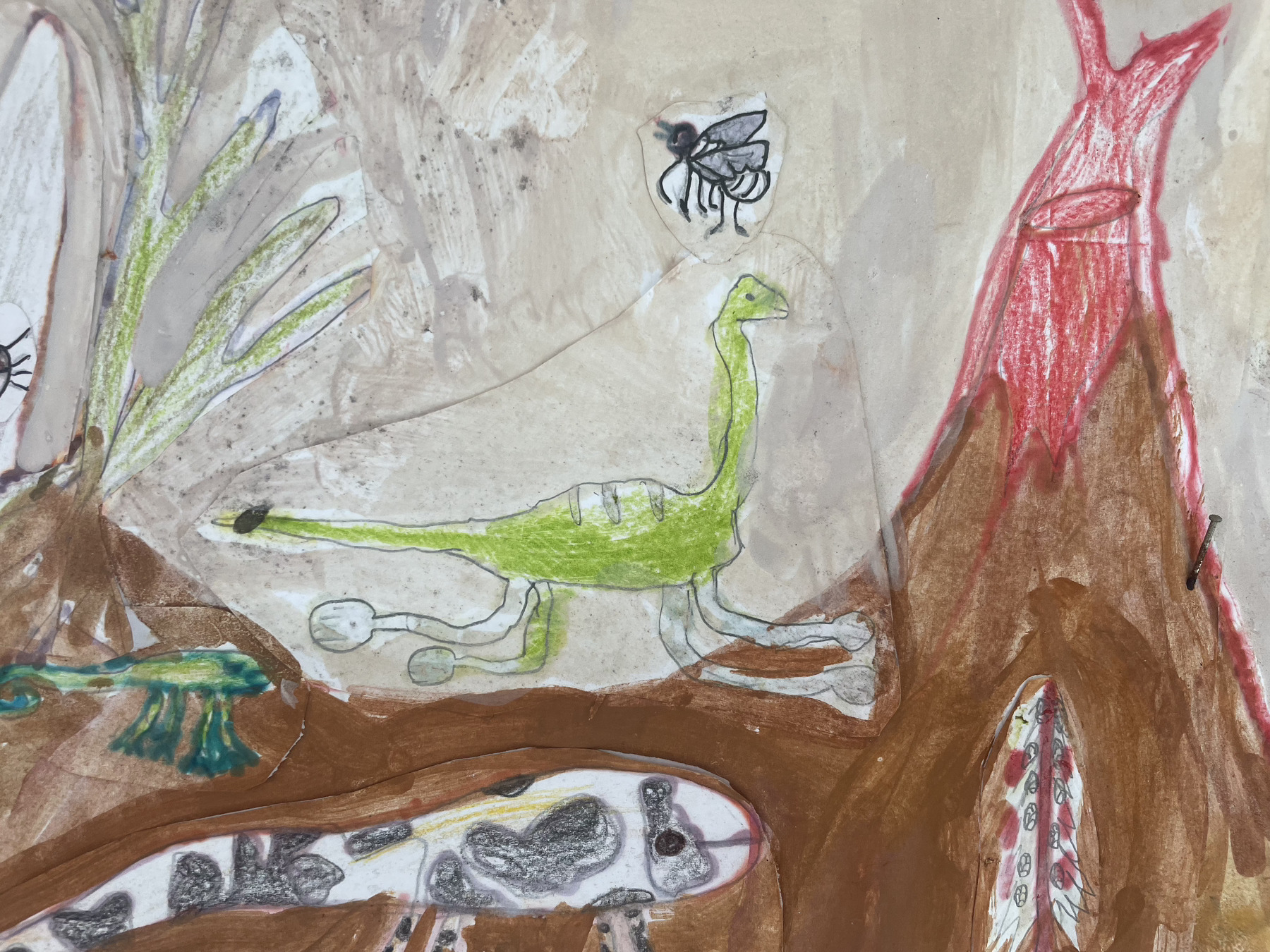
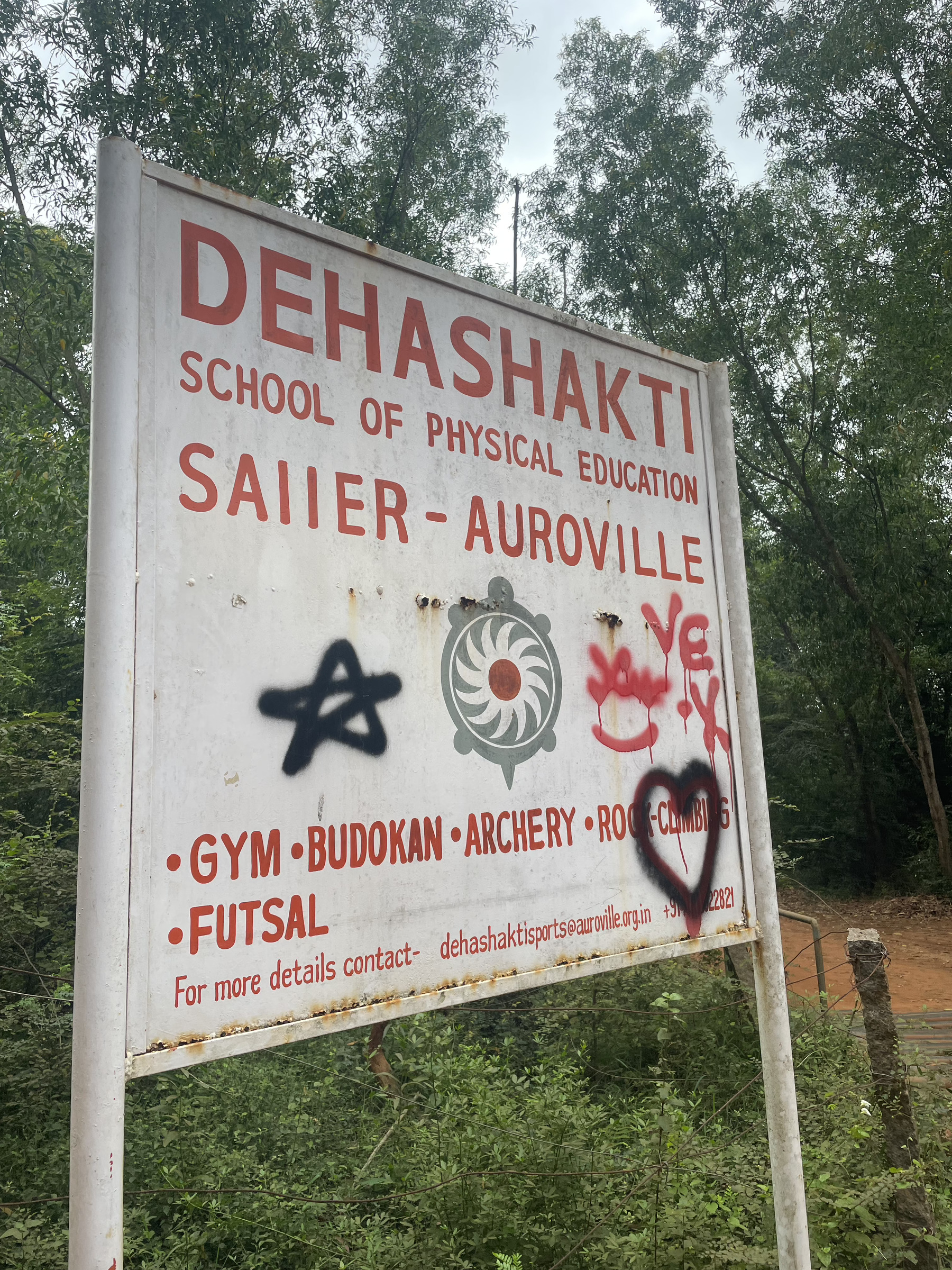
On my way out of the archives I found a very sweet artwork on the evolution of the earth. I especially adored the Sauropod that was flying towards an erupting volcano in the Permian, and have been thinking about Sauropods since… For some time, I have been wanting to go to a gym in Auroville. So I was more than happy to find Dehashakti gym. The day before, on Monday, I had gone to check out Turiya gym, but this urbanized giant felt completely out of place, which is why I was even happier to hear that Auroville has its own gym called Dehashakti. It has good, home-made equipment, and they only ask for a small contribution to use it!
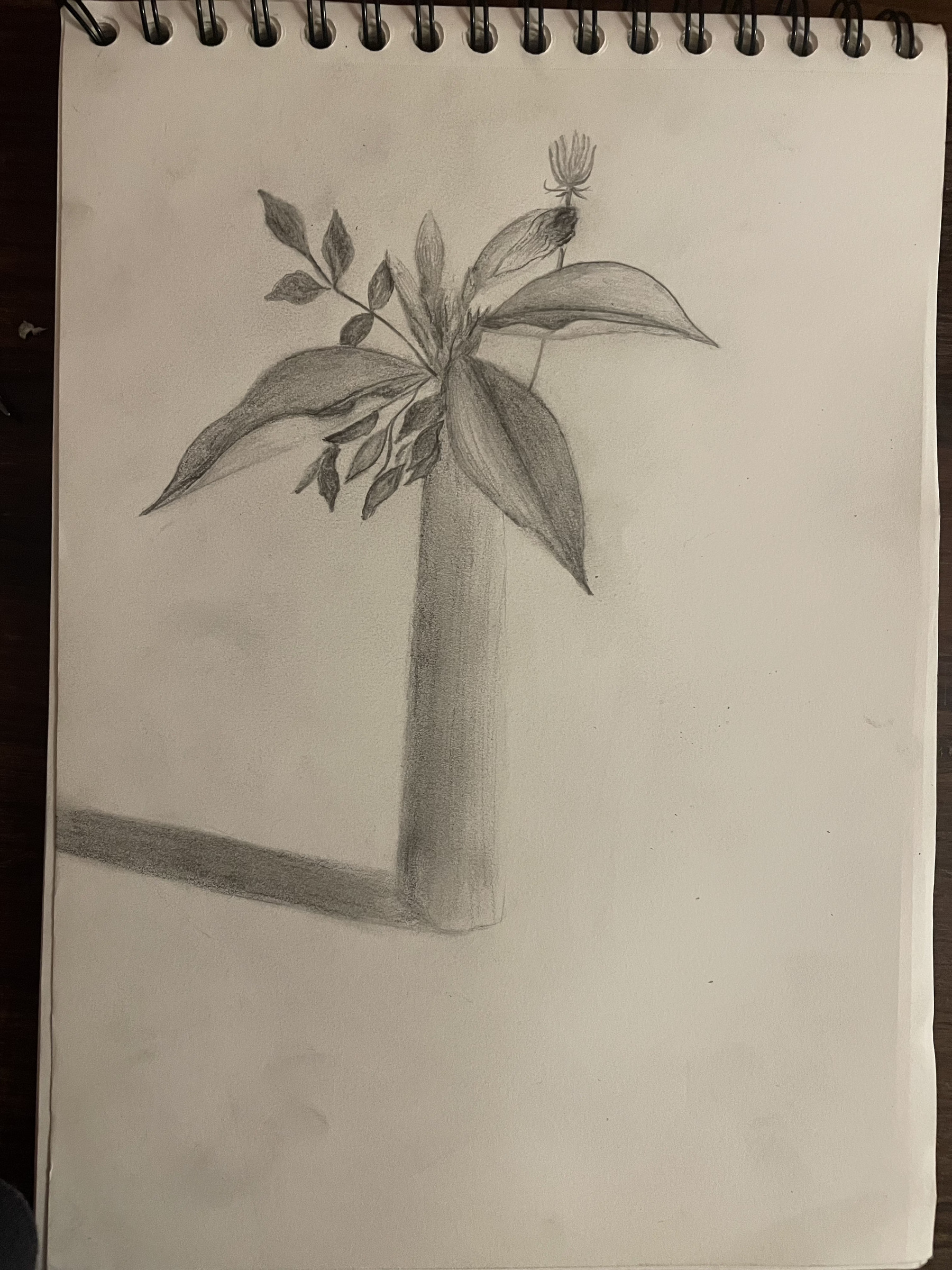
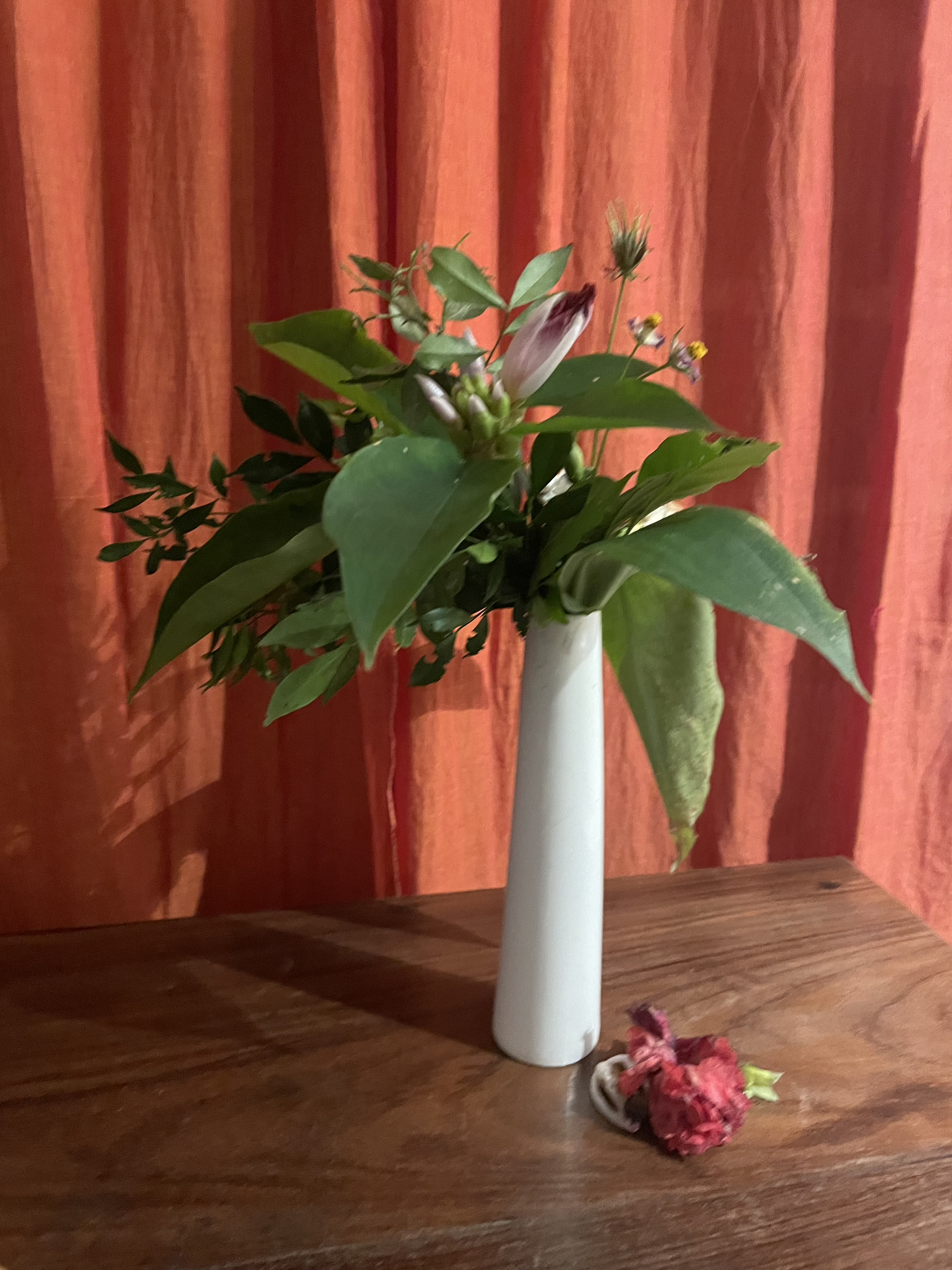
This week I changed from New Creation to Center Guest House (feel free to reach out in case you ever stay in Auroville, I can give tips!). Although I already miss some of the people from the previous place, especially Vijaya, I’ve met some wonderful people here through our communal breakfast and dinner. Yesterday I also had my first Tamil class at the Auroville Language Lab with teacher Ashok. In the afternoon I drew a small plant bouquet in my room.
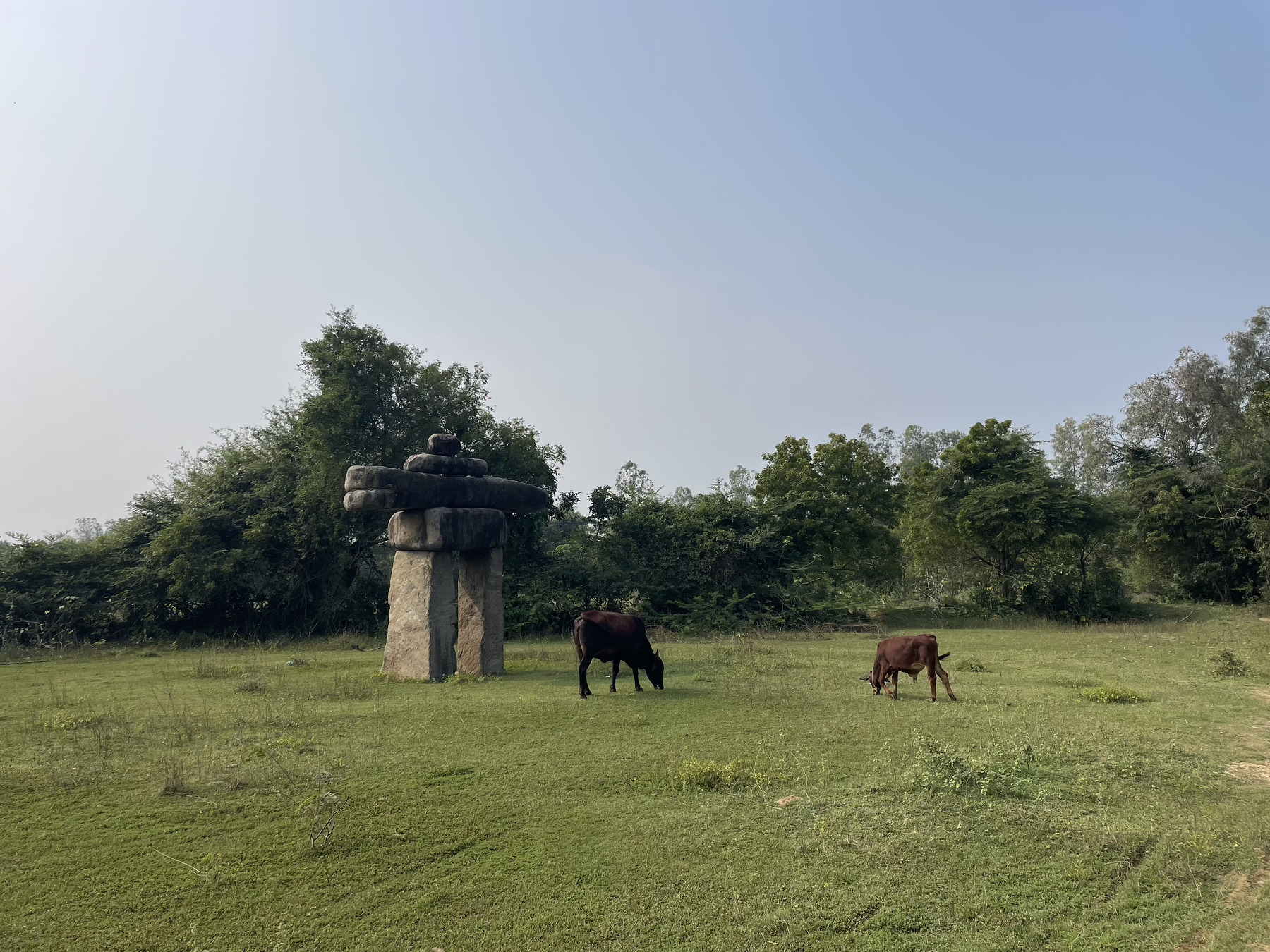
This morning I visited the Matrimandir one more time (it had been a week!), and afterwards went to Solitude Farm with two friends to have lunch. At Solitude Farm we spoke with the legendary Krishna Mckenzie, who has been spearheading local farm initiatives around the area for decades after he came to Auroville at 19. It was wonderful to see how inspired he was by Manasobu Fukuoka, a Japanese thinker and farmer. Yesterday night we all went to the Svaram performance at the amphitheater next to the matrimandir, which was part of the bigger literature festival held in Auroville. The setting at the amphitheater was stunning: The sun was slowly setting leaving a pink hue behind the golden globe, and flying foxes were cruising above us. Three members of Svaram created a soundscape while reading the five “dreams” of Aurobindo broadcasted in 1947 on All India Radio. Though an echo in the microphone slightly broke the flow between music and speech, it was a wonderful music performance!
Unearth Kāla #3, The “Planetary History” of the Krishna-Prometheus Project
In Unearth Kāla I uncover dead time. Kāla, or time, personifies the force destroying all things. This series of letters is there to remember them. This time: The “Planetary History” of the Krishna-Prometheus Project.
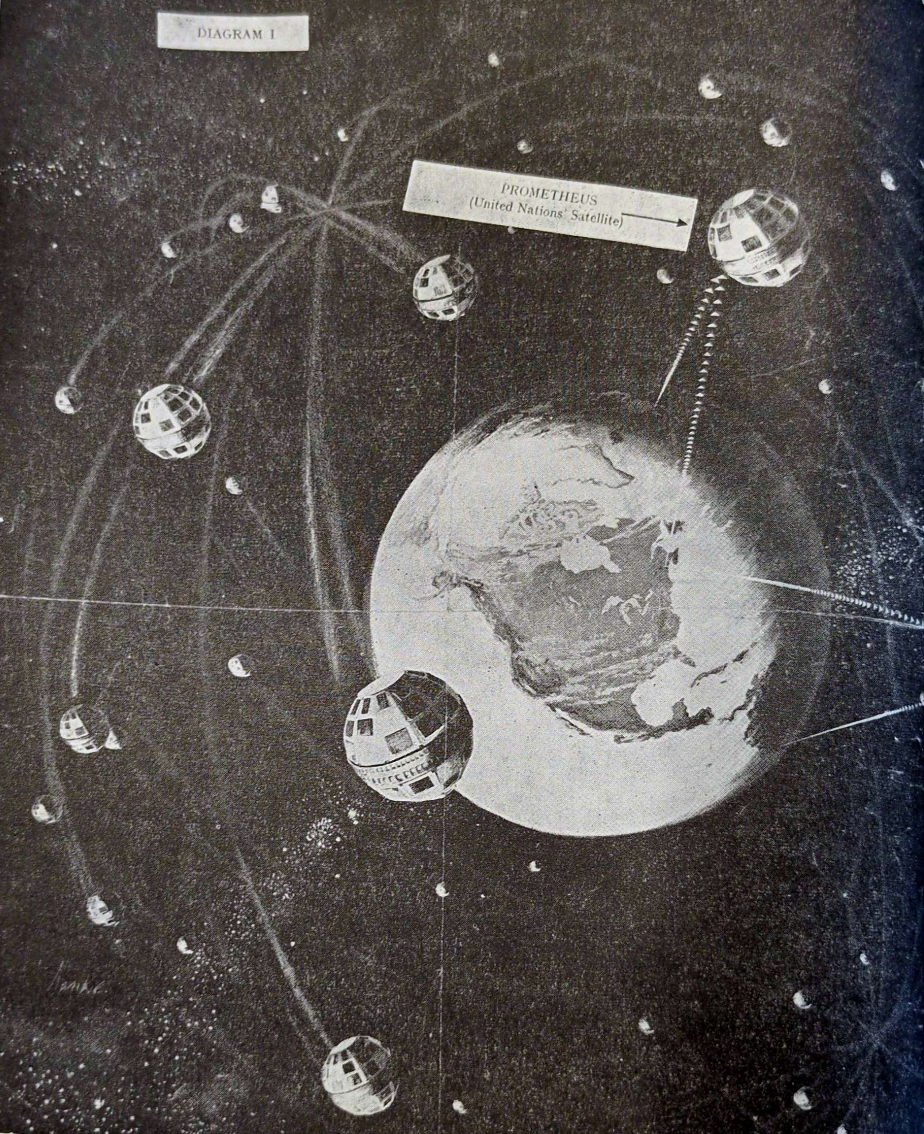
“Mankind is now moving into the era of the conquest of outer space”. Space technology is used for war on Earth, or to escape Earth from war, but far less often to prevent war. Yet the aim of the 1962 Krishna-Prometheus Satellite project was precisely this: To prevent our “descend downward and deathward toward collective insanity and mass suicide”. In 1962 at a now-forgotten yet revolutionary anti-nuclear conference, the Accra Assembly, “The World Without the Bomb”, Project Krishna-Prometheus was proposed by Julie Medlock and Oliver Reiser. Oliver Reiser was a philosophy professor at the University of Pittsburgh; Julie Medlock an evolutionist of the Aurobindo sort who had just quit her role as Bertrand Russell’s literary agent after a trip to a branch of the Aurobindo Ashram, and was now engaged in several active peace projects. The Accra Assembly was initiated early in 1961 by the “consideration” of Kwame Nkrumah, then president of Ghana. Its aim was concisely “summed up in its title ‘The World Without the Bomb’”. There was a truly global attendance at the conference, with speakers and participants like president Kwame Nkrumah, “father of radar” Sir Robert Watson-Watt, historian Joseph Ki-Zerbo, Nobel Prize winning physicist Abdus Salam, and antinuclear physicist Joseph Rotblat. They were insistent that this meeting against atomic warfare could not be “negative”, its aim had to be “positive”: to offer solutions forward into a more peaceful world without weapons of mass destruction. More will soon follow on the Accra Assembly by PhDers Henrike Vellinga and myself. For this “History Foundling”, I wanted to give a glimpse and focus on what was perhaps one of the most bizarre solutions proposed at the Assembly: The Krishna-Prometheus project
The project requested the UN to reach out to the Soviet Union and the US to jointly authorize and host a satellite project called Krishna-Prometheus. This satellite project would bring worldwide education to everyone’s fingertips. Although the primary aim was peace on earth, it had other “cosmic” humanist aims in terms of education and the eradication of poverty. The authors expressed an intense sense of urgency fearing that we otherwise might “lose the battle of man”.
The satellite would host educative television programs focusing on key personalities of the “East” and “West”. These key personalities were major thinkers, religious figures, or inventors, such as “Krishna, Akhenaten … Tagore, Gandhi, Bhave, Sri Aurobindo … Newton, Darwin, Marx, Freud, Einstein, and Russell”. It was “in this manner that a good part of the planet would be covered: we would ‘put a girdle ‘round the earth’ - as Shakespeare foresaw eventually to bind the members of the human family into the form of unity.”
Although utopian, naive, and progressivist toward what they called “backward” peoples, the project was nevertheless revolutionary for its time. To redirect “the conquest” of outer space toward the union and perfection of the human race was laudable, and an early response to stil quite novel technological developments. At the time, satellites and space technology were still new, state controlled or subsidized, and often military-oriented. Hosted in June 1962, with the Cuban Missile Crisis just around the corner, they showed Promethean foresight!
Although it is sill unclear to me, it is unlikely that the proposal was taken up at the United Nations or had any other afterlife (TBC…). It seems that Oliver Reiser went on to pursue other philosophical questions, while Julie Medlock went back to Pondicherry to join the newly emerging Auroville. Their Krishna-Prometheus project meant to bring “fire and light from the heavens above to the teeming billions of people here on earth”. Besides its hubris, the size of the Tower of Babel, I think it is telling that Julie and Oliver also remained silent on the sensitivity of the Greeks to the fate of Prometheus. A careful reader of Aeschylus’s Prometheus Bound knows that to bear Prometheus’ “yoke of punishment”, inflicted by the tyrant of the new gods for giving humans light, demands not only foresight but equally the perseverance of his “foolish stubbornness”!
Just for fun (and further reflection): Hermes vs. Oceanus giving advice to Prometheus… Hermes: for stubbornness standing alone is the weakest of all things in those with foolish minds (1254-1256) Oceanus: well, let me fall ill from this disease, for someone truly wise profits most when he is thought a fool. (484-486) I wonder what Krishna might have advised to our not so despondent Prometheus, Medlock, and Reiser!
Goddag Letter, 14 December, Auroville Weekend
Hei, god dag!
Just a small update on the last three days. I had been in Chennai at the end of this week to walk through the Theosophical Society in Adyar, get a haircut, buy some clothes, and pick up a TLR camera from the CPB Foundation.
When I got back to Auroville, I was pretty exhausted. Yet, after the Peace Pasture series I did on Saturday, Yasmin from AuroOrchard invited me to join her for two events that evening, which I had had no clue about. First was the opening of a Russian art exhibition at the Tibetan Pavilion by Alexander Pereverzev. Alexander gave a wonderful presentation for each artwork, and I particularly liked Seeing off Maslenitsa. Farewell to Winter. This piece is about the famous Butter Week celebrations, in which, on the last day, an effigy of Lady Maslenitsa is burned. Lady Maslenitsa, also called the Butter Lady or Morana, is linked to the ancient Slavic goddess of death. So death is burned… into spring!
Afterwards, we went to the Youth Centre, where they were holding a massive pizza night because they unfortunately have to relocate. There were so many people at this event. We had great pizza, made a fire and sat around it, talked with some elderly Aurovillians, and later watched the meteor shower with friends until after midnight on Gaia Field.
On Sunday I was still pretty tired, but when some of the people I had met asked me to join them at the beach, I couldn’t say no. It was my first time swimming in the ocean since Bergen aan Zee, and it made me incredibly happy. Afterwards, we went to eat at Malgudi Days (highly recommended for homely North Indian food in Auroville) and played cards to close the night.
Only three photos, I forgot to take more!


Peace Pastures #1
Peace Pastures #1
This peace pasture report is part of a series where I go by farms that I buy animal produce from.
This blog series started because I began occasionally eating animal produce (at the moment eggs) again for nutrition but kept racking my brain over their ill-treatment, especially the treatment of “dairy” cows. At the end of this document I’ve given a brief take on my preliminary conclusions as to why we should visit farms to see farm animals with our own eyes. In short, it’s to see the bullshit these animals go through, to choose farm produce with a heart, and to ensure the worthy continued existence of farm animals.
On the Saturday afternoon of 13 December, I visited four farms. It was a long journey as I am doing these farm visits on my bike. During these visits I mostly focus on ducks, chicken, and cows (see list below on what I check). I visited them in the afternoon and since this is eating time, the cows were all in the stall. Next time, I am visiting in the morning to get both sides. I’ll start with the biggest farm and move down to the smallest. But before I continue I want to give a special thanks to AuroOrchard and Yasmin as she treated her four cows, held for manure only, so well! She taught me what to look out for at farms. And besides this, Yasmin, a great elderly lady, invited me to join to a Russian art exhibition and free pizza party night in Auroville!
The following more extensive report is quite boring as I try to make them based on a checklist. I share it for inspiration and because some people here asked cause they also wanted to know. Since I only checked farms that I buy produce from or that are related to the Aurobindo Ashram/Auroville, these farms are relatively speaking already very high standard!
AuroOrchard farm
Manure Cows Space: very spacious, Resting: not checked, Air quality: very fresh, Water: good, Body condition: good, Feet & movement: no hock lesions, gait good, Cleanliness: completely clean udders, Behavior & handling: very calm around farmer, Infrastructure: high standard
Ducks Space: excellent space, Resting: not checked, Air quality: no ammonia smell, Water: not checked, Body condition: not checked, Feet & movement: not checked, Cleanliness: great feather condition, Behavior & handling: very calm, Infrastructure: high standard
Sri Aurobindo Ashram farm
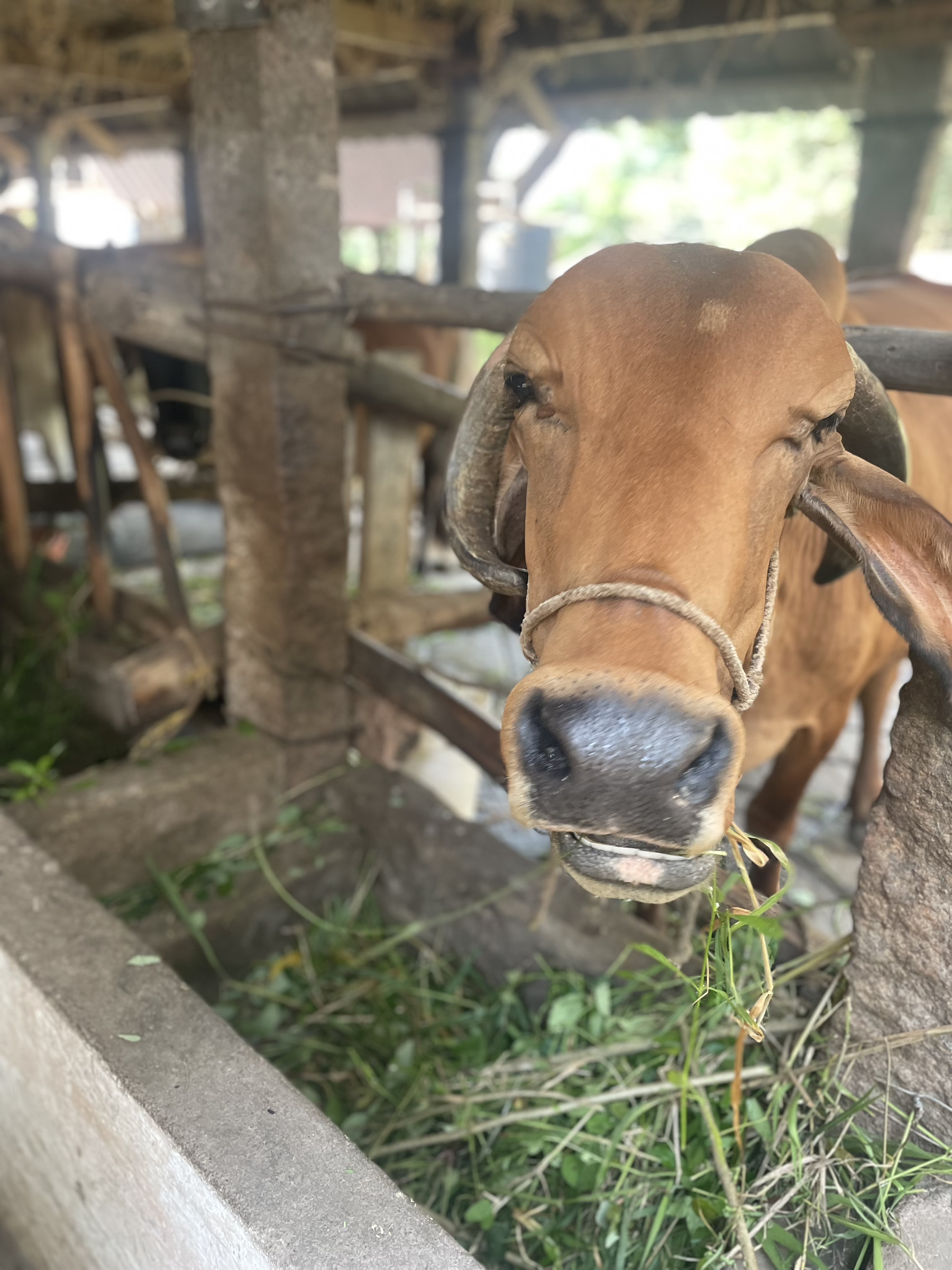
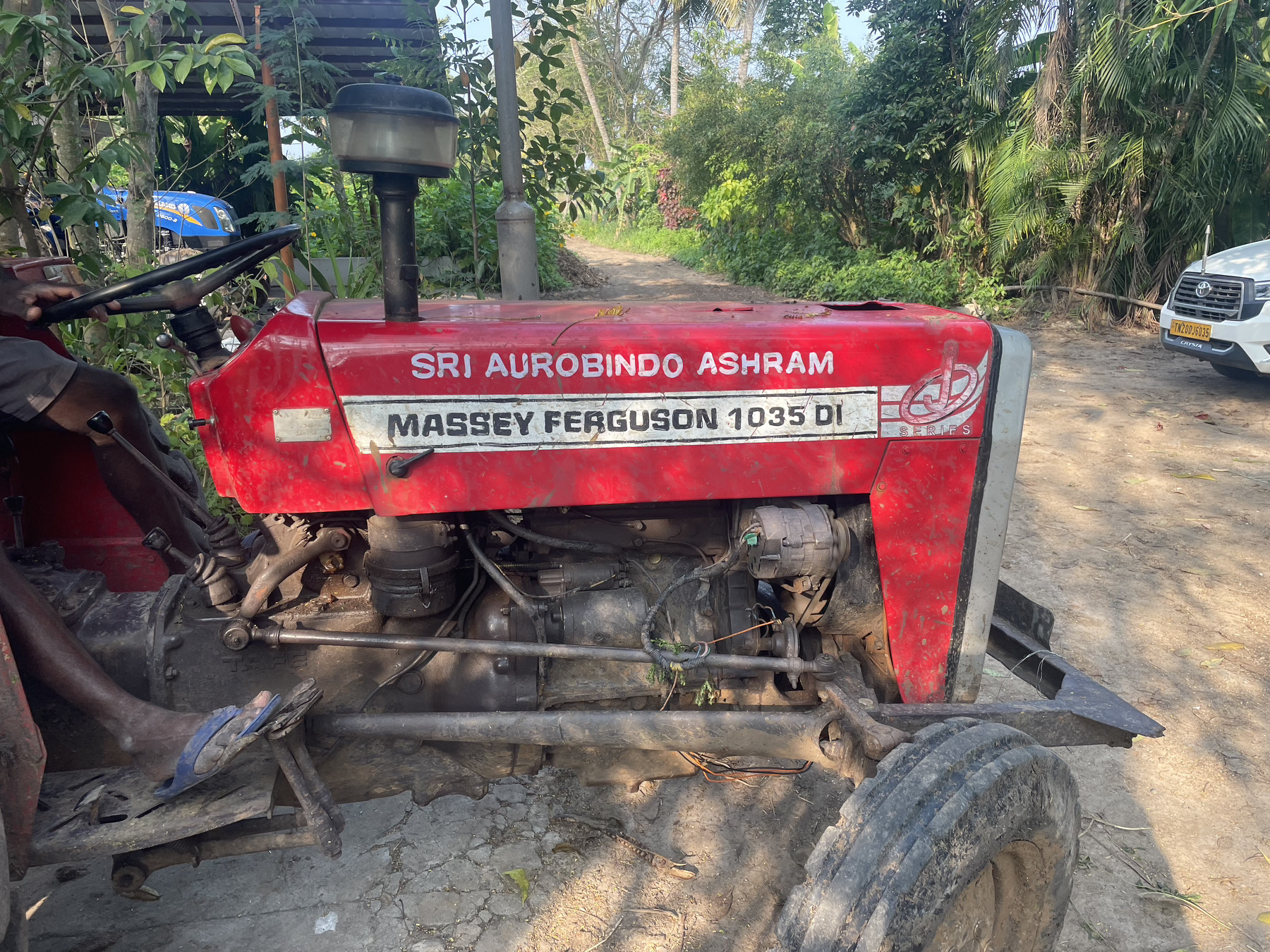
Cows Space: good space and stall availability, Resting: slightly muddy standing area, cows comfortable lying down, Air quality: no ammonia smell, Water: good, Body condition: one or two cows slightly underfed, Feet & movement: no hock lesions, gait ok, Cleanliness: clean udders, Behavior & handling: not very calm handling, not problematic, Infrastructure: functional stalls Annapurna Auroville farm
Cows Space: less stall space than expected, Resting: no resting in stalls seen, Air quality: no ammonia smell, Water: good, Body condition: very well fed, Feet & movement: no hock lesions, gait not checked, Cleanliness: very clean udders, Behavior & handling: slight panic when approached, Infrastructure: adequate but space-limited
Ducks Space: overcrowded, no ability to be alone, Resting: litter not dry, Air quality: slight ammonia smell, Water: bad quality, Feed & body condition: okay, Movement and feet: medium, Cleanliness: feather condition not good, Infrastructure: too small enclosure
Terrasoul farm (chickens), not complete Space: large accessible area, Behavior: appeared healthy, calmness not fully assessed, Infrastructure: cage not finished
For farm animals to live a life that is worth living, and for humans to eat good food, there must be a harmonious relationship between animals and humans. This means knowing our farmers and the conditions under which animals are raised. Practically speaking, occasional consumption of animal produce (manure, eggs, hunting/emergency slaughter, and milk although milk is almost impossible to take non-cruelly from the cow!) will be the main viable way domestic farm animals can continue to exist. At the same time, domesticated animals, humans included, tend to be especially sensitive and are capable of forming deep and lasting bonds. For these two reasons, the only real justification for the existence of domestic animals, compared to having nature take back over, lies in a genuinely respectful and harmonious relationship between humans and animals. So far this has been rare.
If such a relationship cannot be achieved then dietary ahimsa becomes the only heartfelt option. This choice would also mean accepting the eventual disappearance of most domestic animal life. Two things I don’t stand for. Whether one is motivated by a heart for animals (also those held for manure for plants), personal health, environmental responsibility, the conclusion is the same: one must personally know and inform oneself about the conditions of the farm from which one’s animal produce comes.
Here are two quotes by a writer who I cherish, that, perhaps counterintuitively, got me thinking about this more: “In all ages there have been people who wished to ‘improve’ mankind… To call the taming of an animal “improving it”, sounds to our ears almost like a joke. He who knows what goes on in menageries, doubts very much whether an animal is improved in such paces. It is certainly weakened, it is made less dangerous, and by means of the depressing influence of fear, pain, wounds, and hunger, it is converted into a sick animal. And the same holds good of the tamed man whom the priest has ‘improved’”
“We have altered our standpoint. In every respect we have become more modest. We no longer derive from the ‘spirit,’ and from the ‘godhead’; we have thrust him back among the beasts… now man is the great arrière pensée of organic evolution! He is by no means the crown of creation, beside him, every other creature stands at the same stage of perfection… And even in asserting this we go a little too far; for, relatively speaking, man is the most botched and diseased of animals, and he has wandered furthest from his instincts.” (Nietzsche, Twilight of the Idols, The “Improvers of Mankind”, 2 & The Antichrist, 14)
I now focus on the following, please let me know if I missed something
Space (movement, ability to be alone) Resting (bedding dryness, comfort of lying down) Air quality (ammonia, ventilation) Water (cleanliness, species appropriate) Feed & body condition Feet/Legs (gait, hocks/footpads) Cleanliness (udders/feathers/etc.) Behavior (calmness, panic, flow) Infrastructure (safe, finished)
Auroville Forest Photos
Hei, god dag,
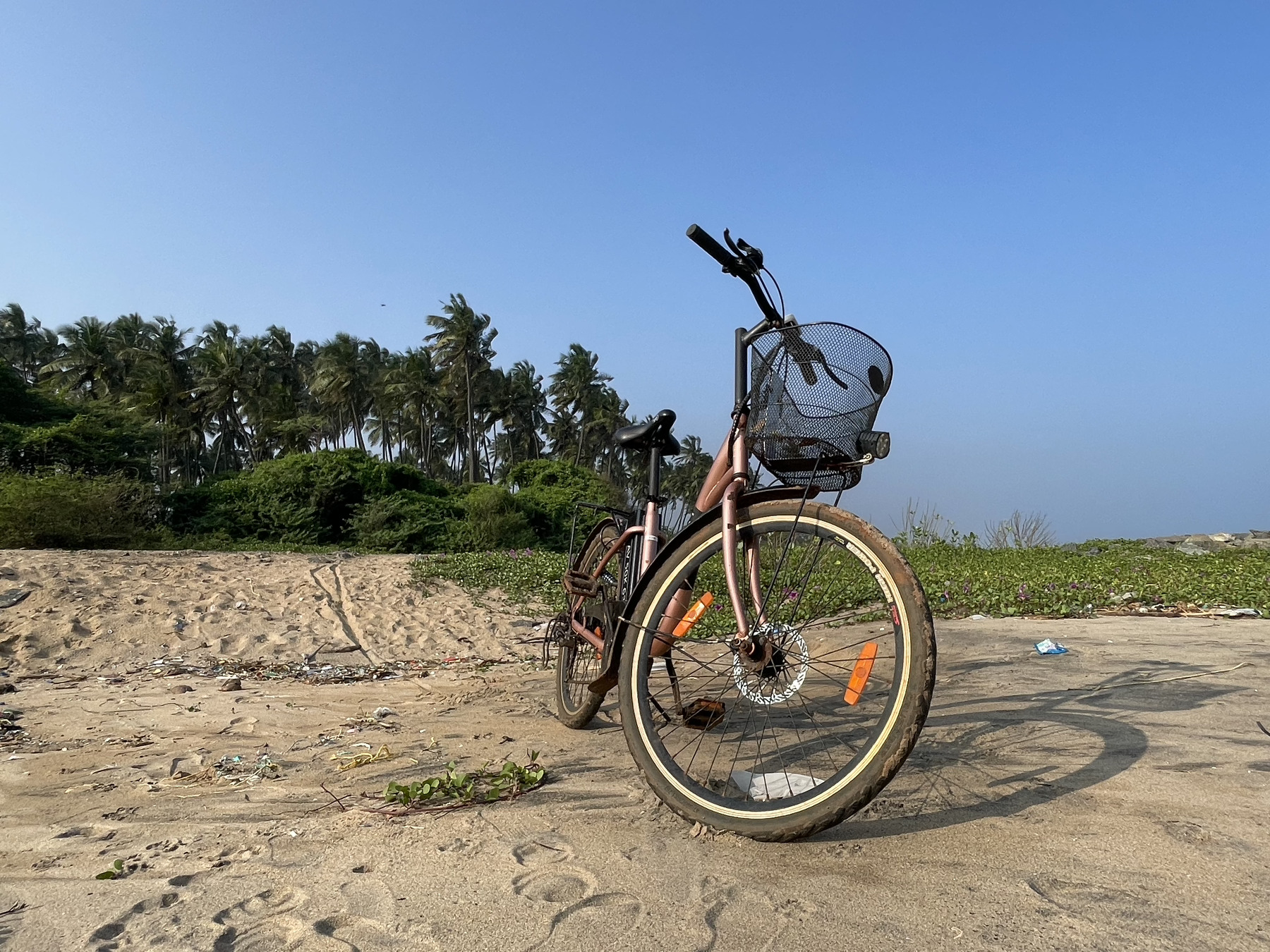
Here is a small photo update. These were taken in the maze of pathways in and around Auroville forest. A forest I traverse every day to go to the Auroville Archives. One of my favourite things to do since I arrived here has been to ride my bicycle through these passages. It leaves me with a powerful calm. Although these photos are of forests, below I added some lines about woods by two writers I cherish:
It was a good place for me; I could lie down on the ground at meals, instead of sitting upright on a chair; I did not upset my glass there. In the woods I could do as I pleased; I could lie down flat on my back and close my eyes if I pleased, and I could say whatever I liked to say. Often one might feel a wish to say something, to speak aloud, and in the woods it sounded like speech from the very heart…
(Knut Hamsun, Pan, p. 41)
I robbed the Woods—
The trusting Woods.
The unsuspecting Trees
Brought out their Burs and mosses
My fantasy to please.
I scanned their trinkets curious—I grasped—I bore away—
What will the solemn Hemlock—
What will the Oak tree say?
(Emily Dickinson, The Complete Poems, p. 24)

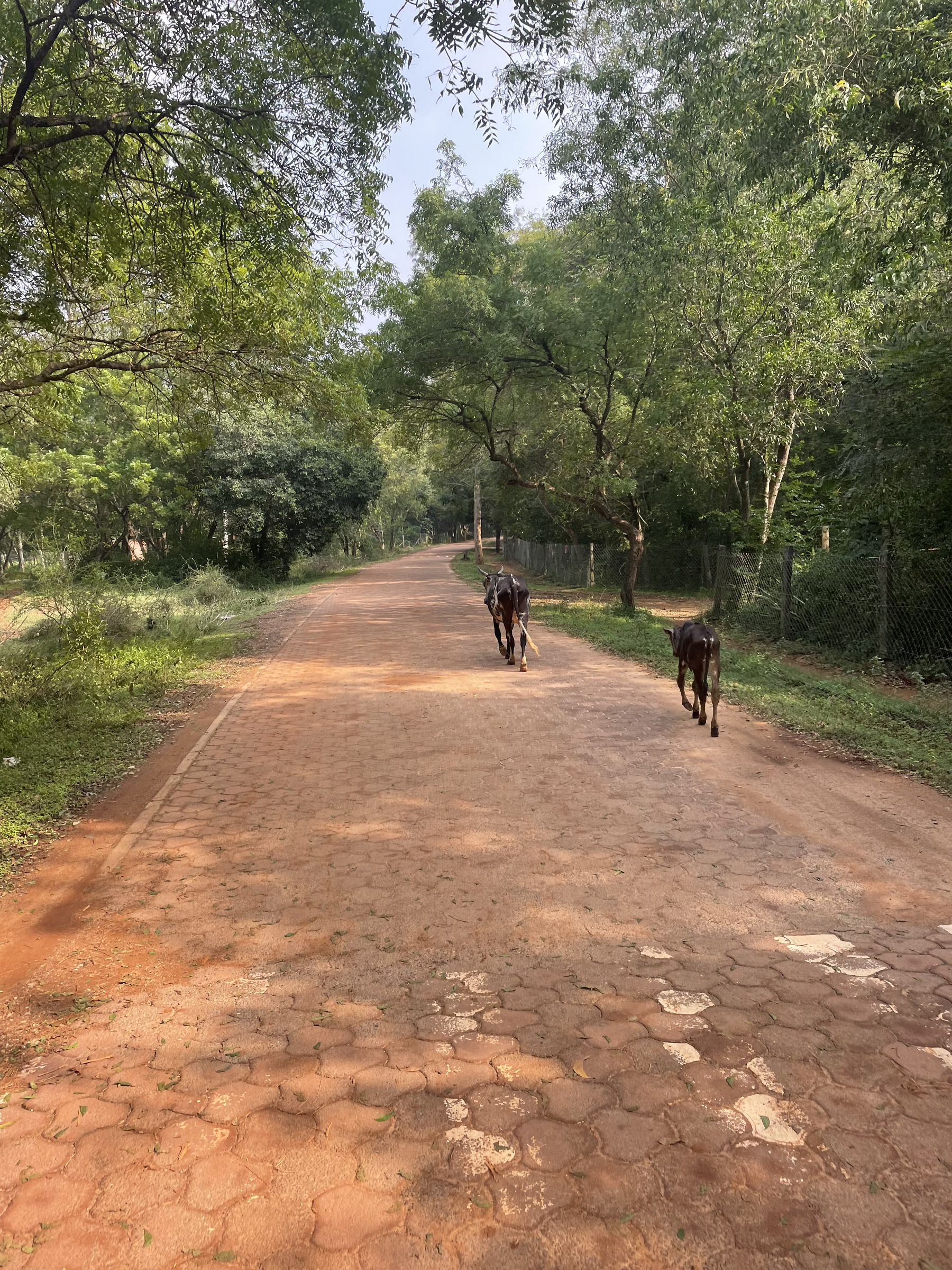
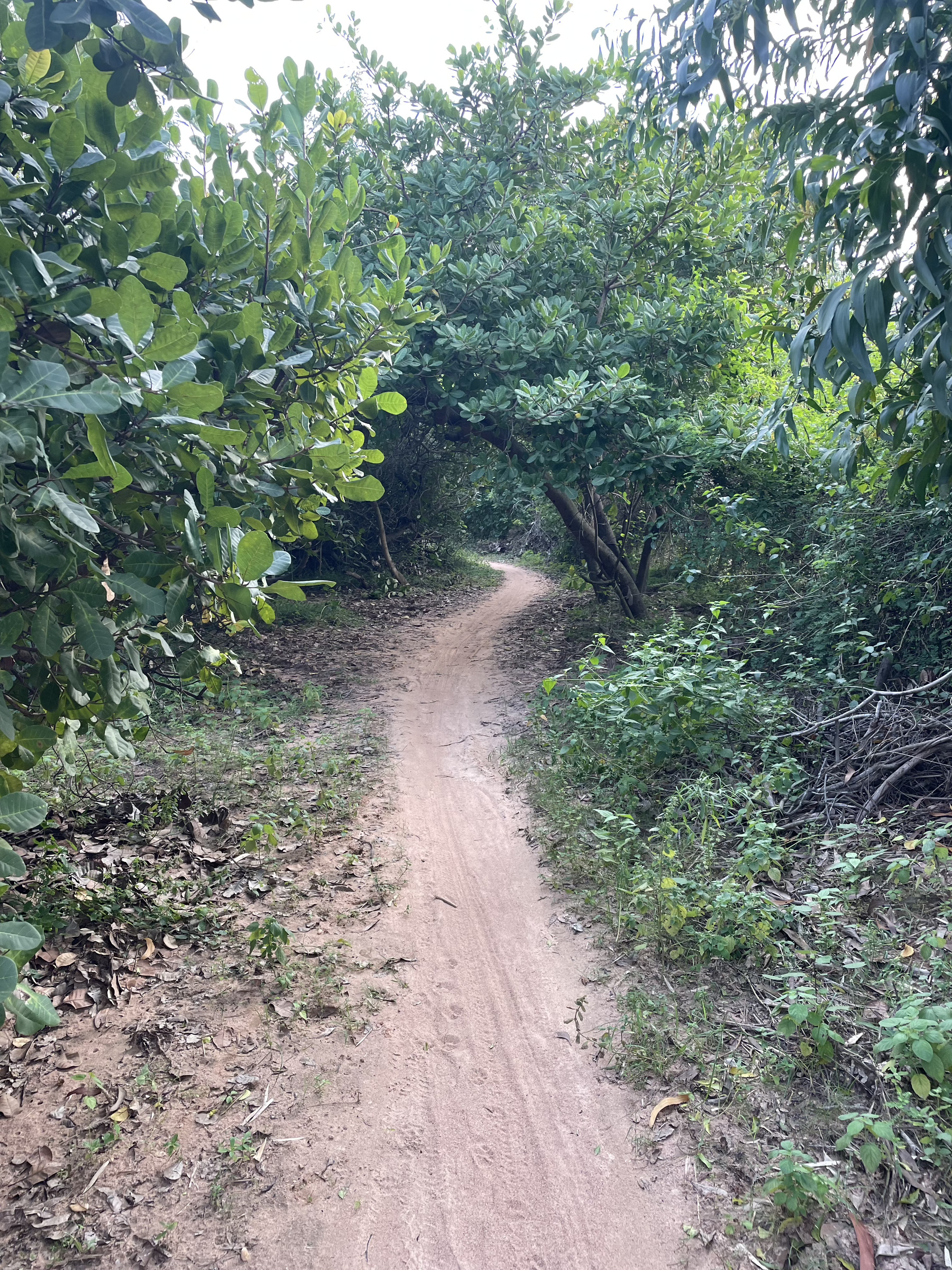

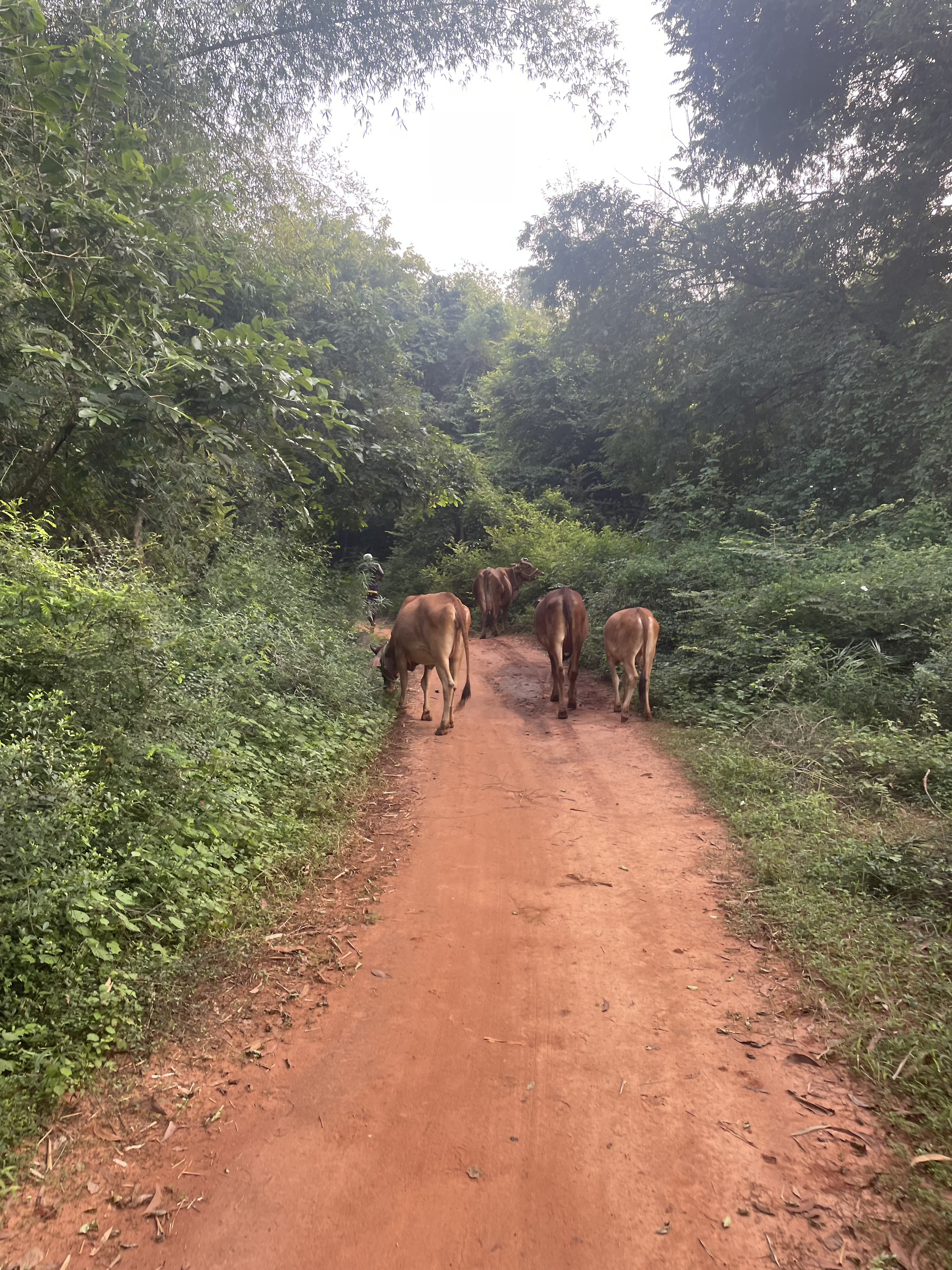
The first goddag letter and the gregarious flowering of the Pigeon Orchid!
Hei, god dag!
In the first two months of archival work I’ve been lucky to meet so many interesting characters and new places. And, since close-ones were asking for more elaborate updates, I thought it’d be nice to start a mini-blog. This will be (hopefully) an update every third day (+book, flower, quote), separate posts on a historical “foundling”, and maybe even random pictures! As I will also do some backlogging, blogs probably won’t be chronological. The goal is to be consistent but I don’t want blogging time to interfere too much with new encounters!
3-9 December 2025
After some truly hectic traveling to get to Pondicherry, the 3rd of December I finally got rest as I checked into my first guest house in the Pondi area: New Creation. The mural pictures are from here. Even though my booking request through Auroville had ended in their spam email, Meera Bhai and the others at the guest house were still ready to give the warmest welcome upon my arrival! There are many dogs, and a few cats, roaming around the wonderful garden with lotus pond. As an Auroville project it also supports a boarding, primary, and preschool in the area, one of them being right next to the guest house.
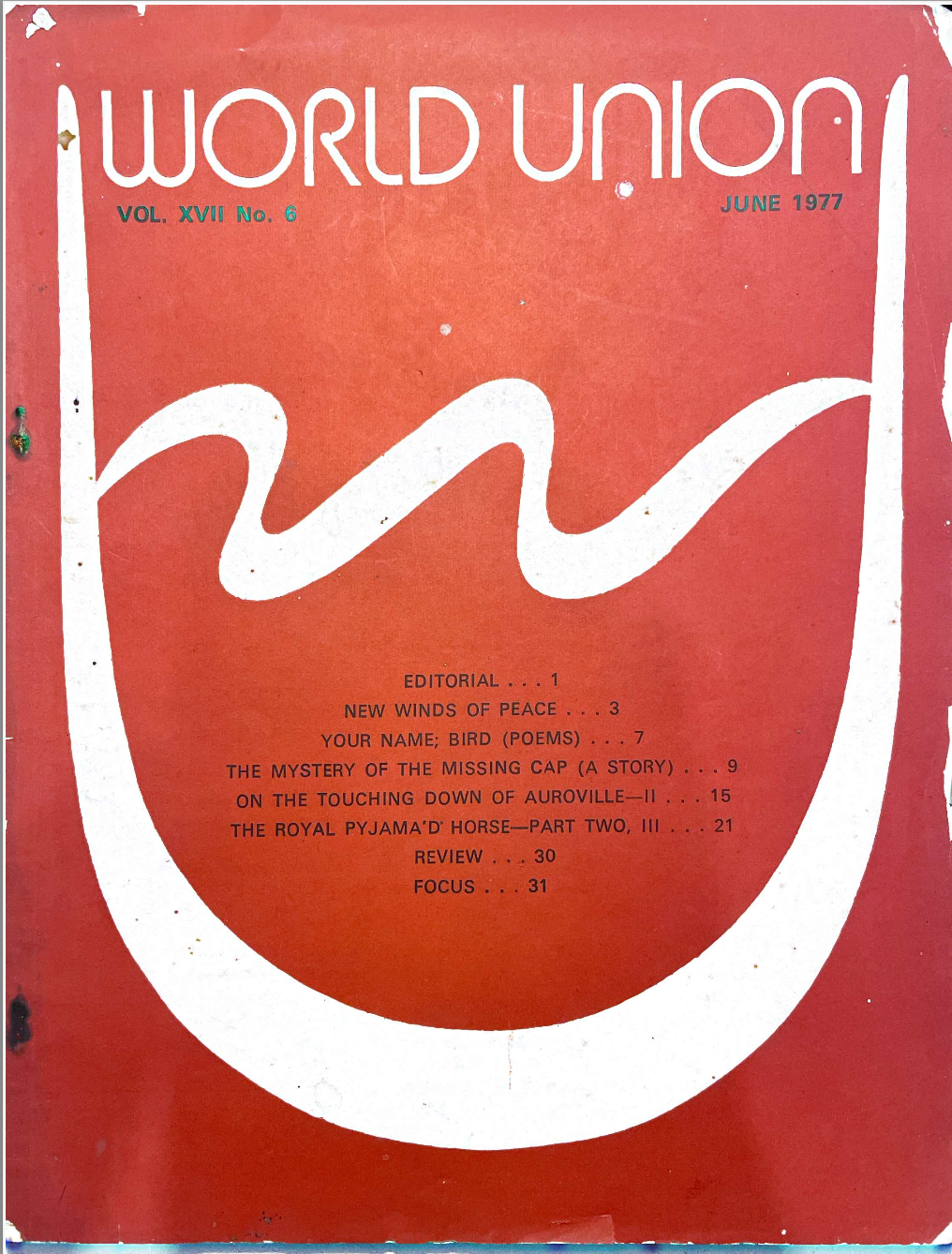
After settling in, getting a Kinisi e-bike, and having some rare quality bread at the Auroville bakery (separate bakery update upcoming), I headed to the Auroville archives to start some work. After a year, I got to reconnect with the wonderful and funny archivist Varun and we almost straightaway found out about the World Union journal, with a lot of relevant information for my research!
Saturday was my first time in Auroville’s golfball, aka the Matrimandir. All in all, the visit felt genuine and refreshing. The many Aurovillians who guide you through the temple are wonderfully diverse, blending 70’s New Age with an almost antique sense of devotional temple service. After a brief introduction, you enter the temple through the East gate and through a spiral stairway go to the inner chamber. The inner chamber is completely white-ish, surrounded by pillars, and has a translucent ball on top of four Aurobindo-styled shatkonas, through the glass sphere sunshine is re-directed by a heliostat on top of the temple. Focusing your meditation on the glass ball in the middle induces an optical illusion where the entire room blackens, and people turn to shadows. For the rest of the days, I took it easy, drove around the unending and serene pathways around Auroville on my bicycle, and spent one day at Aurobeach. Thanks to Auroville’s openness, I got to know a lovely French couple over my breakfasts at the kitchen, a witty Russian lady who is also working at the archives, and Uma who created Upasana!
A book recommendation from my reading on Aurobeach is H.G. Wells’ The World Set Free. It is a chilling yet hilarious prediction on the potential of nuclear catastrophe written in 1913, a time when atomic bombs still seemed a total fantasy to many!
Just now I saw Meera Bhai standing with a flower, which her friend gave to me. It is a Pigeon Orchid (first photo), a small flower that was probably named as such because it somewhat resembles a pigeon. The funny thing about this flower is that its flowering is “gregarious”, if you’re in need of a refresher on what this means you can read this 1922 paper The Gregarious Flowering of the Orchid Dendrobium Crumenatum.
While I was reading K.D. Sethna’s The Indian Spirit and the World’s Future today in the archive, I found this beautiful line he quotes from Tacitus: “Ubi solitudinem faciunt, paces appellant”, often rendered as “They make a desert and call it peace”, although “desert” could just as well be “solitude”. Sethna compares it to the dead peace of colonialism. Tacitus put the words in General Calgacus’s mouth to inspire courage in his troops, yet the line is also read as a critique of the desperation created by imperial politics. To me, it additionally rang psychologically true of false solitude!


Unearth Kāla #2, The Fri Peace Odyssey and The Aurobindo Ashram
Hei, god dag,
History Foundling #2, 05.12.2025
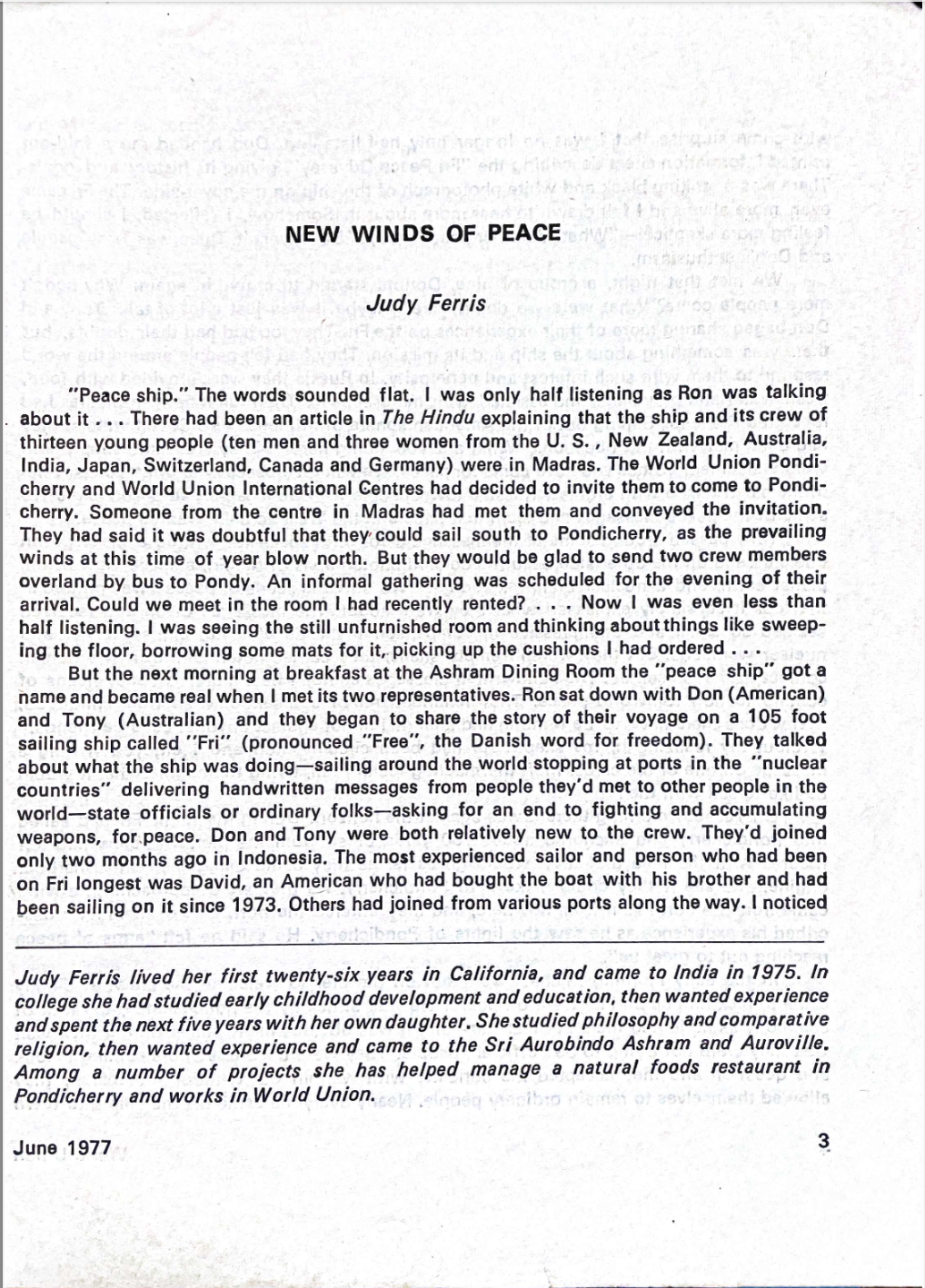
On my third day in the Auroville archives, as I was leafing through the World Union journals, I came across an interesting yet almost forgotten exchange between an anti-nuclear sailing voyage and an Indian ashram. In 1977, Judy Ferris writes about how the Fri Peace Odyssey came into contact with the Aurobindo Ashram!
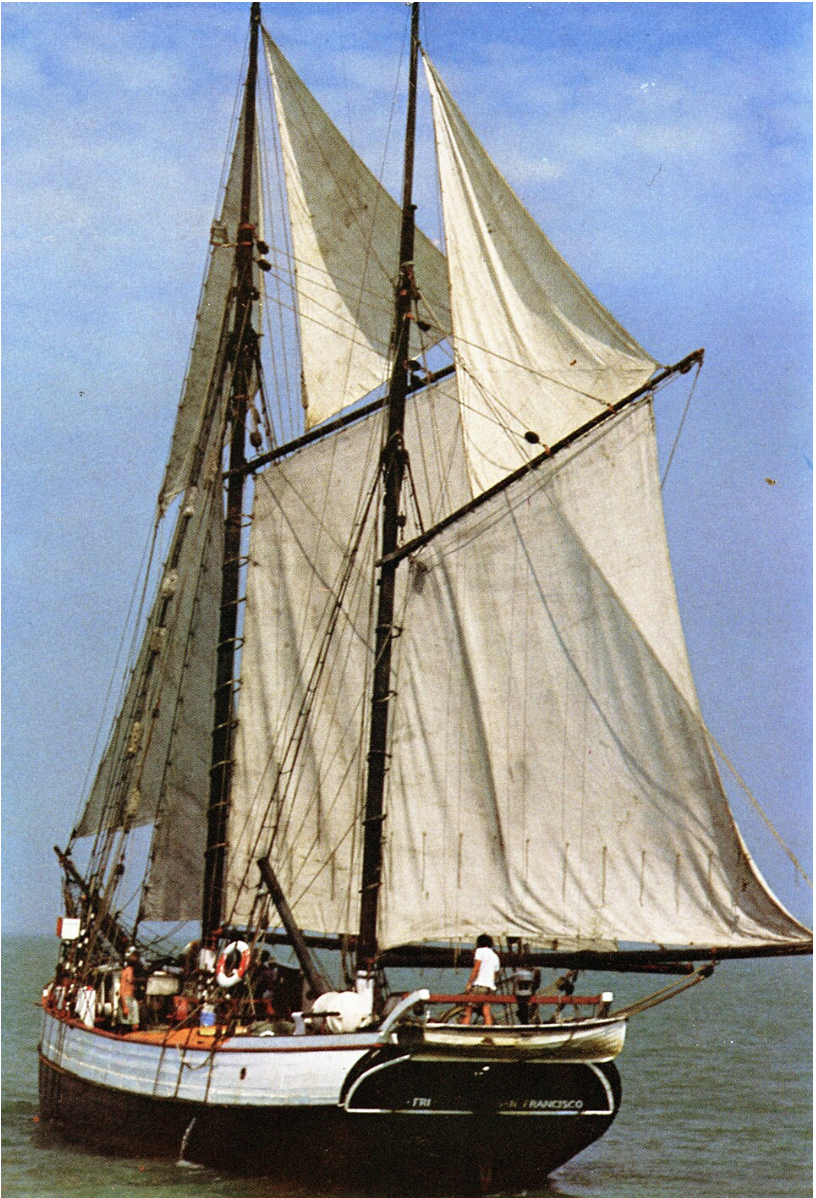
The Fri Peace Odyssey was a flotilla that sailed for three years tens of thousands of kilometers to spread the message of peace and protest the French Government’s nuclear weapons test site at Moruroa Atoll. The mother ship in the flotilla was a ship called “Fri”. This ship had an adventurous life before being part of the flotilla. You can read all about it here: web.archive.org/web/20070… Originally it was a Baltic trader that had sailed until 1968 with coal, cement, and ceramic drainpipes, until it went with beer and whiskey to be part of the San Francisco Maritime Museum, which rejected it, and it instead supplied Native Americans who occupied Alcatraz to focus on their land rights with water and supplies.
In 1973, David Moodie and Emma Young agreed that Fri would be the mother ship of the flotilla to protest French nuclear weapon testing, especially in Moruora. Judy Ferris writes that it had a crew of thirteen young people from the U.S., New Zealand, India, Japan, Germany, Canada, and Switzerland, and that they got notice of the flotilla in the Aurobindo Ashram, as it had boarded in Madras (present-day Chennai). The World Union International Centers and its headquarters in Pondicherry had reached out with an invitation to come to Pondicherry, but the winds did not allow this anymore. Instead the ship sent two of its crew members by bus to Pondy. At breakfast in the dining room of the Aurobindo Ashram she talked with two of the crew members who had recently joined the voyage in Indonesia. They shared positive experiences they had had with the Indian Navy, who repainted their boat, and Russians in the Soviet Union, who were surprised Westerners wanted peace and provided them with provisions and major repairs.
Then on the next morning Fri actually sailed into Pondicherry! They had tried with their harbour engine, but suddenly a northern wind carried them to Pondicherry. The crew members joined in on a “Cercle de Pondicherry” hosted by the World Union organisation. The Aurobindo Ashram provided them with books by Sri Aurobindo, meals at the Dining Room, and their tired bodies with homeopathic treatment by its doctors. A tree for peace was planted at Utilité (and later in the botanical gardens). Some crew members worked a few days in Auroville, and some Aurovilians went on board when the ship sailed off again to Sri Lanka.
Judy finishes her account with the following sentence: “It is the sea that is one unbroken mass touching most all the countries of the earth, and Fri, sailing from point to point on that sea, weaves one more invisible thread to draw men closer together."
I’ll still edit this post if I can find a picture of the peace tree at Utilité or the botanical gardens and/or more information in the Auroville archives on this exchange!
Backlog Goddag Letter, Madurai and Rameswaram, 2 December 2025
With all the good memories of Hamilton still in my head I was dropped off by Siobhan early morning for a long journey to Madurai. After Irish set dancing, nearly two full days of travel from Toronto, and a complete reversal of my internal clock, I felt utterly exhausted when I finally arrived in Madurai.
When my energy returned, I visited the Gandhi Memorial Museum, as I hoped to consult their extensive library. While their website highlights that they are one of the largest libraries on Gandhian and peace studies, it failed to mention that the library was under renovation… The gallery attendant there pointed me toward a temporary library next to the museum. As I made my way over, passing a giant dinosaur, I found a small temporary reading room stocked only with newspapers from recent years. I decided I had to give up on the library and instead checked out the peculiar temporary exhibition. Right beside it, you can still find Gandhi’s ashes, which gave me chills! The rest of the day I hung out at the lovely and open library of the Theosophical Society in Madurai. You can simply walk in, write down your name, and read any old book that’s in their shelves. No questions asked! To me, it seemed they truly took to heart one of my favourite dictums from Harold Bloom: read and write “not to believe, not to accept, not to contradict, but to learn to share in that one nature that writes and reads.”!
The next morning I woke up early to visit the Meenakshi temple before sunrise, to have a calm experience there. The temple corridors and carvings are stunning. The distant glimpses I caught from the Garbhagriha (literally womb chamber, but it’s used kind of in the sense of a Sanctum Sanctorum) and the deities were beautiful. As I was walking down one of the massive, mostly empty, corridors, the rhythms of drums and mridangams heightened and a throng of ecstatic devotees passed by. While temple animals are a common sight in India, I hadn’t seen an elephant provide blessings. This horrid sight of who I think must have been Parvathi chained and having to give blessings throughout the day confirms the unfortunate hypocrisy of animal worship. Although I understand that her eye infection and domesticated life make her unfit for the wild, any sensitive nature would find this state a perversion of religion - der Erde treu.
After some breakfast, I made my way to Madurai Junction to take the train to Rameswaram, another name for Rama-isvaram, “Lord of Rama”. This name hints at the deity of Rameswaram’s main Ramanathaswamy temple: the destructive Lord Shiva. The story goes that Rama prayed to Shiva before he went to war with Ravana, as he was a devotee of Shiva. Upon victory, Rama returned with Sita and worshipped again at Agni Teertham to absolve himself from Brahmahatya (Ravana was a Brahmin by birth). This 12th-century Pandya dynasty temple hosts, it is said, the longest temple corridors of 1.2 kilometers! Nowadays most people visit Rameswaram mostly by land, for example, as a pilgrimage to one of the four dhams. However, until 1964, Rameswaram remained a major transit point by sea, dating back to the colonial era. It used to connect Sri Lanka and India by a famous boat mail service, and operate as a relatively big sea port town. The Hindu reports that Bal Gangadhar Tilak and S. Kasturi Ranga Iyengar took the train, and also mentions the Alavadar Murder Case of 1952 on the train. While the train is still “active”, I took the Amritha Express on the same route. By coincidence, I was reading Savitri Devi’s travelogue L’Étang aux Lotus on the Amritha Express, she was both an Axis spy and a deep ecologist. Her first encounter with India at Rameswaram, like many firsts for travellers to India at the time, is described in it in third person: De toute façon, les préjugés que le missionnaire professe à son égard sont la barrière qui le sépare de l’Inde, à tout jamais.Mais, de temps en temps, perdu au milieu de la foule des touristes, des fonctionnaires anglais, et des gens d’affaires de toutes nationalités, débarque à Bombay, ou sur la plage déserte de Dhanuskodi, un inconnu sans prétentions : c’est un pèlerin… Tout l’exalte, mais rien ne l’étonne, pas même les grandioses corridors, les interminables enfilades de piliers, les immenses porches, incroyablement sculptés, du premier temple hindou qu’il voit de ses yeux, à Rameswaram. However, Dhanushkodi was no longer a transit point after 1964 when a major cyclone hit the area, which turned it into an eerie ghost town at the “last road of India”! At the time I was there, Ditwah was battering parts of Sri Lanka and approaching Tamil Nadu, and Dhanushkodi was already flooded by heavy rains…


Goddag letter, 25 November 2025
God dag,
Writing these notes on my way from Toronto to Madurai… The last days were truly some of the warmest and most welcoming travel days!
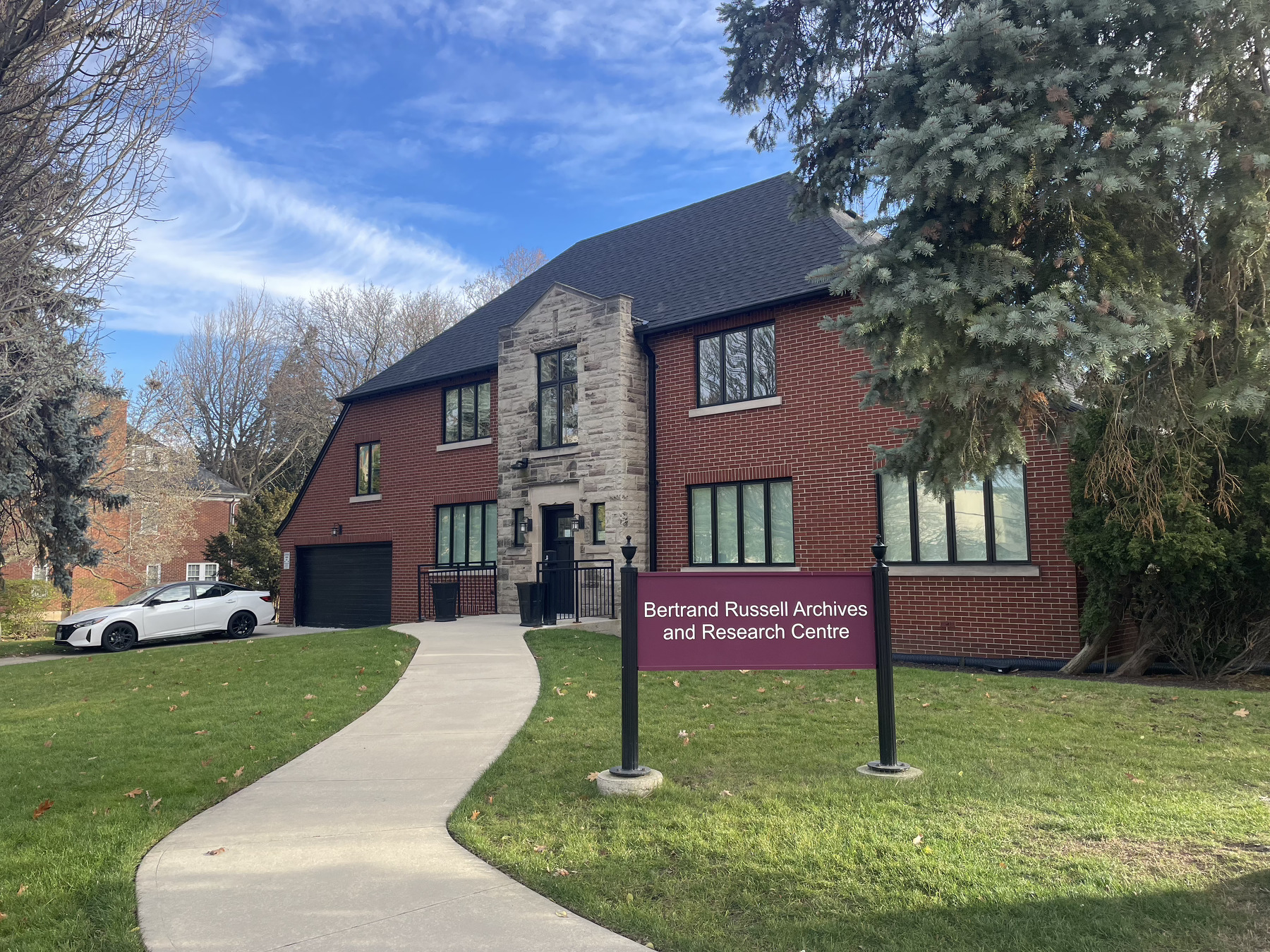
Very early in the morning of 20 November I left Washington DC and Daniele for the Bertrand Russell Archives in Hamilton. No time for lunch, so I quickly snacked on a roasted sweet potato (with me just wondering how this, to me, so Chinese winter snack of 烤地瓜, arrived in Hamilton!). Upon arrival at the archive, I was greeted by the wonderful Bridget Whittle. I felt slightly embarrassed for carrying all my stuff, including my suitcase, into the archive. Luckily there wasn’t anyone else yet except Bridget. Bridget helped me tremendously in getting through the first day of my sources! At some time I got to meet Kenneth Blackwell, who I later found out worked for Russell and was himself present in many archival files too! After closing time, Kenneth invited me upstairs to have a “cuppa” with Andrew Bone, after which Andrew drove me to the family I was staying with for the days in Hamilton.
When I got to opening the front door, I saw James and Siobhan opening a little cage with an almost fluid pup trying to walk his way out of the cage. Soon the new pup would be called Lucy. I was truly beyond tired, but still had to eat. Since Siobhan was driving somewhere, she dropped me at the supermarket, where I got some food for the night.
The next day was another one at the archives with many findings about Julie Medlock, a woman who used to be Russell’s literary agent in the 50’s until a trip to India turned her towards the philosophy of Sri Aurobindo, which she thereafter propagated at the antinuclear Accra Assembly she set up in Ghana.
That evening, Siobhan and James invited me to eat with their friends and daughter. It was such a great night! I chatted away with Rowan, and we sang Prince and Johnny Cash songs over them playing the guitar until late in the night. Saturday I went to the Falls; I drove with Siobhan and her friend there, and the Falls were indeed overwhelmingly beautiful. Sunday to Toronto, where I walked into a massive Christmas parade and had some delicious ramen. At night, the three of us discussed our crazy lives, love lives, and barbershop quartet singing.
Since Monday was already my last day in Hamilton, I had to go through my archival boxes at rapid speed! I think I never made this many scans in such a short time. After the archives closed, we watched some Paul McCartney videos as he played in Hamilton two nights before and Andrew had gone! Then I had promised to cook for Siobhan and James, so I made some Chinese dishes, after which I joined Siobhan and her friends at the first Irish Set Dancing Class of my life, which was wonderful!



Backlog Goddag Letter, Peace History Society and Swarthmore, 16 November
“It’s better if you go to the doctor!” Henrike insisted, as she was preparing to present her conference talk, “A Missing African Peace?”, at the Peace History Society. I really did not want to miss her talk, yet the condition of my body was seriously starting to get to my head. Henrike gave me her phone in case , and I left for the hospital. At the emergency department, I described what I had been dealing with over the past week: how my joints had felt paralysed, my mind split open as if by a sledgehammer, and the constant feverish highs and lows. “It must be malaria” I heard one of the doctors whisper. Internally, I shook my head. The whole situation felt a bit absurd, as it seemed they were there to make me undergo as many medical procedures as possible (for example, an X-ray, which I politely declined) for the sake of “broad screening.” Aside from the astronomical prices, this broken medical system also appeared not to have heard of Dengue or Chikungunya… Though they could not test for what I was hoping for, the results still brought relief. The only things they found were food-poisoning bacteria and broken-down muscle tissue.
I went back to the conference, joined the keynote talk, and afterwards we drove back to our place in Georgia. Every day we made the same drive back and forth to the conference at Berry College. On the way back to our place, we always knew exactly which turn to take because there was a raccoon lying by the roadside in permanent rigor mortis.
The next day, Carolien, Daniele, and I were scheduled to speak in the afternoon. Despite the sickness, I felt a stubborn desire to present my paper. I had come so far from Uruli Kanchan and prepared it, why not do it? The three of us were on the same panel, with Michael Clinton from Gwynedd as chair and commenter. Carolien introduced our project and spoke about Gandhigram, the India–China Friendship March of 1963, and others that highlighted the global character of the peace movement. Daniele gave a talk on peace and decolonization in the Maghreb, focusing on the role of trade unionists, the Comité tunisien pour la défense de la paix, and the (attempted) unity between nationalists and communists. I was content with my own talk too.
That evening, an enormous sense of relief came over me, both because of the hospital test results and because the talk was behind me. We celebrated by having dinner at a Thai place, with a lovely and funny lady behind the counter, and then going to a screening at the international film festival in Rome: Coroner to the Stars.
With the conference behind us, we were meant to make our way to the Swarthmore Peace Collection in Philadelphia. Upon arriving at Atlanta airport, Henrike and I discovered that our flights had been canceled due to the government shutdown. With a rapid change of plans, we managed to get onto another flight and ran to its final boarding call, this one was heading to Baltimore. From there, we took a train to Philadelphia.
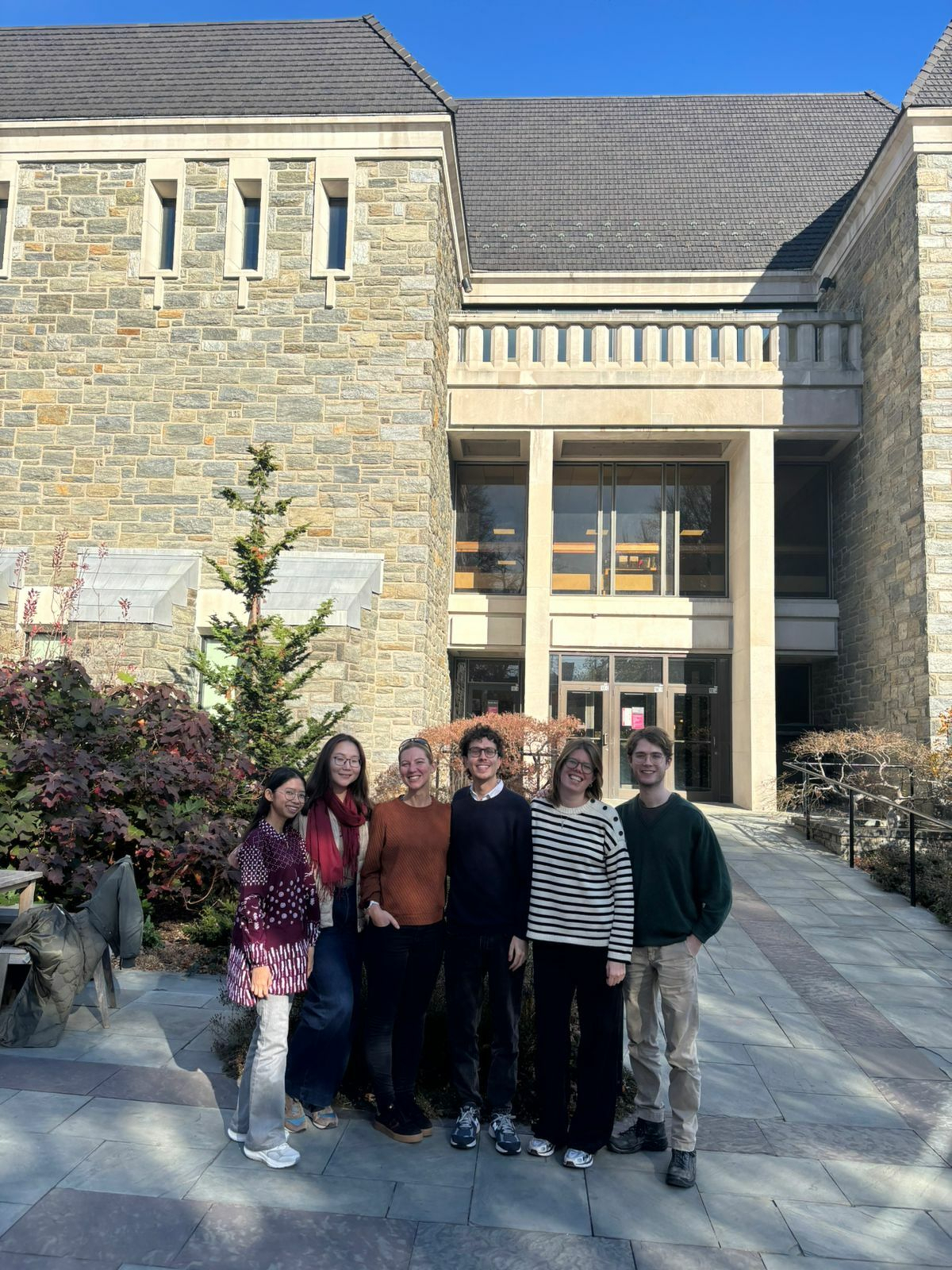
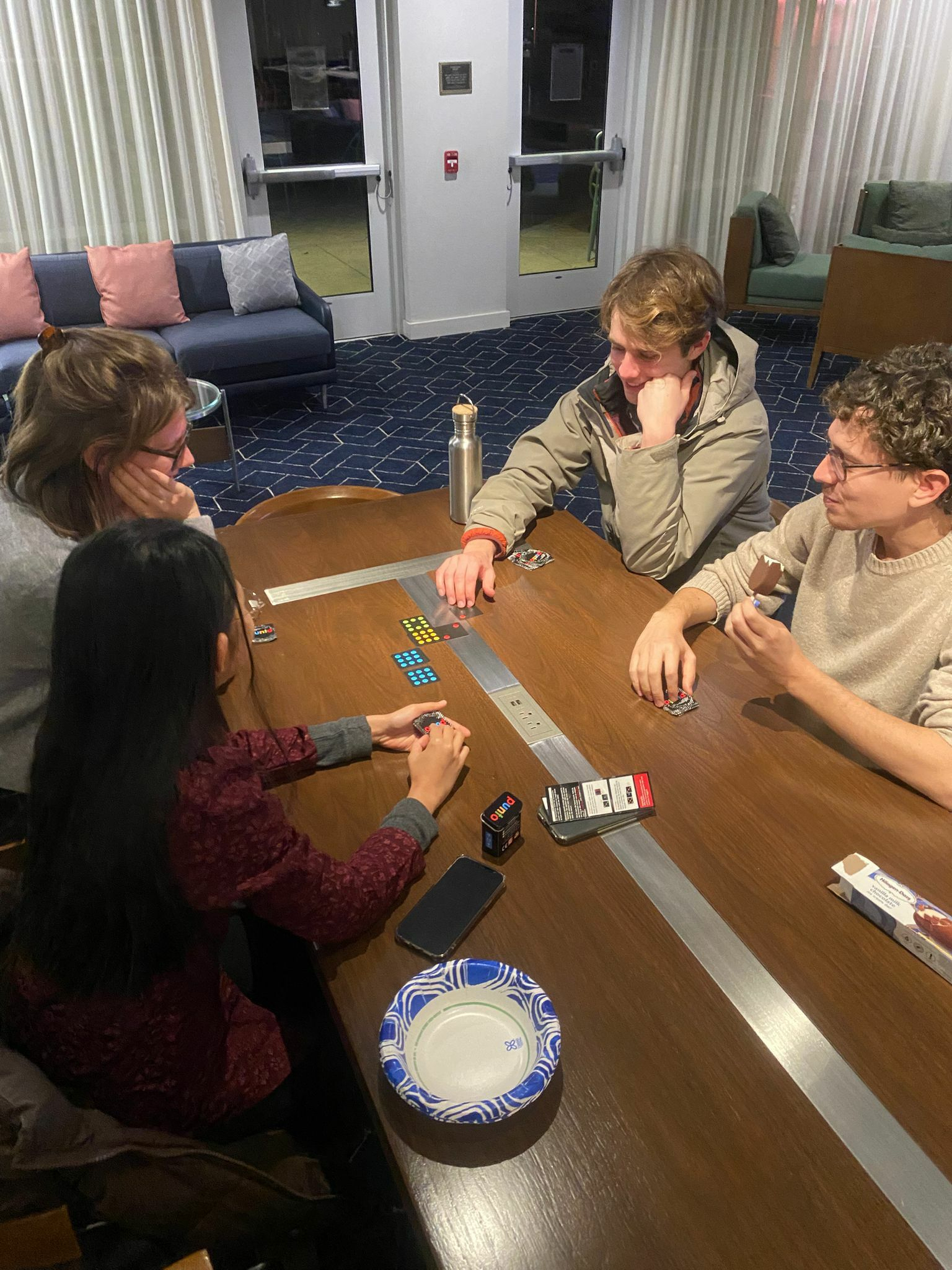
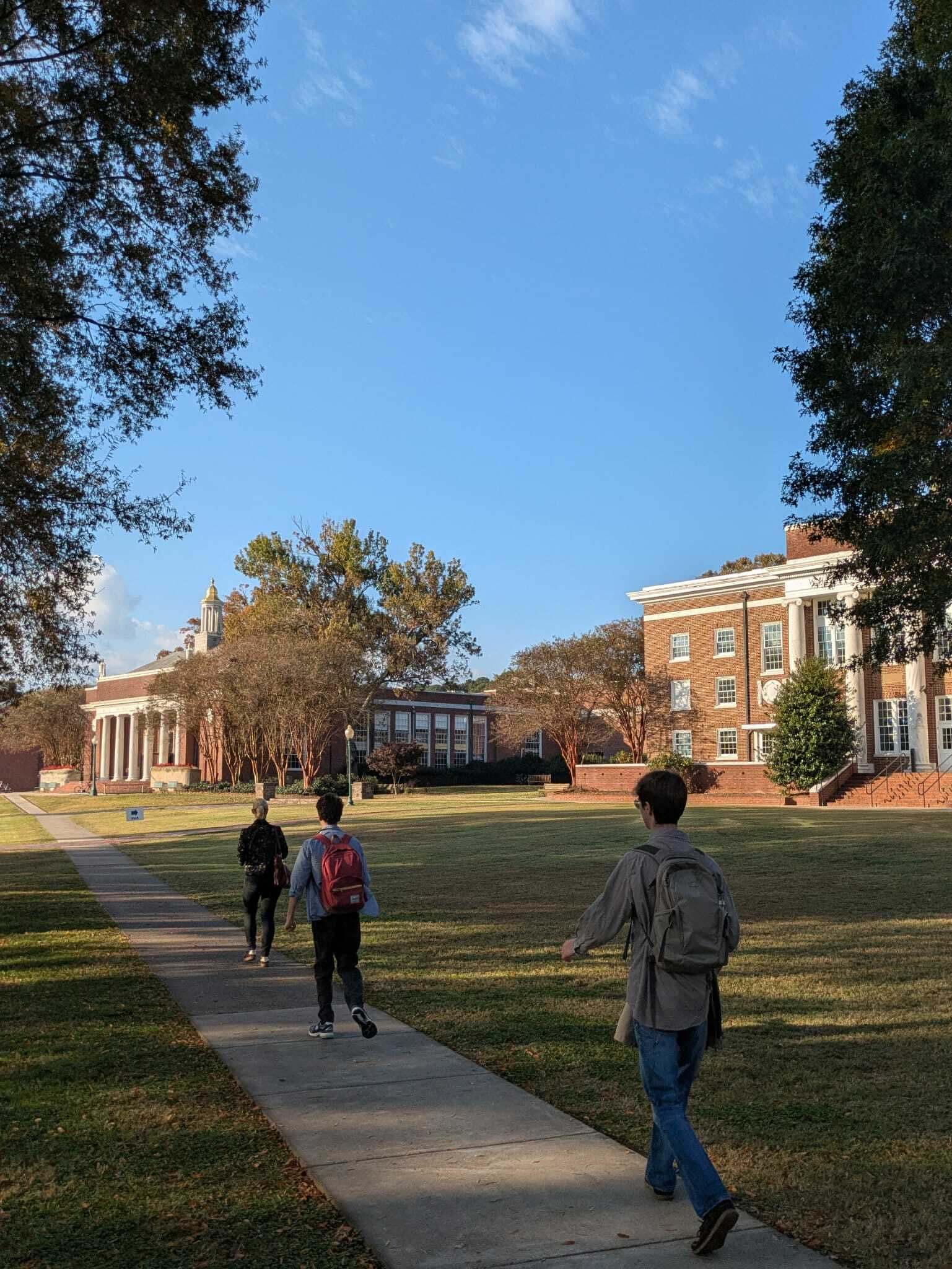
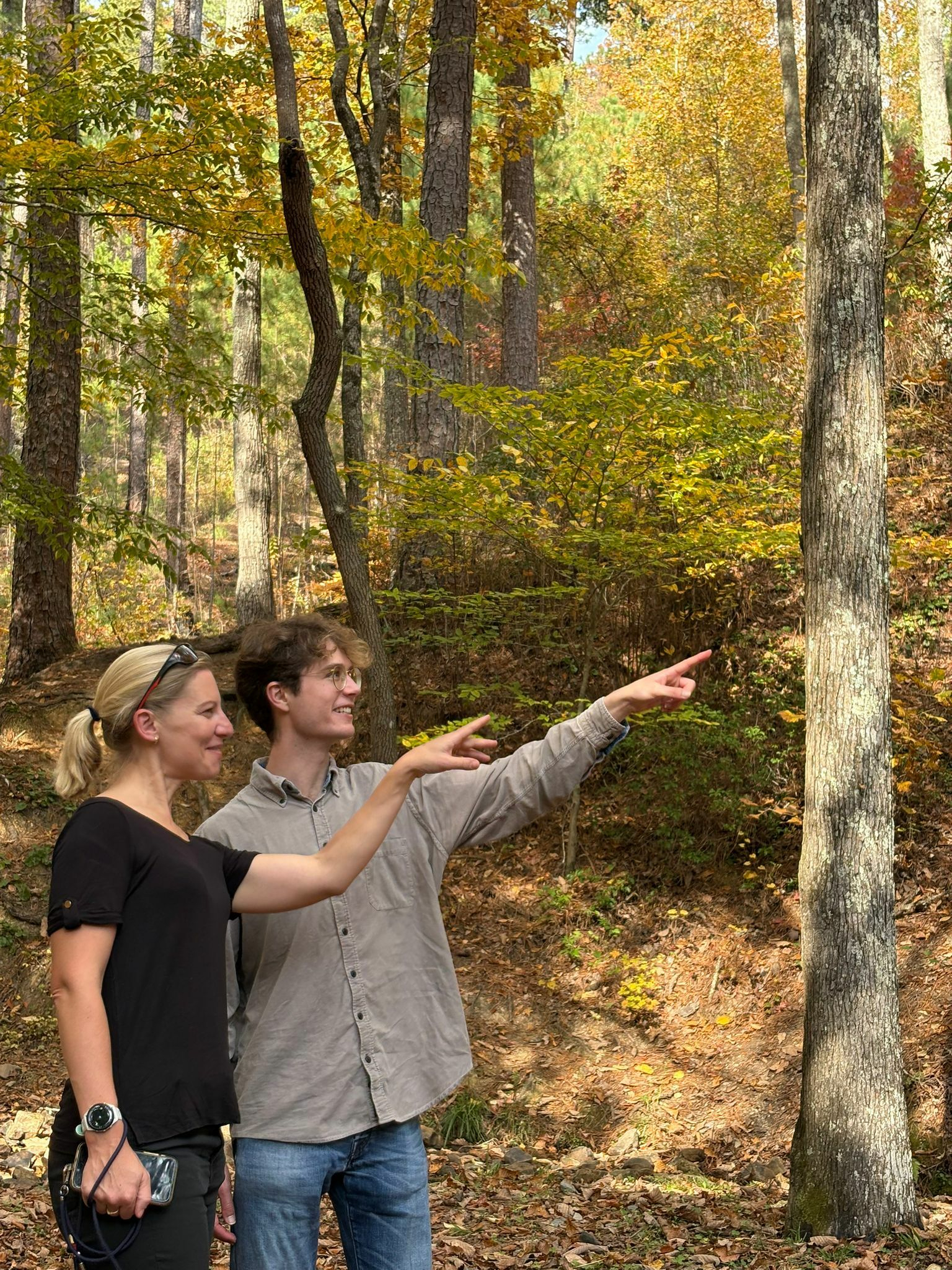
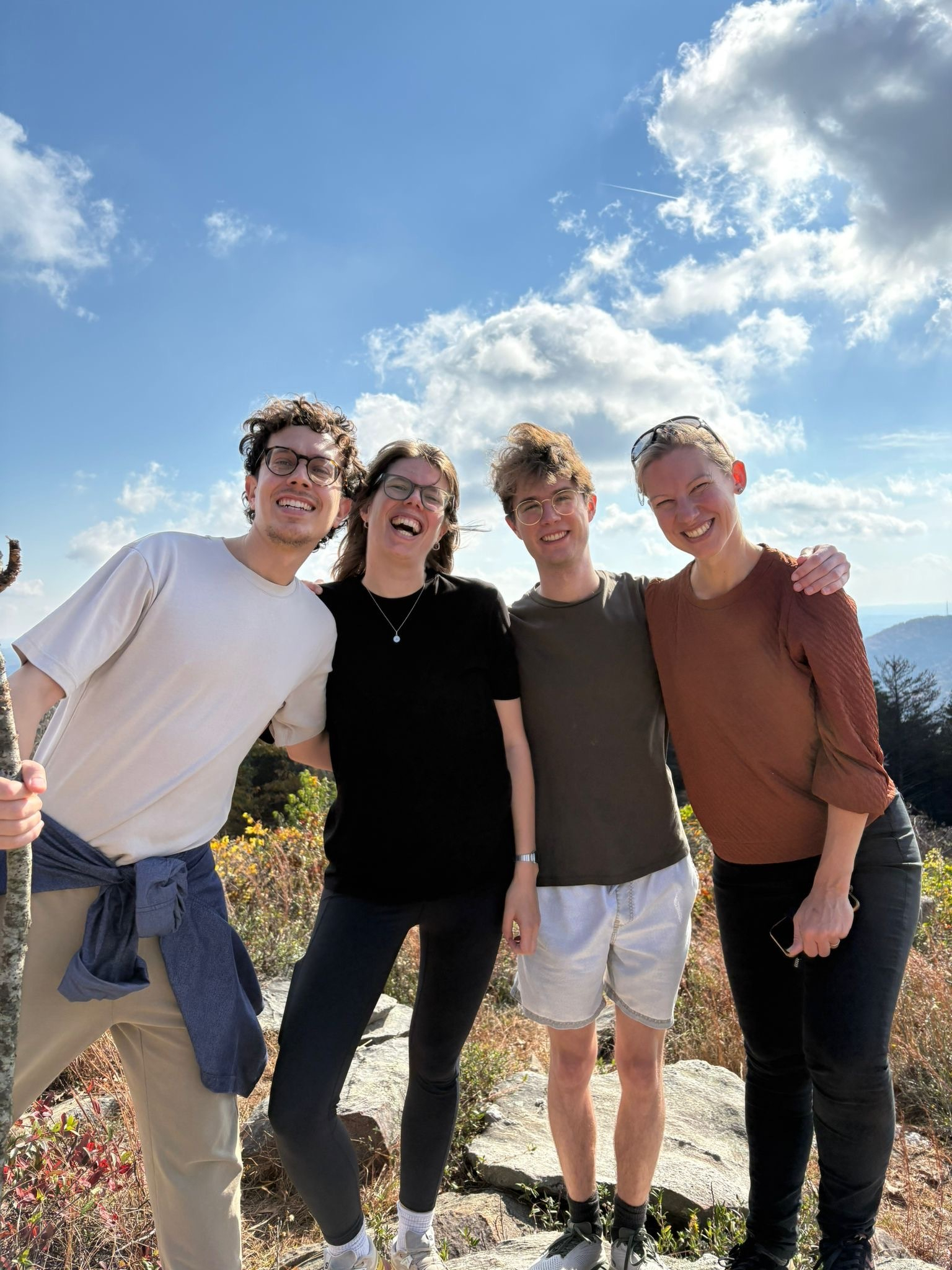
As we walked toward Swarthmore College next morning, with the crisp air blowing into my face, I vividly remember how much I enjoyed being in the USA with our team. The next few days mostly consisted of walking to the archive, working through materials at the Swarthmore Peace Collection, and walking back again. Most days I walked and chatted with Pratika, we share a similar walking speed and sense of humor. On the archive, our entire team agreed that this was probably the most well-organized and well-prepared one any of us had worked in. On the second day, we had a lunch in Swarthmore’s main dining hall (so many options!) together with members of the Swarthmore Archives. Since Daniele and I were heading to Washington DC that Saturday, we decided to visit Philadelphia on a weekday evening. Pratika joined us, and we took a long stroll through the city, followed by a delicious dinner at a Korean restaurant. One evening we also went out to eat with Michael Clinton and Scott Bennett at a Chinese restaurant, then, we ended the night at a cozy jazz café. Finally, a favorite part of the trip was playing Punto with our team in the evening. 🙂

Backlog Goddag Letter, Sabarmati and Nisargopchar Ashram
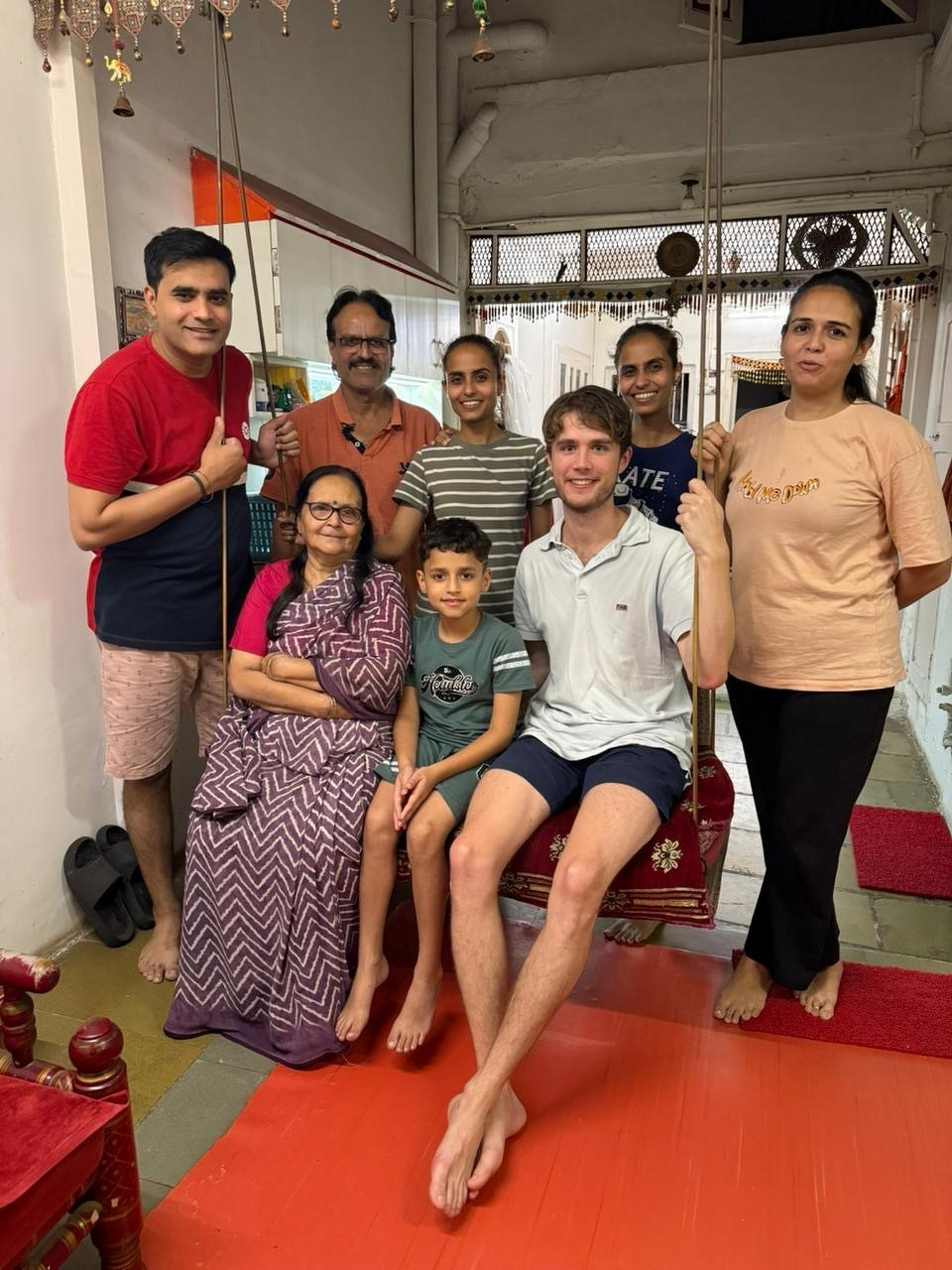
As I stepped into the old yellow house of the Mehtas, I immediately felt part of a family. In the heart of Ahmedabad lives this welcoming and upbeat family. They are a family of musicians, with the twin sisters regularly performing in and outside of India. The youngest is Shivaj, a big fan of Mr. Beast and a lively boy. I couldn’t have wished for a warmer home to spend the last few Diwali days with.
The reason I had come to Ahmedabad was to visit the Sabarmati Ashram. I had reached out to Kinnari Bhatt, but on my first visit she was still out of town due to Diwali. The other librarian held a little suspicion but eventually let me access the books. Though I had a great day of research, most of what I learned came after Kinnari Bhatt returned. She was such a bright mind and a really well-read archivist on the topic of nonviolent naturopathy and land reform. The second day we talked for hours, and she insisted I join them for lunch, which we ate on the floor at the archive. Kinnari shared information on naturopathic nonviolent ashrams across India. Another great find in the library was on Jayanti Thakur, whose autobiography happened to lie in the Sabarmati library. Besides the archive and the library, I spent some time exploring the general grounds of Sabarmati. This was the place from which Gandhi had given his Gita lectures, a series of lectures that explained the Bhagavad Gita as a text for nonviolent Satyagraha. During my MPhil I had spent a lot of time pitting his lectures against Bal Gangadhar Tilak’s Gita Rahasya, so this was, of course, a fascinating site for me to be at.
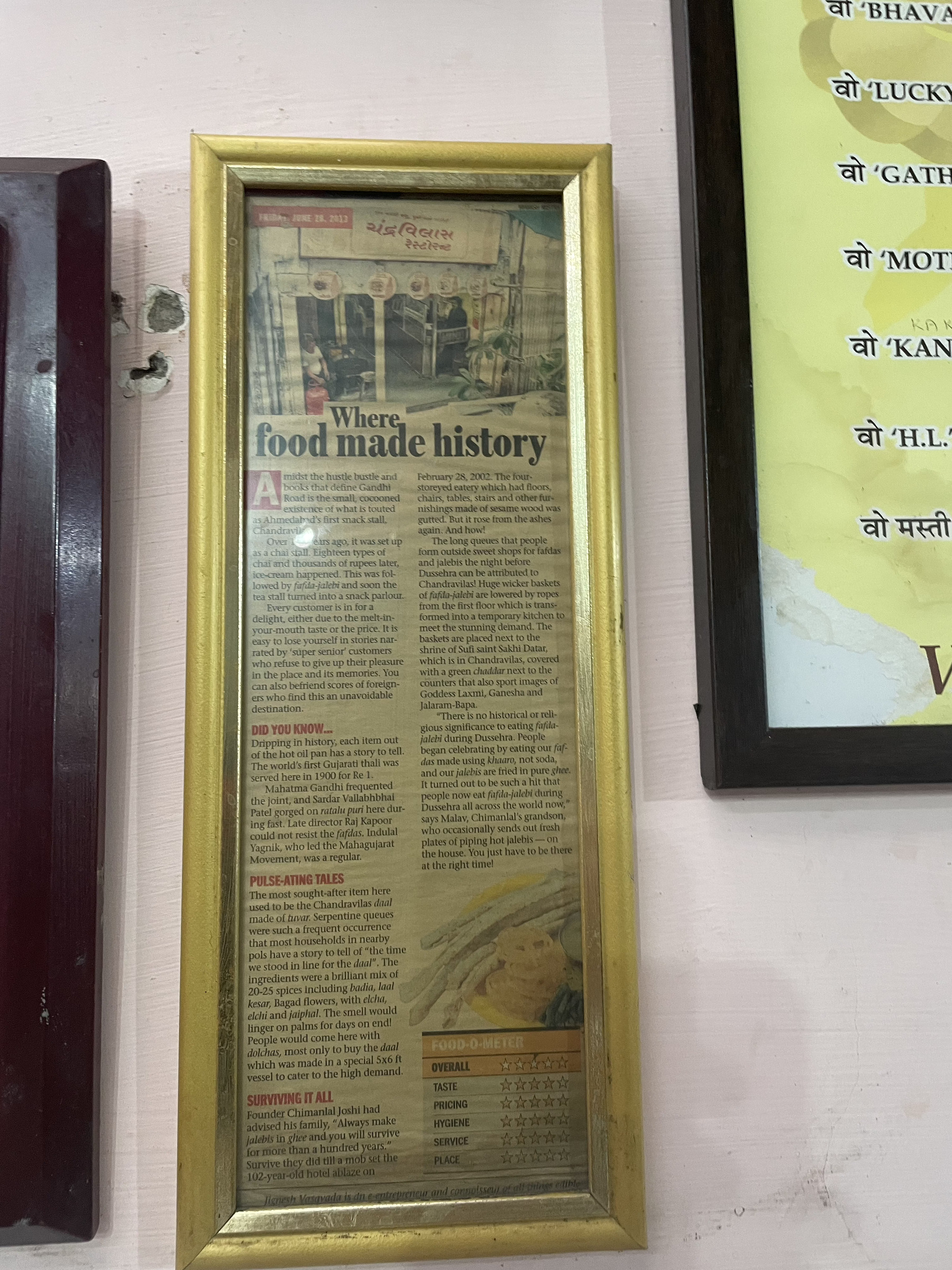
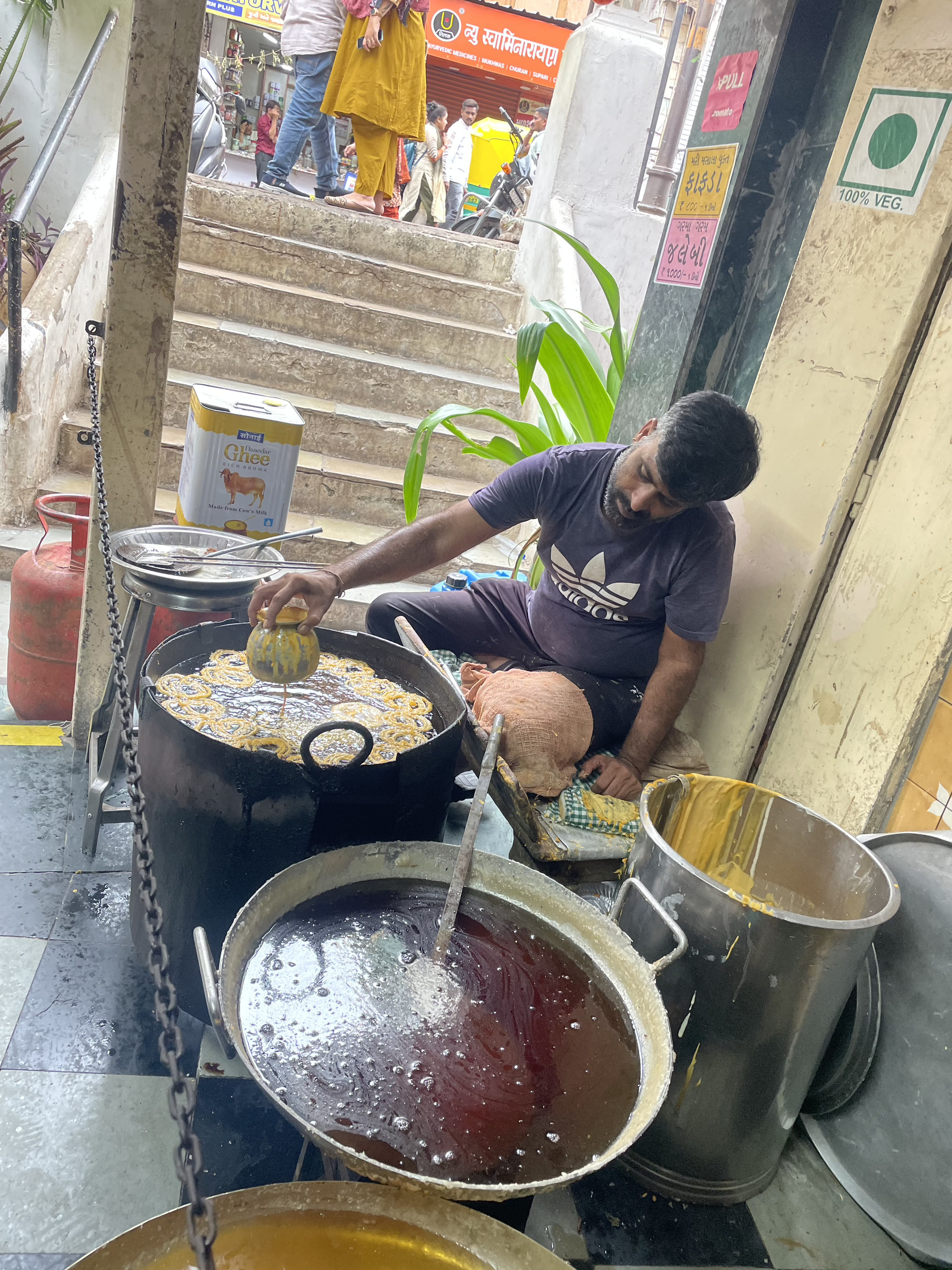
When I wasn’t at Sabarmati, I spent most of my time with the Mehta family or exploring Ahmedabad. Especially the Hutheesing Jain Temple was a favourite spot of mine. In case you’re in Ahmedabad, you should also try out the delicious food at Chandravilas, their fafda jalebi. It is allegedly the place where the first Gujarati thali was served and has had some notable visitors who ate there, such as Vallabhbhai Patel, Mahatma Gandhi, and current Prime Minister Narendra Modi.
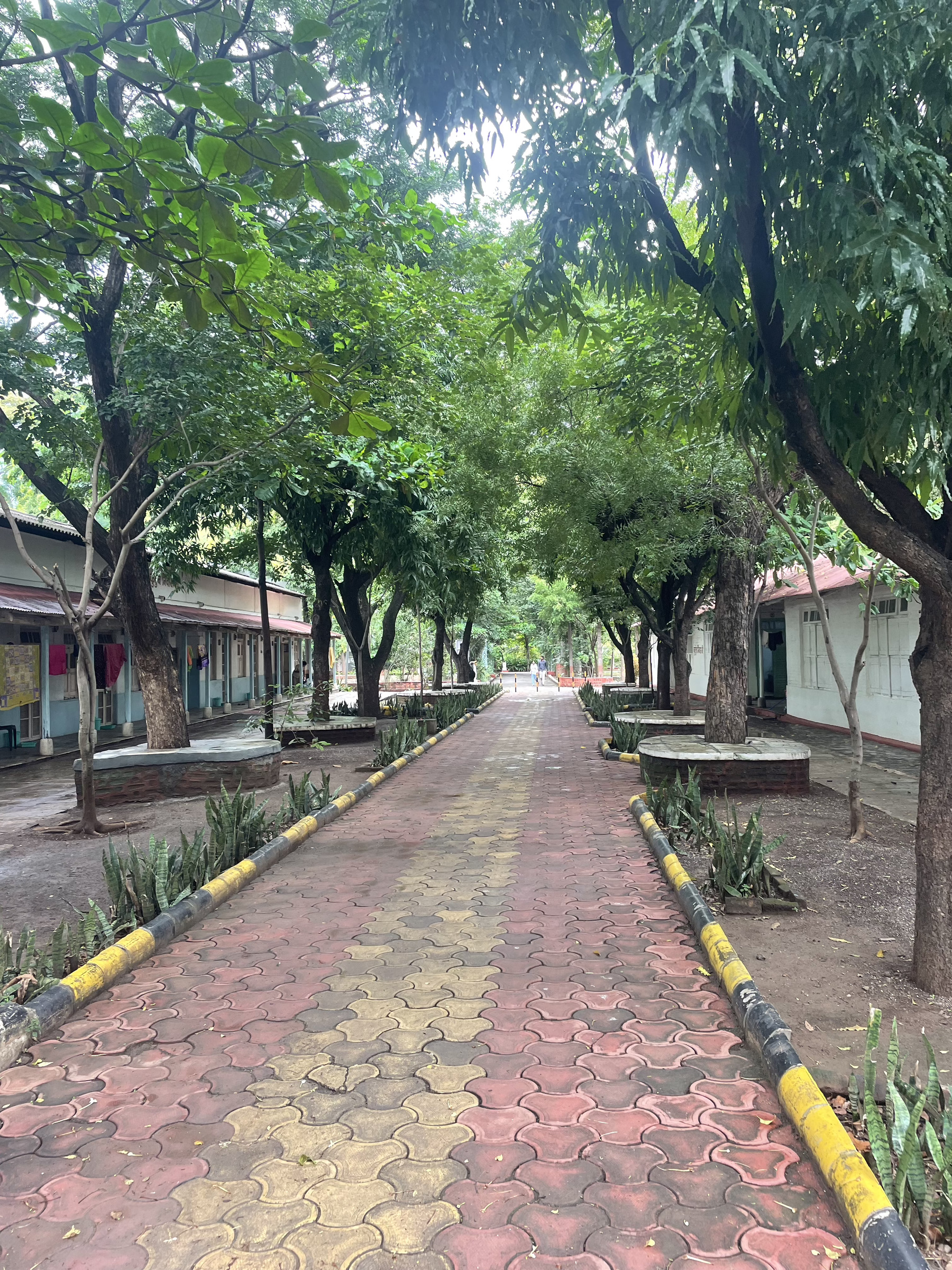
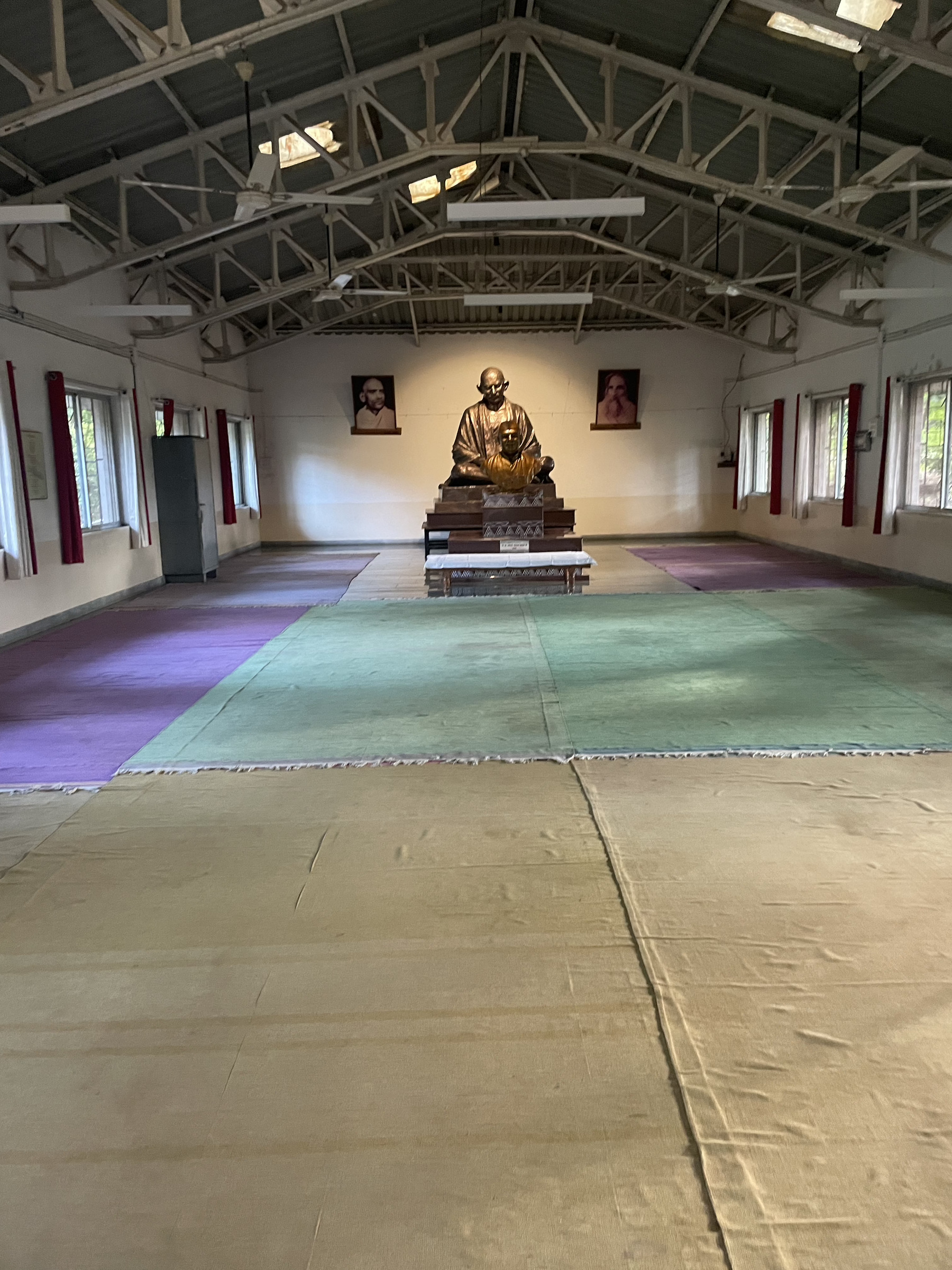
From Ahmedabad I went to perhaps the most crucial nonviolent naturopathic ashram in India: Nisargopchar Ashram. Literally called Nature Cure Ashram, it was started in 1946 by Gandhi and his naturopathic doctor Dinshaw Mehta. After a year, the ashram was managed by evolutionist and naturopath A.K. Bhagwat.
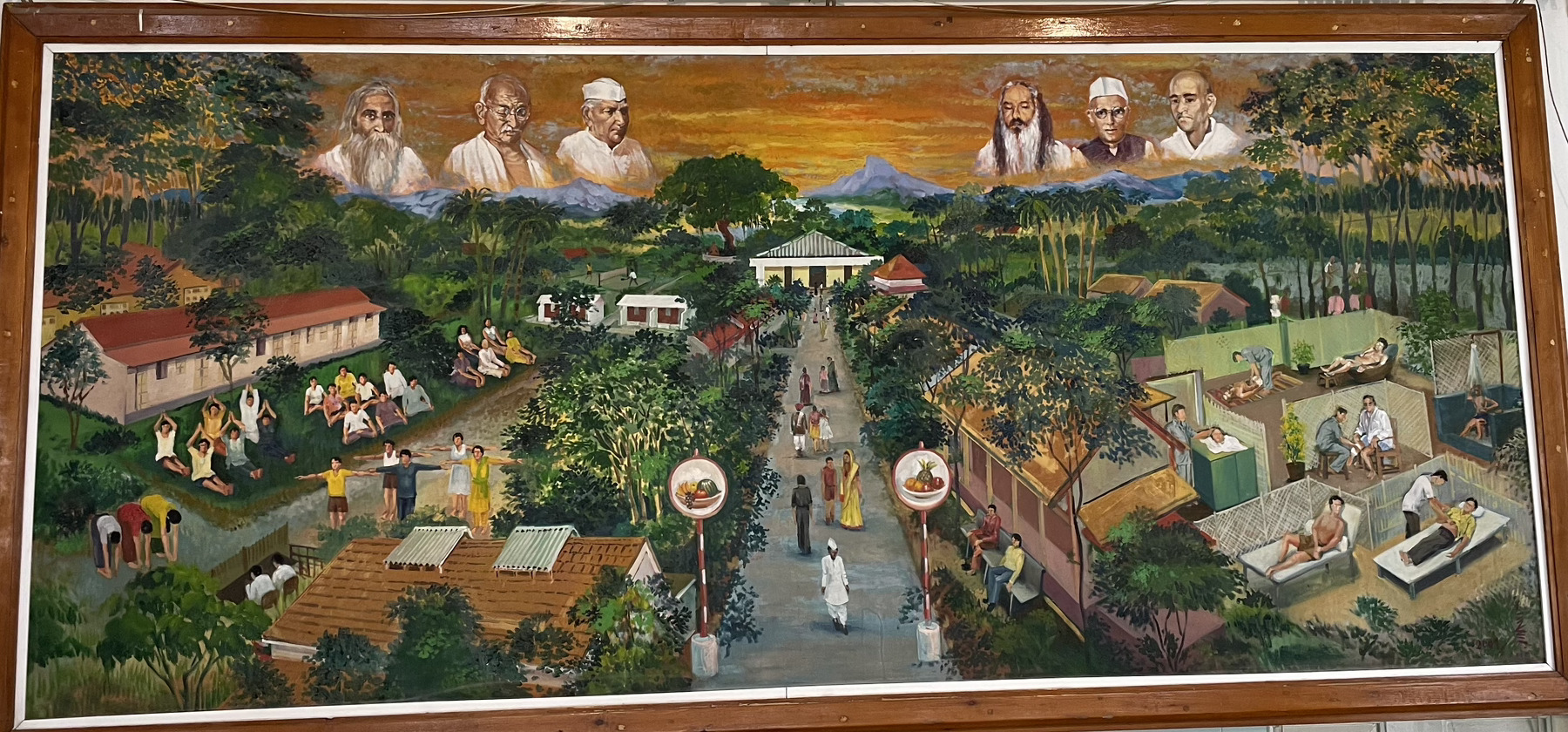
After a super hectic journey, my train to Uruli Kanchan arrived rather late at night. Fortunately, they could still offer me my room. Early the next morning, I returned for “admission.” The naturopathic doctor present established that nothing was wrong with me and that I would follow regular naturopathic treatment. This included mud packs, heat pressure, and a specific ashram-controlled diet, aspects that were once actively used in the nonviolent struggle against empire. As I’ve always been an avid eater, I pushed back on the small meal size and got a double serving each day. The dining hall was a favourite place for me, as I met interesting individuals there to talk with. Above our heads, in the dining hall, there was a big artwork where Gandhi, Vinoba Bhave, Dinshaw Mehta, and some others were overlooking us eat.
Unfortunately, I got terribly sick on my third day at the ashram. I could not stand properly; my joints and muscles were paralyzed, and I had the worst headache ever. Although the doctor thought I had chikungunya, tests showed I did not, now I think it might have been dengue. I stopped reading books on nonviolent naturopathy from the Nisargopchar Ashram library. Instead, I focused only on making my presentation for the conference at Mount Berry and on getting better. Since you are not allowed to exit the ashram unless you stop treatment, I decided to stop and go to Pune for one night to recover. Since I did not have enough time at Nisargopchar Ashram, I am returning this February, so there will be another update coming. The next day in Pune, I would leave for the US for fieldwork with my research team.
Backlog Goddag Letter, Diwali Days, 26 October 2025
My long Diwali celebrations of 2025 had been some of the most memorable and spontaneous days in a while.
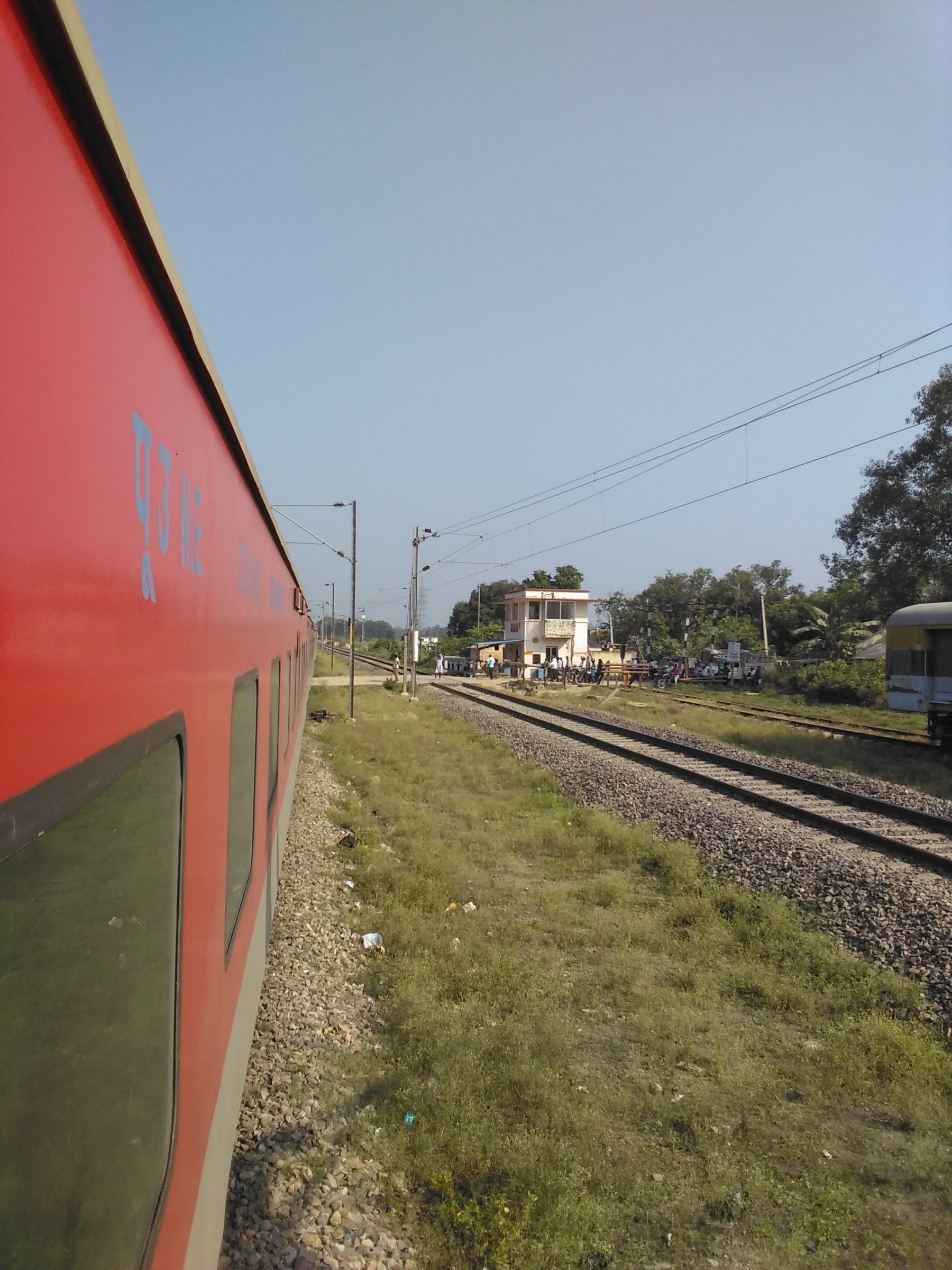
I believe Diwali started early for me, on the 15th of October. After learning, upon arrival at NDLS, that my train to Gorakhpur was severely delayed, I tried to find a calm spot on the platform to pass some time. Walking towards the end of the platform, I found an area with barely any people except for two cheerful police ladies chatting. I took a seat close to them and started reading Kierkegaard’s Purity of Heart. Eventually, the police ladies moved off, leaving room for a drunk old man. He stared intensely at me, far more intensely than the perpetual gaze foreigners receive in India. I just carried on reading. The section I was reading was about maturing and the lack of being able to go further than the eternal:
“For in relation to the Eternal, a man ages neither in the sense of time nor in the sense of an accumulation of past events. No, when an old person has outgrown the childish and the youthful, ordinary language calls this maturity and a gain. But willfully ever to have outgrown the Eternal is spoken of as falling away from God and as perdition and only the life of the ungodly ‘shall be as the snail that melts as it goes.’”
Only seconds after being struck by this passage, Diwali kicked in: a young open guy sat down beside me and started talking. Abhishek was his name. I immediately had a good feeling talking to him. He asked me why I didn’t move away from the drunk guy staring at me, nor the trash right next to me. It hadn’t bothered me too much. Then the old drunk guy walked up to us and asked us for food. I only had my sourdough bread on me, which I shared with him. I don’t think he really liked it… As the man started shivering when eating the sourdough bread, Abhishek told him to stop bothering us.
We sat down a few meters further and exchanged our life stories. It felt surprisingly comfortable chatting with him. He invited me for Diwali to his house, we checked trains, and that was it: I was going for Diwali to Bagaha! We were in different train compartments and would reconnect the next morning. Meanwhile I chatted with Arpita, a wonderful girl I met that booked the same train cabin as me.
Before going to Bagaha, I was doing my research in Arogya Mandir, a health ashram by the revolutionary Vithal Das Modi (this will get a separate blog!).
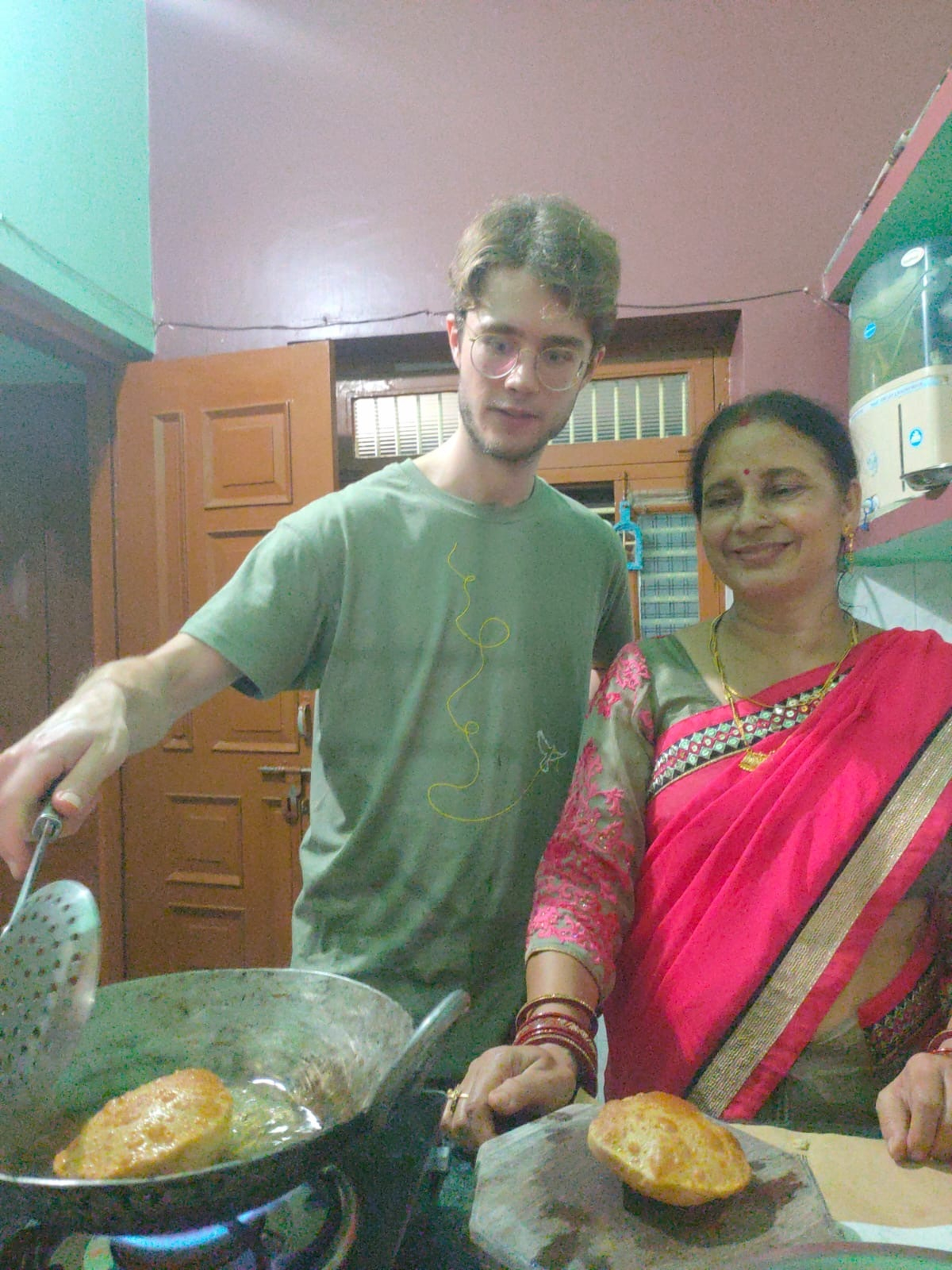
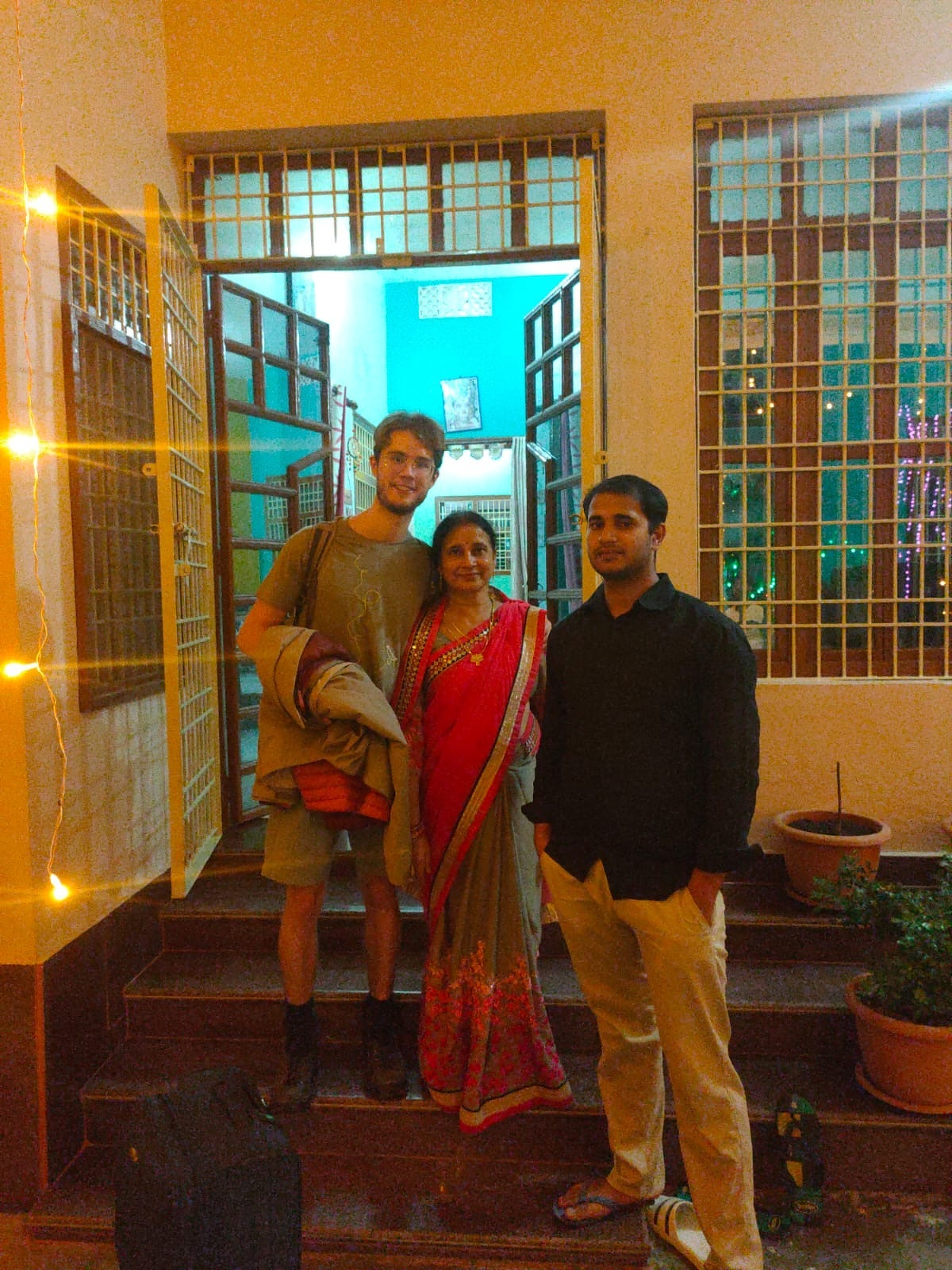
That weekend I went on the Vande Bharat to Bagaha, where I found Abhishek and his father. They drove me to his house. In no time, I had met his entire family, who were lovely. The person who fascinated me most was Abhishek’s grandfather, who was reading the Gita and other smriti books in a little shed in front of the house. He had given all this land that he had bought relatively cheaply from the Britishers, when they suddenly had to leave in 1947… Since he couldn’t pay everything in one go, he even still transferred money after they had long left (unimaginable now!). For several years now, he had fully devoted himself to God. The family and I cooked together, held pujas together, made flower rangolis, lit diyas, and much more. The hospitality was, in every sense, overwhelming.
The next day we explored Gandhi’s ashram, where he began his first Champaran Satyagraha against unfair indigo trade, and then visited some remaining Ashoka Pillars with Abhishek’s uncle. Quite soon I had to leave as I had already booked a journey to Ahmedabad from Ayodhya.
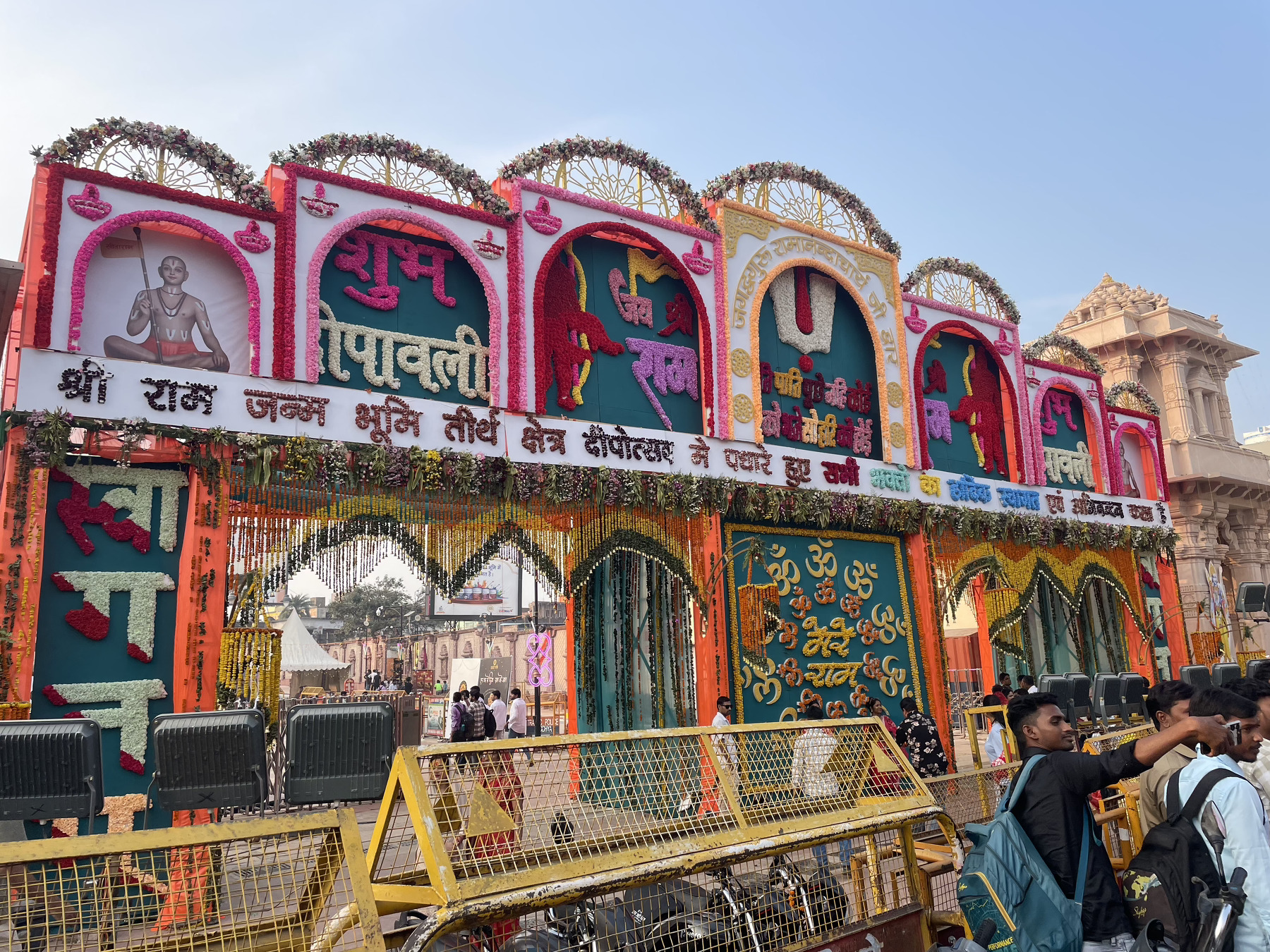
Before arriving at Ahmedabad, I stopped by the new Ram Mandir, at the site believed to be the birthplace of Lord Rama. The Ram Mandir has only recently been officially completed (25 Nov 2025). There had been tension around its construction, as it had followed the destruction of the Babri Masjid in 1992.
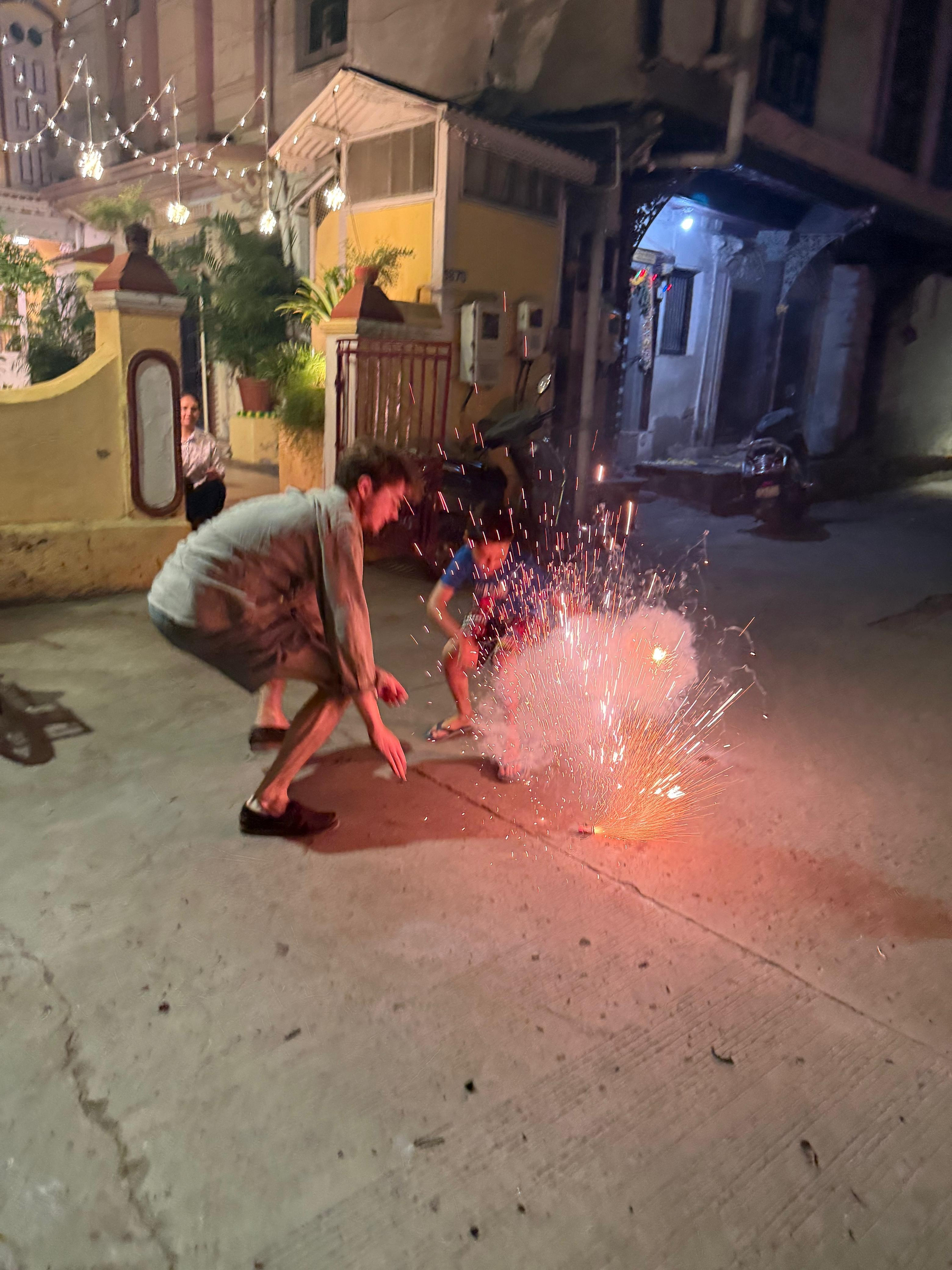
In Ahmedabad I was welcomed in the beautiful family of Jagdip Mehta, a family of musicians who did performances together, and the twin daughters did regular national and international tours. The “heritage home” that they live in is a stunning house that the family renovated around 2008, featuring a 16th-century Italian-designed ceiling in front of the room I was sleeping in! My days in Ahmedabad shifted between visits to the archives at Sabarmati, with its wonderful archivists (separate update!), and time with the Mehta family. We ate together, cracked Diwali fireworks, played card games, and sung devotional songs. Especially the youngest, Shivaj, a big fan of the YouTuber Mr. Beast, was such a lively character with a promising future ahead of him!


Unearth Kāla #1 Queen Huh (?) Memorial Park
Hei, god dag,
This is my first Unearth Kāla Post. I called it Unearth Kāla, because Kāla is a sanskrit term meaning “death” or “time” and I am unearthing dead time here :). In these posts I share notes on things I find out about a place, object, or event that surprise me and I had no clue about before. Maybe you didn’t know it either, and if so, help with your memory so that it is not forgotten…
20.10.2025
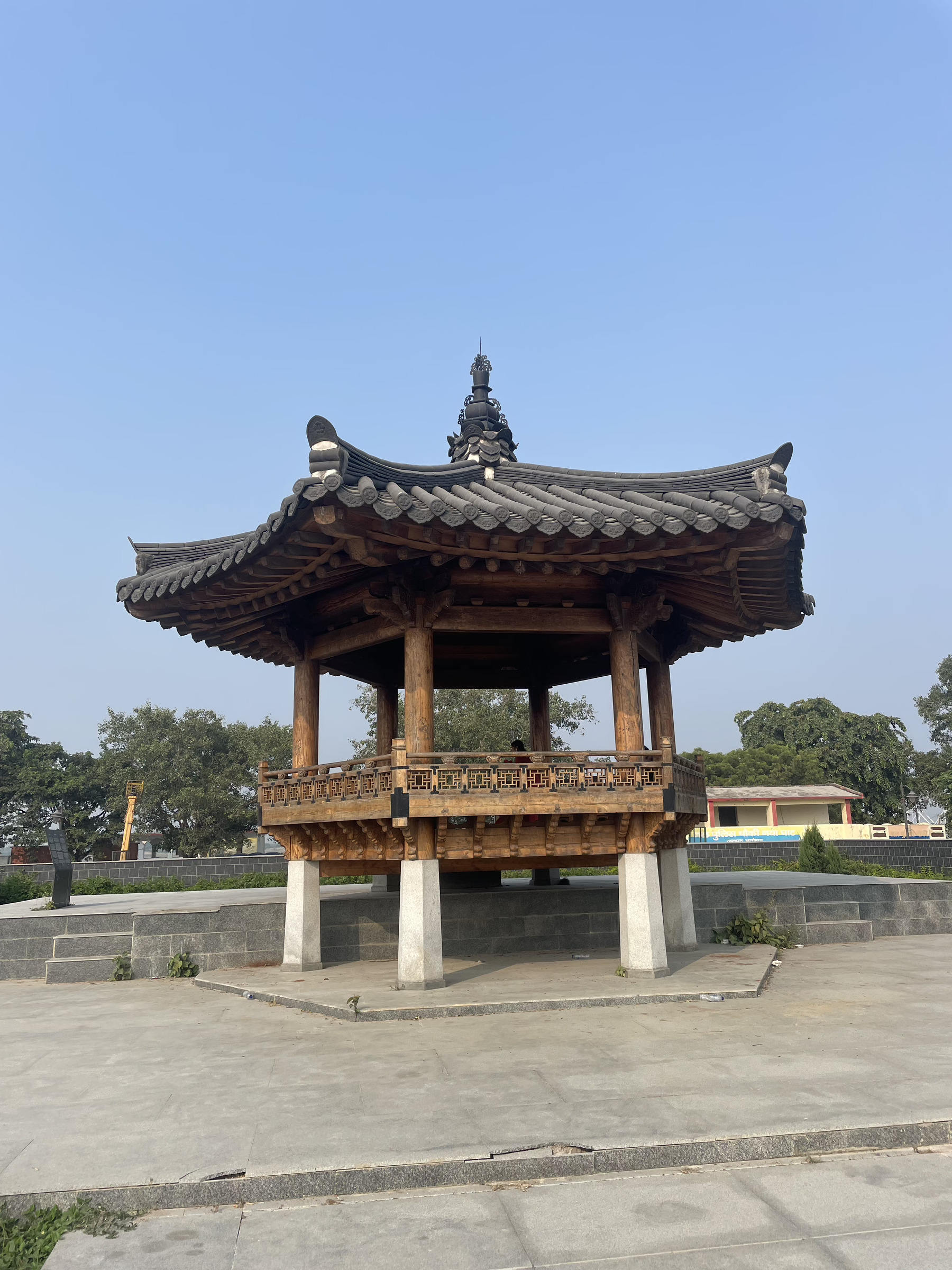
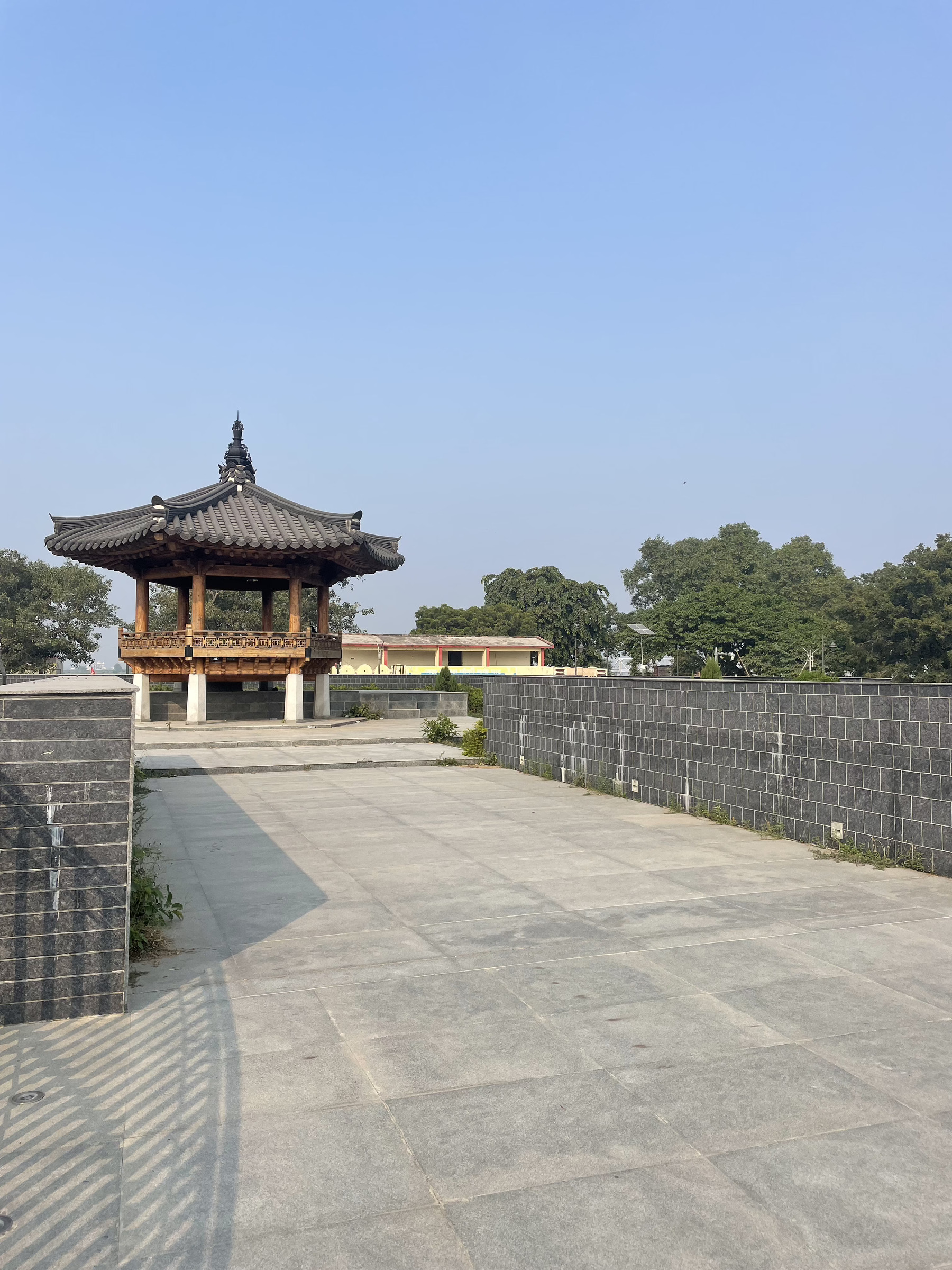
In between all the warm Diwali celebrations, I bumped into the first historical “foundling”, which is actually hard to miss when you are in Ayodhya: Queen Huh (?) Memorial Park. While Ayodhya is mostly visited now because of the new Ram Temple constructed on the site where the Babri Masjid stood until 1992. Nestled between the bustle of Sarayu Ghat, Ram Ki Paidi, and a new construction site for who knows what, there is a garden with a pavilion dedicated to Korea-India ties that, it is said, stretch back 2,000 years!
When I walked into the garden, the first thing I noticed is poor spatial harmony. But if you walk over the bridge, there sits a beautiful pavilion reflecting the Joseon-architectural style of Changdeok Palace! So many questions came to mind, but crucially: why is there, in the middle of Ayodhya, a Joseon-style pavilion?
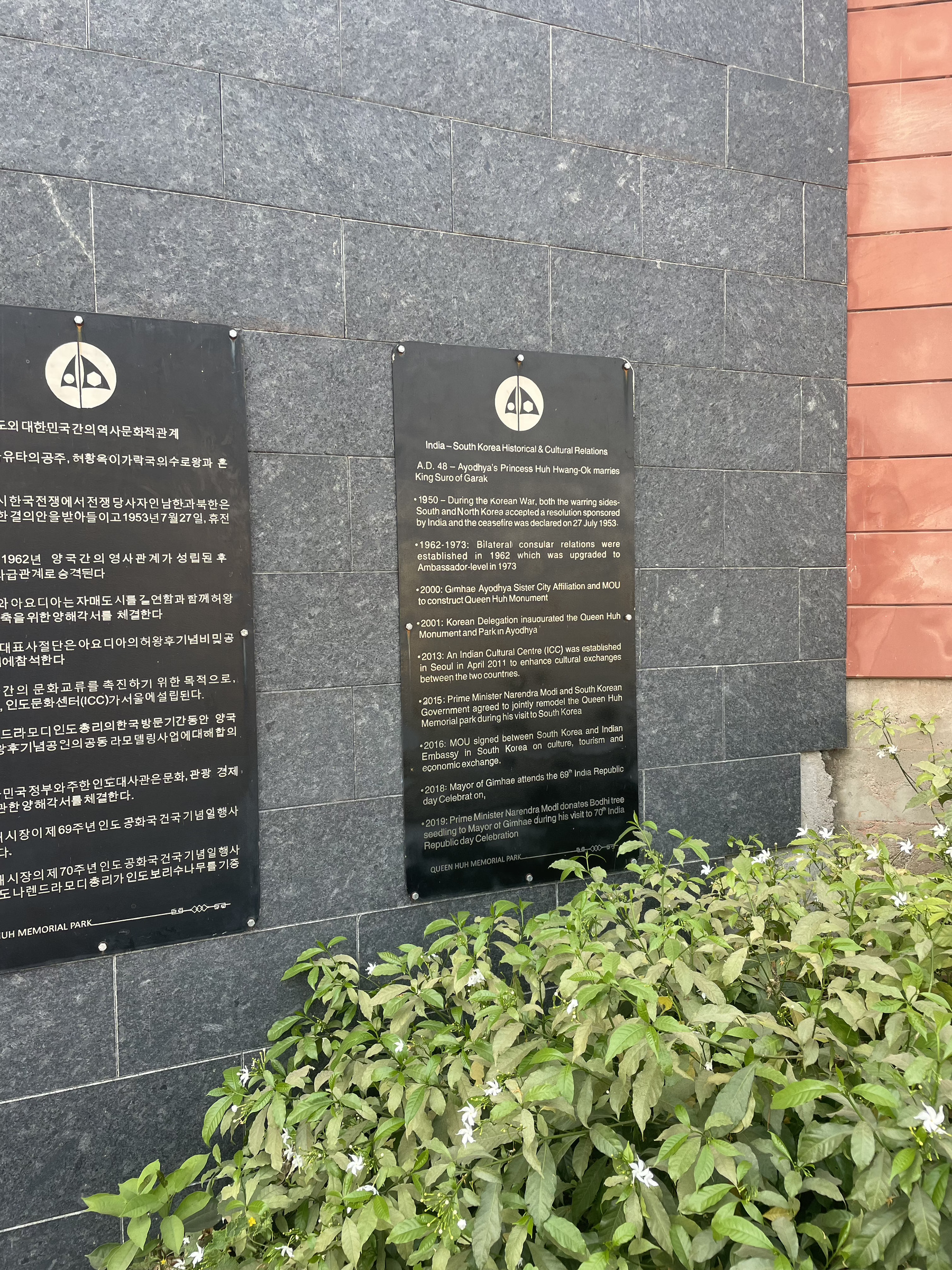
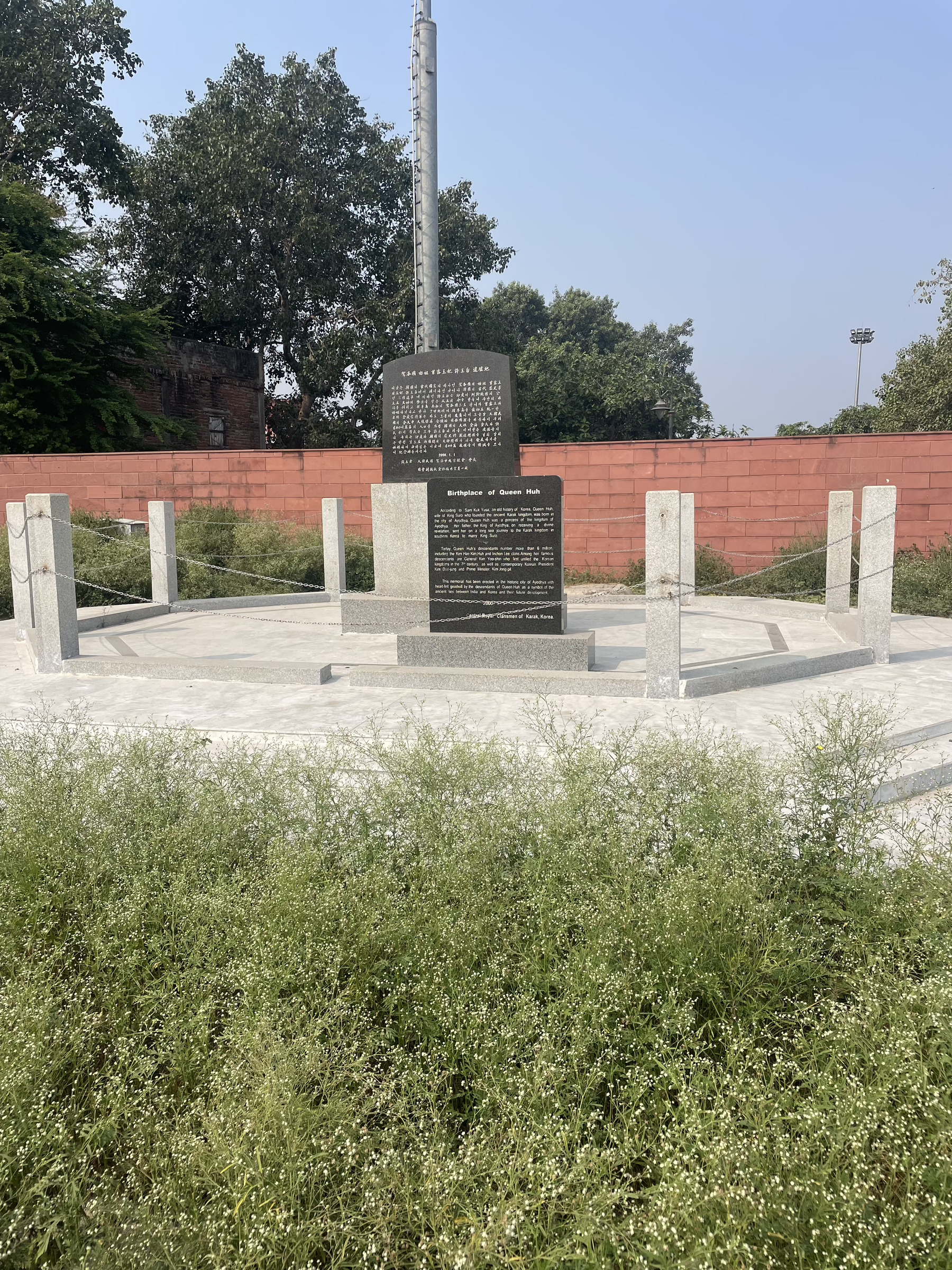
The answer merges myth with history. According to Il-Yeon’s “Samguk Yusa (1281)”, King Suro, the legendary founder of the Gaya confederacy 2,000 years ago on the Korean Peninsula, married Princess Suriratna of “Ayuttha”. The plaque next to the Korean Pavilion concludes, in Korean, Hindi, and English, that Suriratna, after a divine dream, must have sailed “4500 km across the sea to become the Queen of Garak”.
However, when I first heard the name Ayuttha, I immediately thought of an entirely different city almost 2000 km east of Ayodhya: Ayutthaya! It turns out there is an ongoing scholarly debate on where Queen Heo Hwang-ok truly came from. Rana P.B. Singh and Sarvesh Kumar give a nice overview of it in Interfacing Cultural Landscapes between India and Korea. In 2000, Ayodhya and Gimhae were designated as sister cities. In 2001, a Korean delegation allegedly accompanied by the North Korean ambassador to India came to inaugurate the memorial. As hinted at in the chronological overview, over the years the park has gone through various remodelings.
Backlog Goddag Letter, 18 October 2025, Arogya Mandir
God dag!
A letter from 18 October 2025:
“The next stop, I am getting off of this train - no matter what!” I said, fully determined. Abhishek glanced up and mumbled: “And they call it Gorakhpur Express… Arpita said nothing. The three of us were stuck together by the shared ordeal of Indian Railways. The twelve-hour delay affected Abhishek and Arpita much more: they missed their connection, with family waiting back home to celebrate Diwali. Stragenly, though, it felt as if only my patience with the train system wearing thin…
As we were rolling stepfoot into Domingarh, a ten-minute ride from our destination, Abhishek suddenly stood up and, without warning, jumped off our train. “See you in Bagaha!” he shouted as he disappeared into the thick smoke surrounding Domingarh. “Floris, don’t get off, this neighbourhood isn’t any good… look around, there’s absolutely nothing but dust and garbage!” Arpita argued. Looking outside you could indeed hardly see an actual station. I agreed with Arpita, I could not leave here. Indecision kept clouding my thought process, uncertainty about where I would sleep the night, and all my former resolve had gone up in thin air.
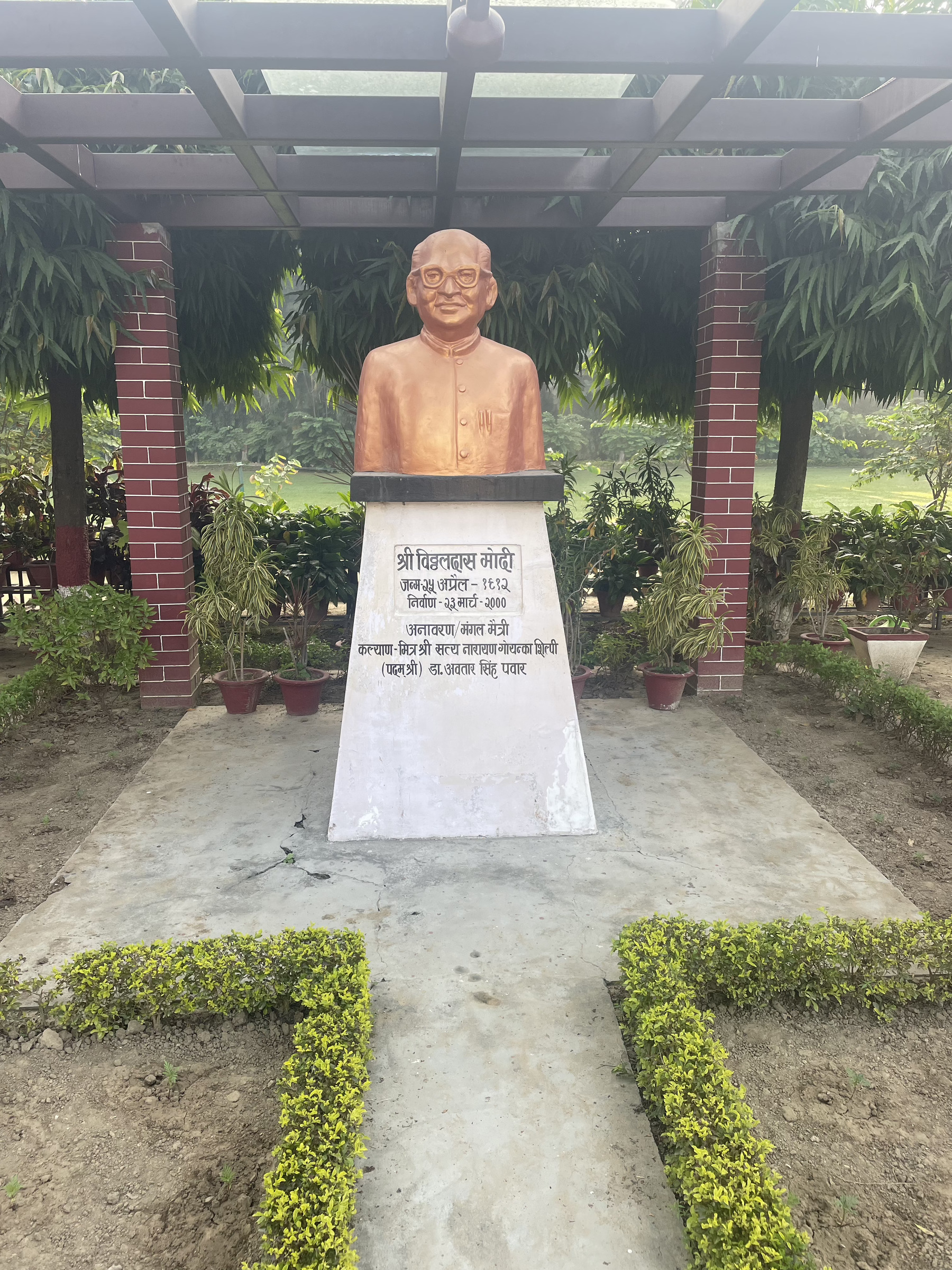
Eventually, the train started moving again and barely ten minutes later we arrived in Gorakhpur. I took an auto to Arogya Mandir. Though Gorakhpur was full of life at midnight, Arogya Mandir seemed fast asleep when I arrived. Founded in 1940 by the non-violent resister Vithal Das Modi, Arogya Mandir is a naturopathic ashram. I had come to study its ideas on naturopathic non-violence and its role in India’s independence movement. But when I arrived, I found the gate firmly shut. Just as worries about the night began creeping in, I spotted a guard at the far end of the wall. He asked whether I had an appointment with Vimal Modi. I nodded, and moments later the beautiful wooden doors opened. A gentle, well-kept man stood before me and said: Don’t excuse yourself for being late, the train is outside of your control. Little did I know that he was the son of Vithal Das Modi himself, the revolutionary naturopath who founded Arogya Mandir. Feeling embarrassed of how unkept, and probably how smelly (!), I was after my long train journey, I kept my tick jacket tightly closed. He put me at ease, offered me a room, and suggested I freshen up. We would talk in the morning.
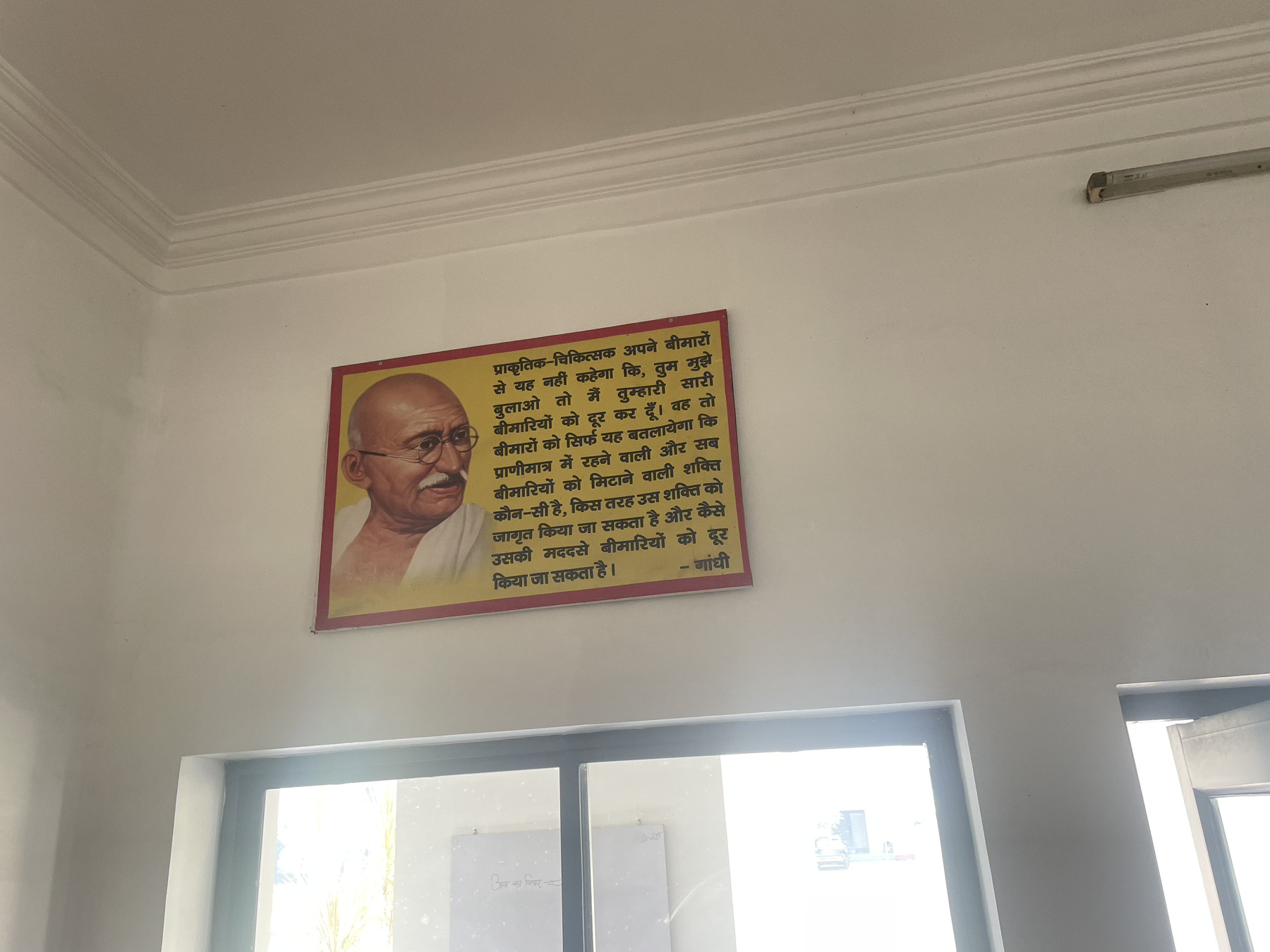
I reported at six in the morning., and with the others I shared a cup of tea before starting to walk on the circular mud path beside the dormitory corridors. My fellow path walkers looked visibly surprised to see me. Vimal Modi soon walked next to me and we began talking. He spoke about his father, appeal of the naturopathic lifestyle, his meetings with Gandhi, and his own pride in the centre. Insisting on the non-violent nature of naturopathic treatment, he was careful to separate it from politics. “Gandhi requested Vithal Das Modi to only focus on naturopathy, not politics”, he explained. He was equally glad to hear why I came.
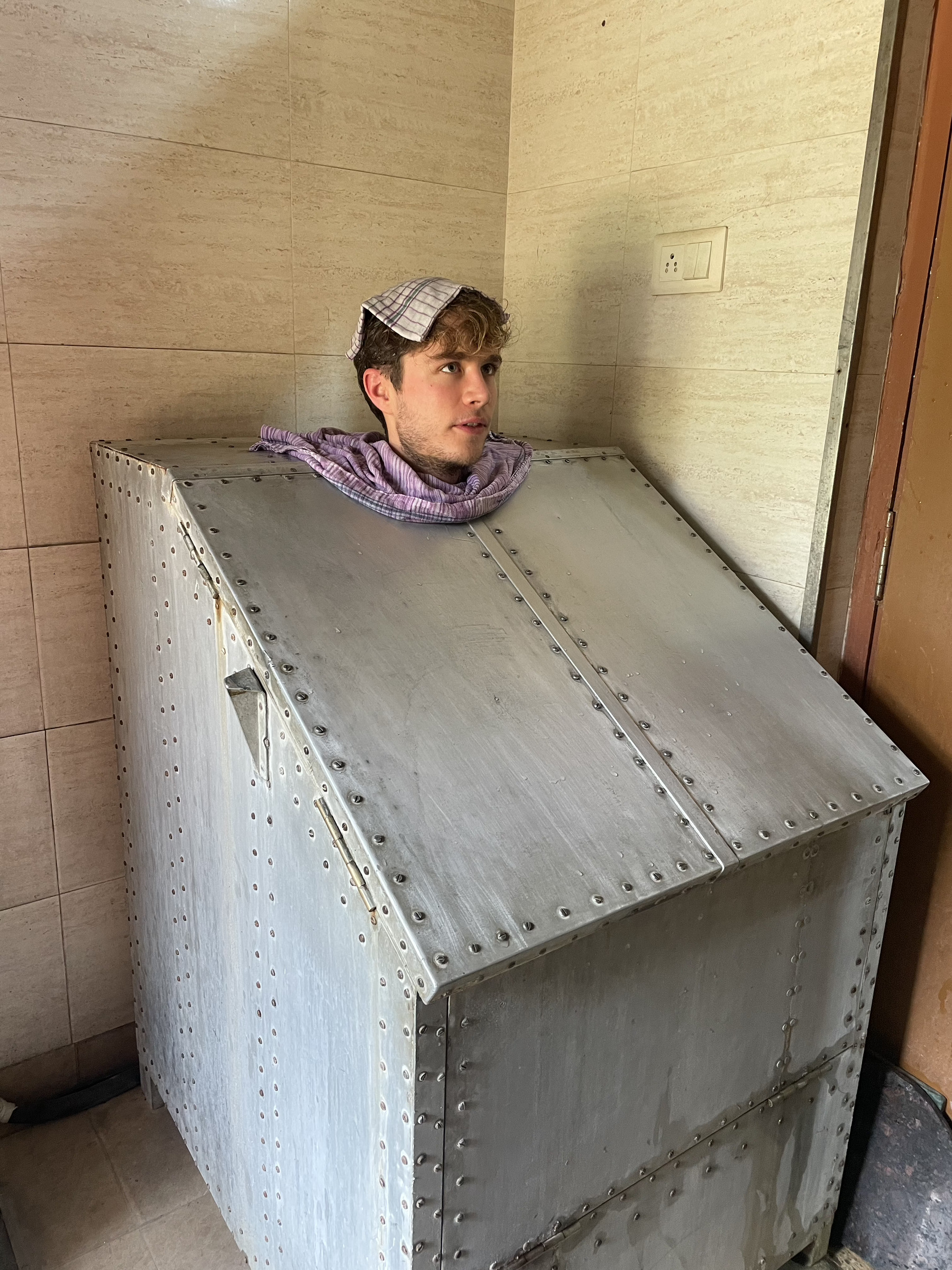
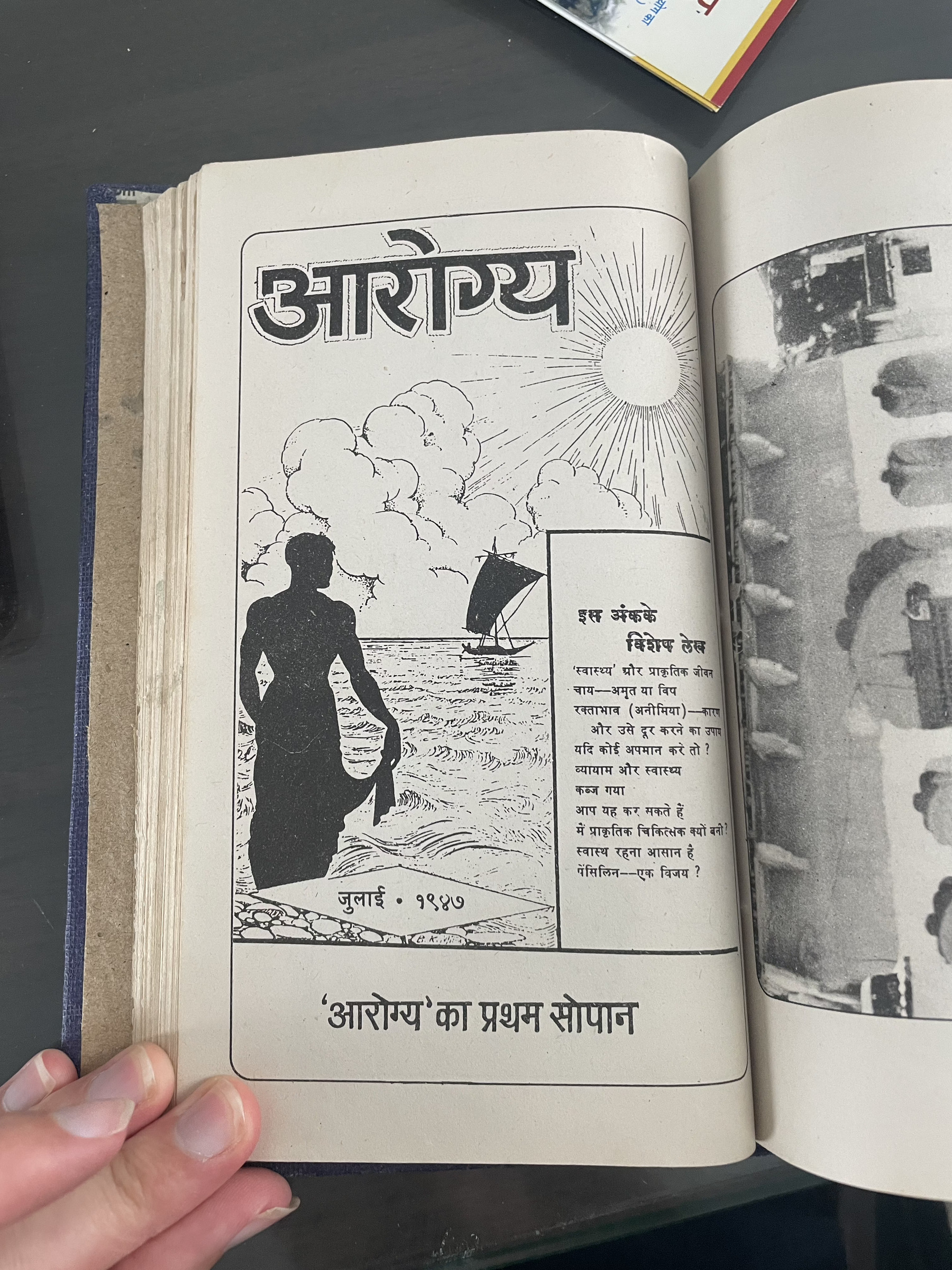
After the walk a light nature cure breakfast awaited me: fresh papaya, walnuts, and sprouted greens. Treatment then began for the “patients”, with heat packs, mud packs, steam baths, and enemas. The last one I politely declined… After some persistence, I received access to the library, where I read more about Vithal Das Modi’s non-violent activities and the ashram’s role in sheltering revolutionaries. Old photographs of Gorakhpur were in the books. As Vimal had mentioned in the morning, before independence Arogya Mandir stood on the city’s outskirts, in quiet nature. Over time, the city, with all its noise and pollution, had crept closer to the ashram. And yet, as a Buddhist monk from Arunachal Pradesh told me over dinner, no ashram set in such chaos ever keeps this kind of calm!
A few nights at the ashram indeed left me feeling recharged with energy, something that would turn out vital for the wild Diwali days that were to come!