Unearth Kāla #4, Egypt’s City of the Horizon and India’s City of Dawn
The similarities of sun worship, internationalism, and earth religion between the ancient Egyptian Akhet-Aten and Auroville have fueled speculation about a hidden, even occult, connection.
In the year 2000, Claire le Touzé was the first to put together all the information that linked these two cities in the minds of some Aurovilians. Ever since, there have been numerous booklets on the connection between Mirra Alfassa and Queen Tiye or Queen Hatshepsut, and between Akhet-Aten and Auroville.
To begin with the link between Mirra Alfassa and these two ancient Egyptian queens, we need to go back to some biographical aspects of Mirra in which she relates to both. Though not the first female ruler of Egypt, Hatshepsut was probably the first to hold full powers as a pharaoh. In many ways a child of French Egyptomania, Mirra Alfassa said she had encountered Hatshepsut’s toilet case in a museum at a young age and felt an immediate connection. Much later, when she was living in Pondicherry, she sometimes shared ideas and visions she had that related to ancient Egypt. She mentioned that she thought of ancient Egypt as an extremely occult age. Once, she had a dream in which her son was Akhenaten, or Amenhotep IV, making her Queen Tiye. The historical Akhenaten would become the ruler of Egypt who initiated one of the biggest and most intense periods of religious reform in human history. He attempted to change polytheistic Egypt into a culture devoted to the worship of the sun disk, also known as Aten. While Queen Tiye and Amenhotep III were already devoted to Aten, it was their son who implemented drastic religious change in ancient Egypt. Akhenaten, or “the one who is faithful to Aten,” wanted all of Egypt devoted to Aten.
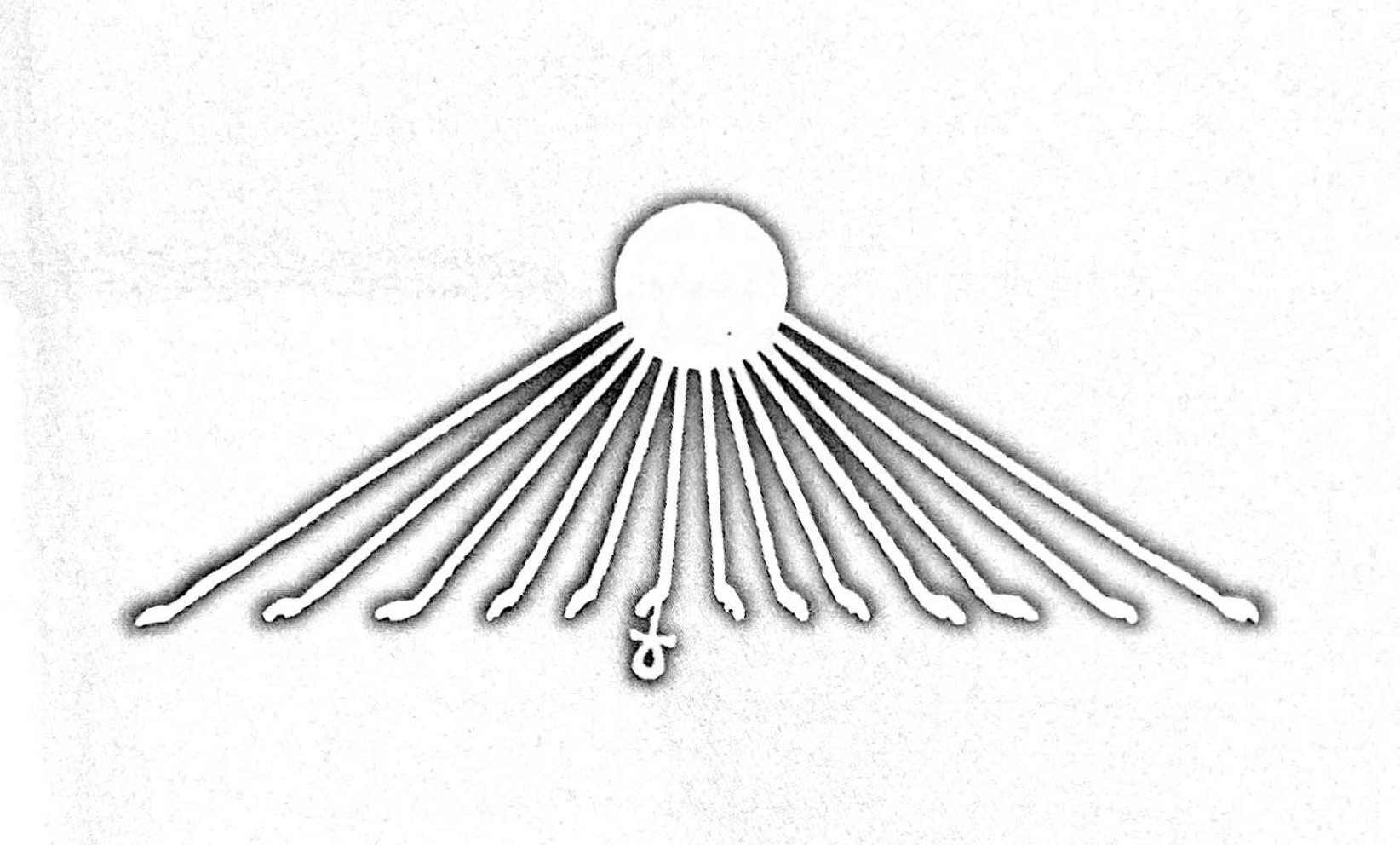
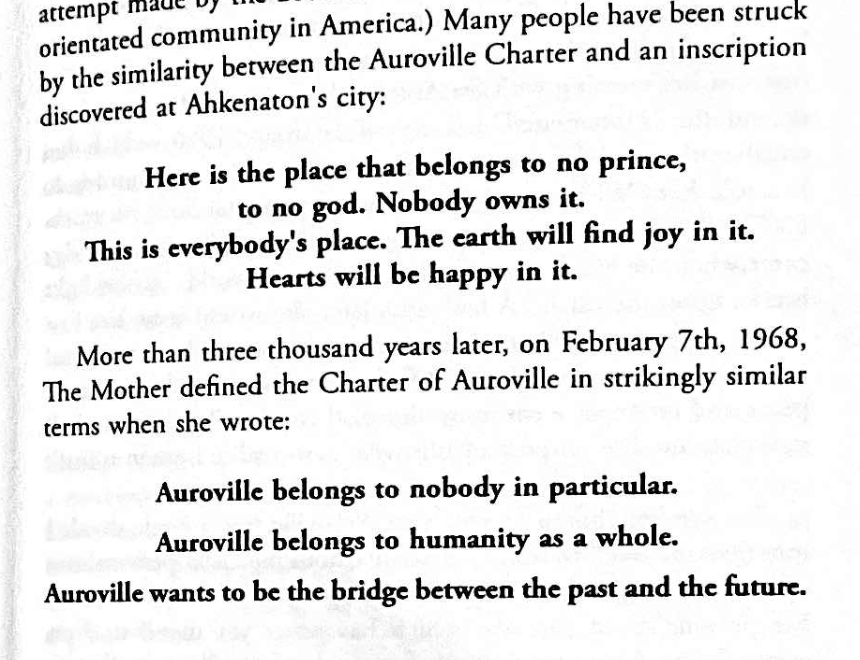
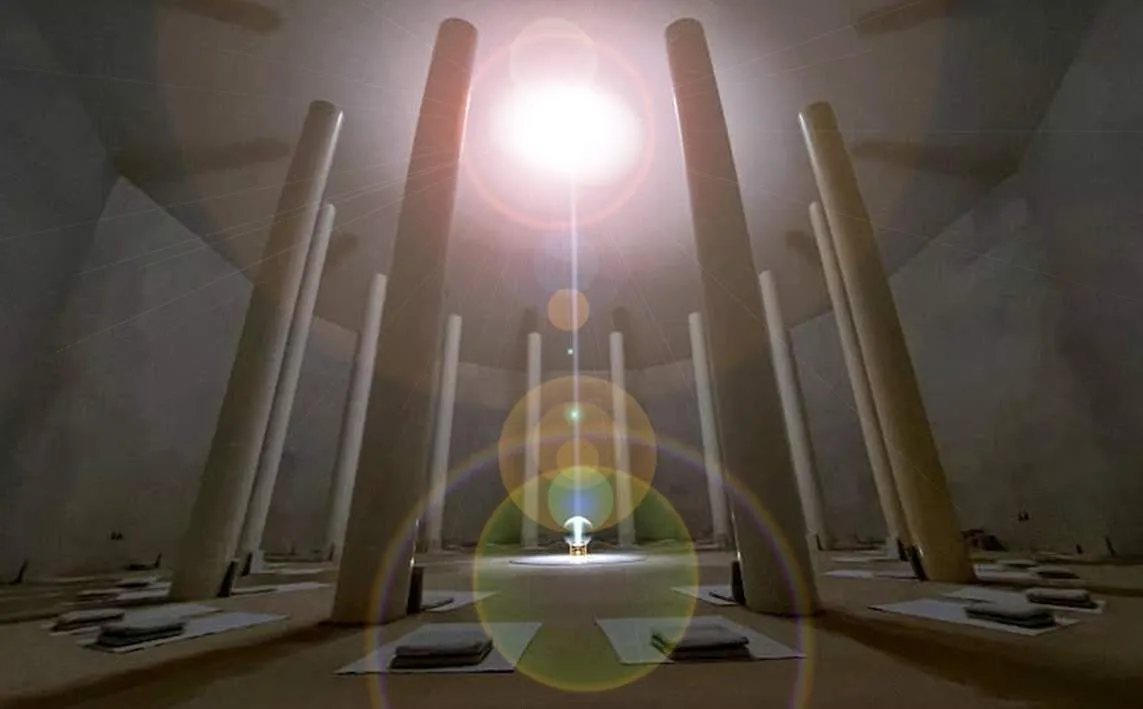
The young couple Akhenaten and Nefertiti would found an entirely new city called Akhet-Aten, Horizon of Aten, or City of the Horizon. This city was dedicated to Aten, represented as the sun disk with little hands reaching out to humanity. The new city of Amarna (Horizon) has been linked to Auroville by Aurovilians in various ways. For example, Aurovilian Gilbert Lachaux has argued that Akhet-Aten, like Auroville, was meant to be an international and, in some sense, pacifist city. This idea was thought to be reconfirmed by the similarity between the Auroville Charter and Akhenaten’s proclamation at Akhet-Aten (see picture below from booklet, reference still needed -> will get it soon when I’m back at the archive). The worship of Aten likely took place without the usual ritualistic ceremonies, consisting instead of devotional hymns such as the Great Hymn to the Aten. Both cities share a nuanced form of monotheistic earth-centered religion. The worship of the sun disk in the main temple of Akhet-Aten also corresponds somewhat to that of the “sun temple” of Auroville, the Matrimandir. Lastly, Mirra Alfassa claimed that “Akhenaten’s revelation aimed at revealing to the humanity of their time the Unity of the Divine with its manifestations.” Such claims and surface similarities between Akhet-Aten and Auroville have left Aurovilians questioning and will likely continue to fuel speculation about a hidden link between these two fascinating cities.