Unearth Kāla #5, Arikamedu an Indo-Roman Trading Port?
After my workday today, I went on my bicycle to Arikamedu. I’d been told this was the famous Indo-Roman port on the east coast. In the 1940s, excavations by Wheeler uncovered a lot of pottery, jewelry, and beads, indicating extensive trade with the Roman Empire. Journal articles from the time hailed this as the decisive identification of the ancient Poduca or Poduke mentioned in The Periplus of the Erythraean Sea and in Ptolemy’s work (see, for example, archive.org/details/i… , you can find Poduke on p. 8, and Poduca on the map at the end, the Periplus is easier to find yourself).
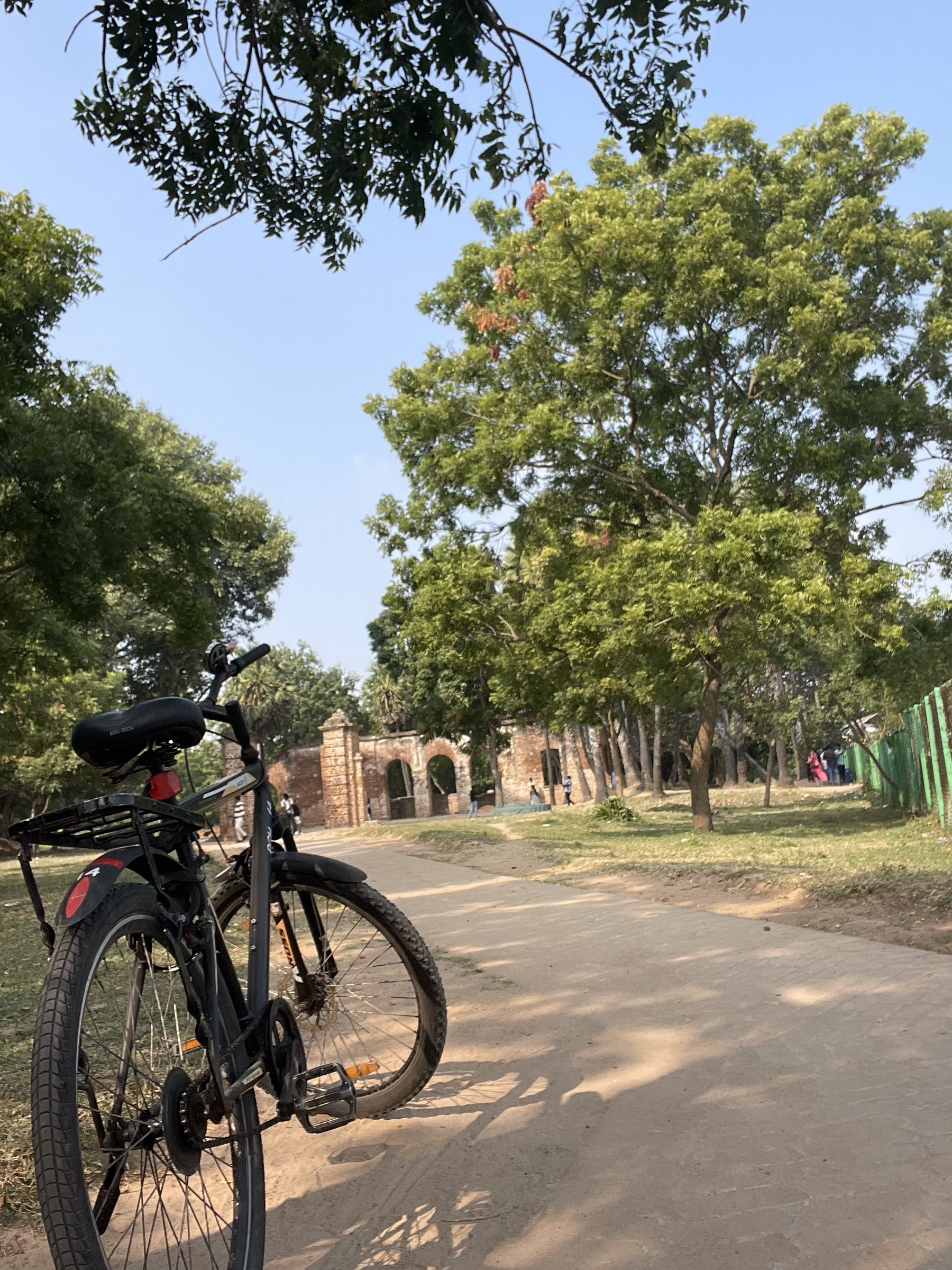
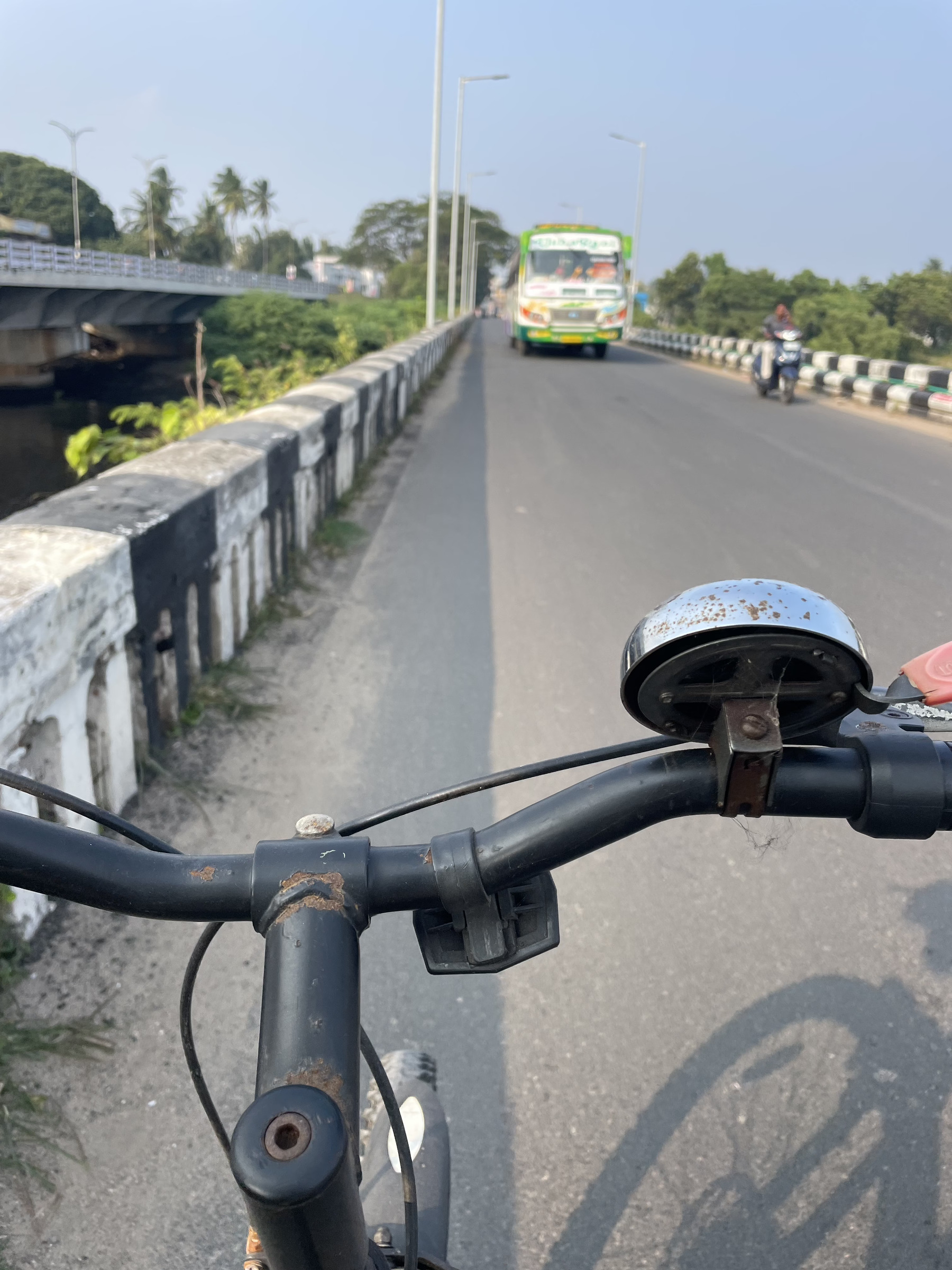
The bicycle ride there was quite nice: sunny, with the wind blowing through my blouse. The only thing that bothered me, of course, were the massive buses and trucks that would honk and rush by at a hair’s distance! See my picture for one of these approaching me.
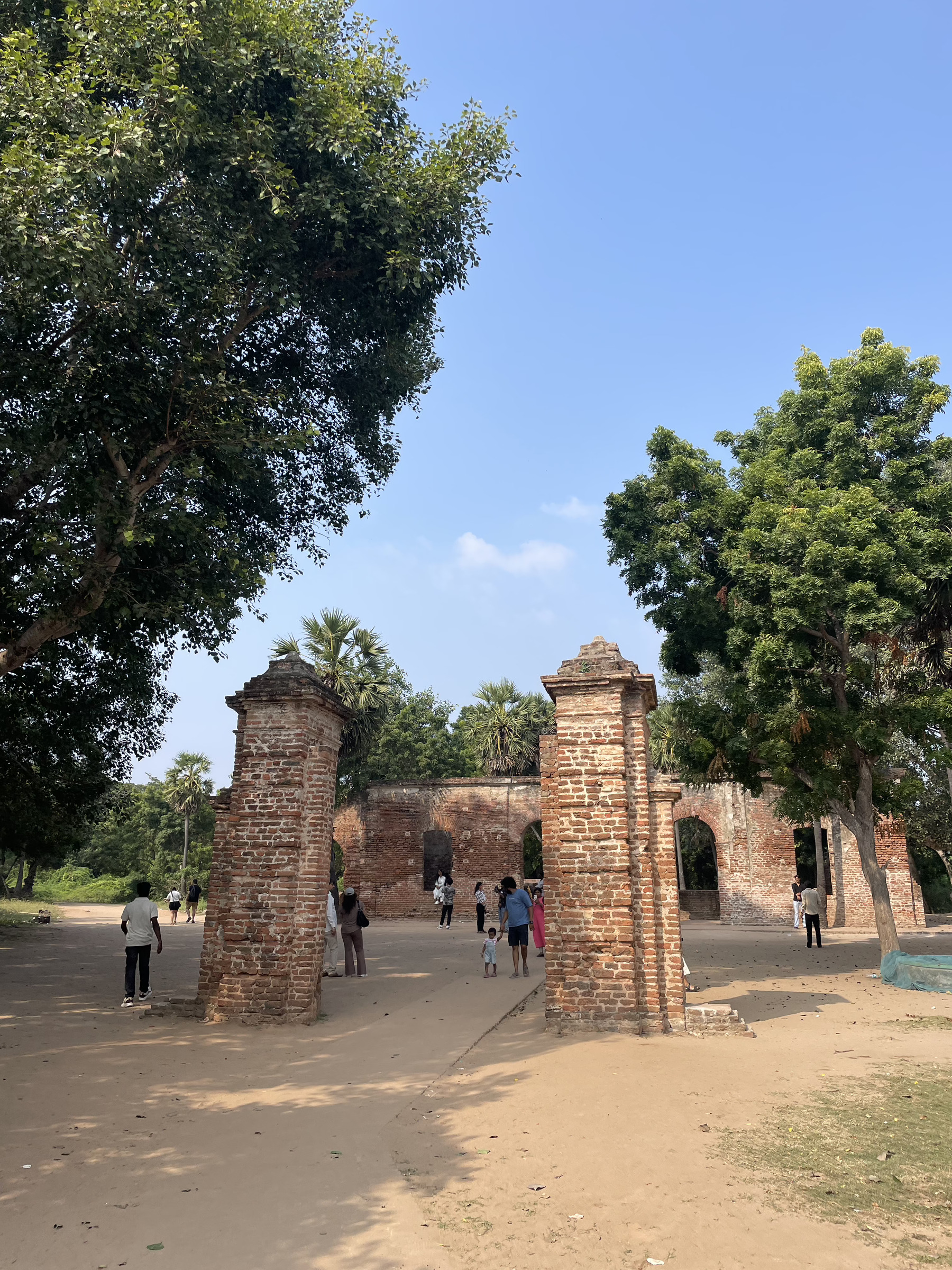
Many visitors to Arikamedu confuse the current ruins with the Indo-Roman port town. As I understand it, these 18th-century red brick ruins are the remains of a French Mission House. Starting from the “French Mission House,” Wheeler began his excavations, which were later continued by others in the 1940s and 1980s. After the first set of excavations, the large number of Roman-influenced crafts convinced archaeologists that this must be the ancient Poduca. P. Z. Pattabiramin concluded quite triumphantly in 1945: “How really happy we are to have found back the town of Poduke which had a Roman factory in the territory of Pondicherry [sic].” (P. Z. Pattabiramin, Proceedings of the Indian History Congress, Arikamedu Excavation, 1945).
When I find time this week, I’ll go and see the excavated material at the Pondicherry Museum, after which I’ll edit this post. For now, though, the link between these ancient texts and maps and the excavations of the 1940s feels a bit hasty to me. In Pondicherry, it is commonly held as fact that Arikamedu (rather than, say, Pulicat, which some scholars have leaned toward) must be the Poduca of the Geographia or the Periplus. This feels more like an inference than an established fact. Still, the excavations are wonderful, and the revealed historical links of a trade network that probably lasted from the 2nd century BCE to perhaps even the 1800s are amazing. Fortunately, research showing a broadening period of trade activity at Arikamedu keeps expanding, and the link to the ancient trading port of Poduca is made more cautiously.
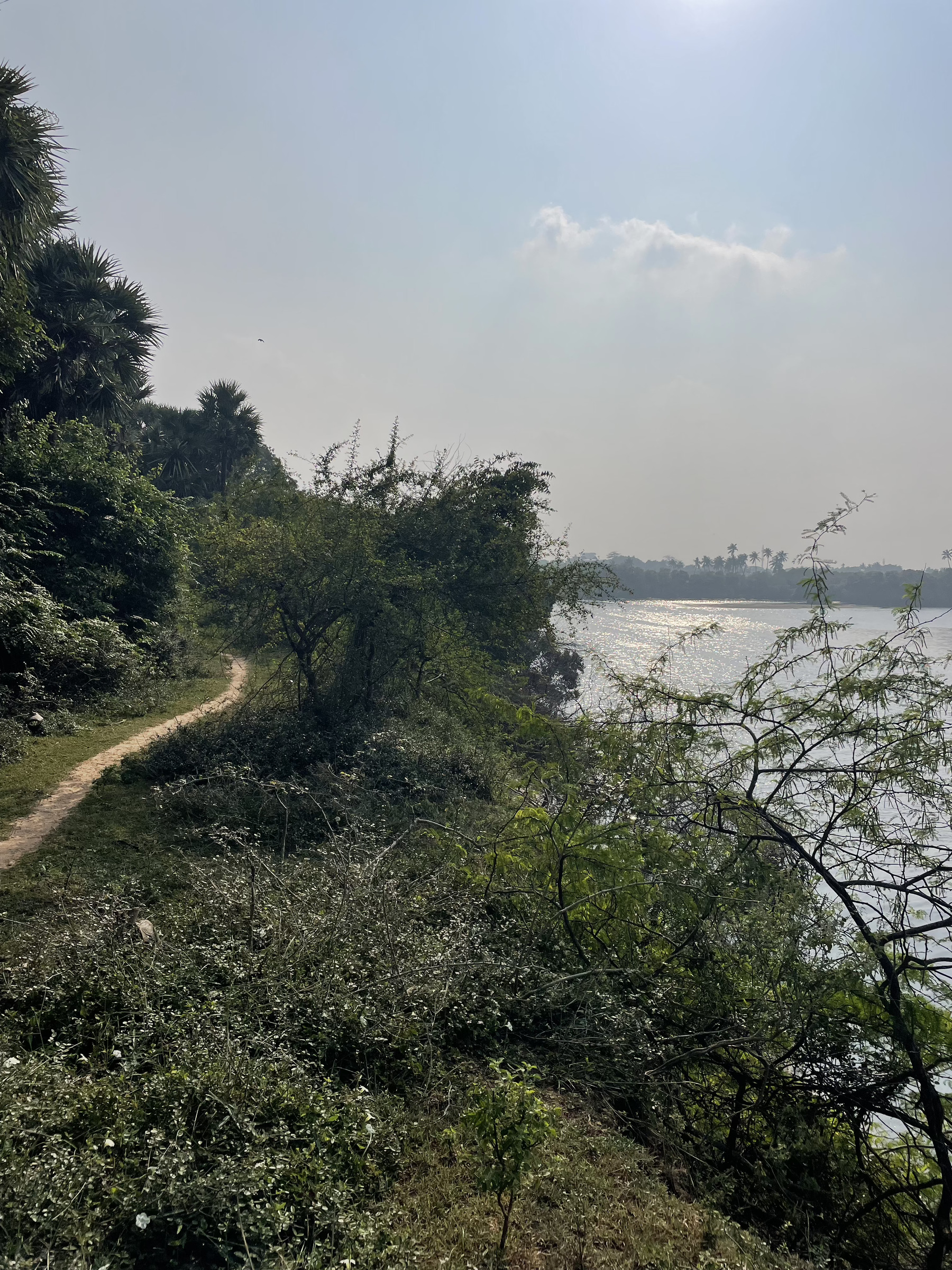
In the mangrove forest right next to the excavation site, I found these really funny crabs. They’re fiddler crabs. Some mangrove ecologists consider them ecosystem engineers. For example, their little tunnels are thought to be crucial for soil oxygen levels and water infiltration for mangrove tree roots. The male fiddler crab is especially funny to me because he has this lopsided, single giant claw, while the other claw is normal-sized. They wave it in their own rhythm: to impress the ladies, threaten other males, or get rid of excess body heat. There’s a funny article in BioScience about an urban myth surrounding the fiddler crab’s giant claw, you can read it here: academic.oup.com/bioscienc…