Backlog Goddag Letter, Madurai and Rameswaram, 2 December 2025
With all the good memories of Hamilton still in my head I was dropped off by Siobhan early morning for a long journey to Madurai. After Irish set dancing, nearly two full days of travel from Toronto, and a complete reversal of my internal clock, I felt utterly exhausted when I finally arrived in Madurai.
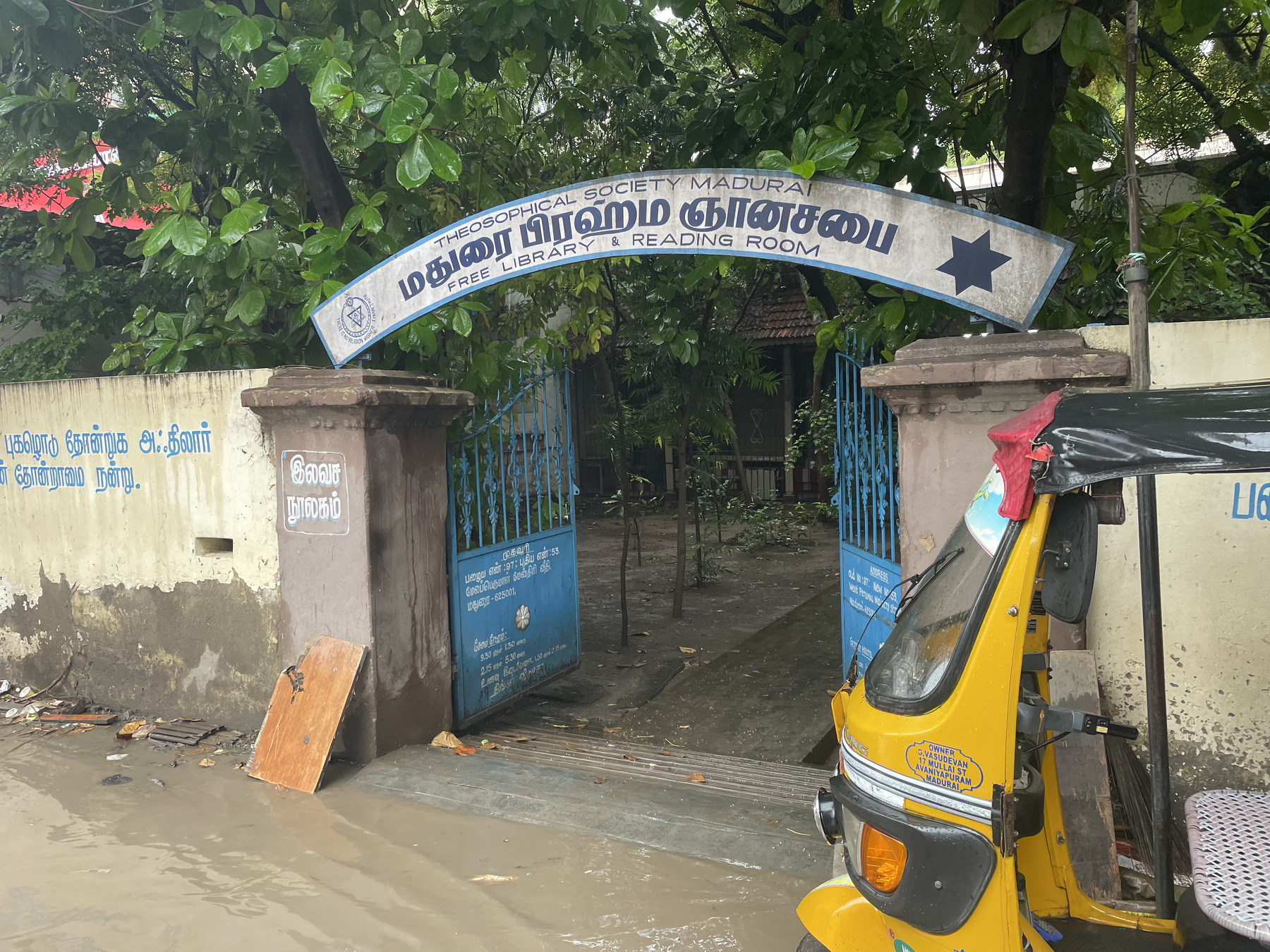
When my energy returned, I visited the Gandhi Memorial Museum, as I hoped to consult their extensive library. While their website highlights that they are one of the largest libraries on Gandhian and peace studies, it failed to mention that the library was under renovation… The gallery attendant there pointed me toward a temporary library next to the museum. As I made my way over, passing a giant dinosaur, I found a small temporary reading room stocked only with newspapers from recent years. I decided I had to give up on the library and instead checked out the peculiar temporary exhibition. Right beside it, you can still find Gandhi’s ashes, which gave me chills! The rest of the day I hung out at the lovely and open library of the Theosophical Society in Madurai. You can simply walk in, write down your name, and read any old book that’s in their shelves. No questions asked! To me, it seemed they truly took to heart one of my favourite dictums from Harold Bloom: read and write “not to believe, not to accept, not to contradict, but to learn to share in that one nature that writes and reads.”!
The next morning I woke up early to visit the Meenakshi temple before sunrise, to have a calm experience there. The temple corridors and carvings are stunning. The distant glimpses I caught from the Garbhagriha (literally womb chamber, but it’s used kind of in the sense of a Sanctum Sanctorum) and the deities were beautiful. As I was walking down one of the massive, mostly empty, corridors, the rhythms of drums and mridangams heightened and a throng of ecstatic devotees passed by. While temple animals are a common sight in India, I hadn’t seen an elephant provide blessings. This horrid sight of who I think must have been Parvathi chained and having to give blessings throughout the day confirms the unfortunate hypocrisy of animal worship. Although I understand that her eye infection and domesticated life make her unfit for the wild, any sensitive nature would find this state a perversion of religion - der Erde treu.
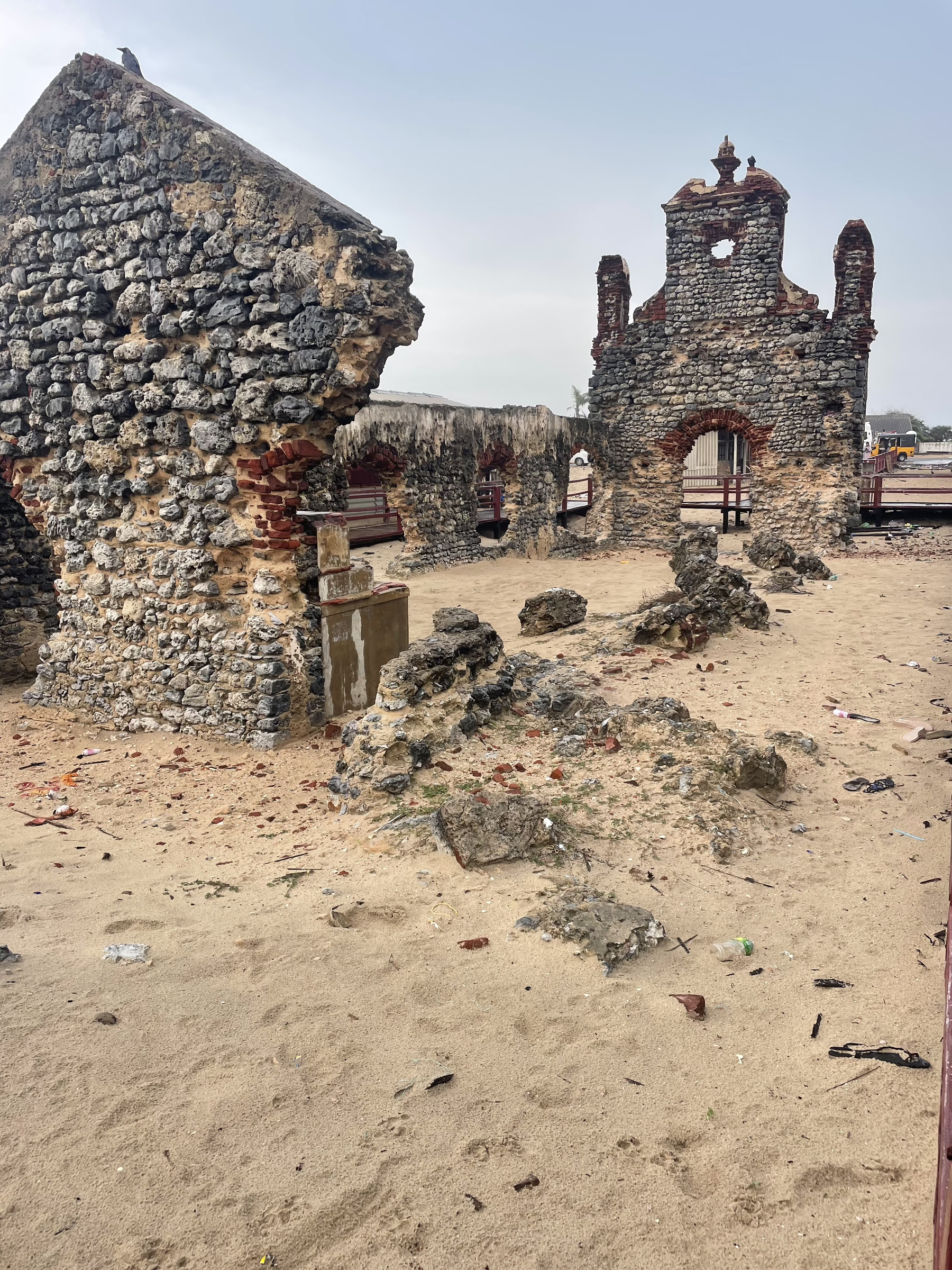
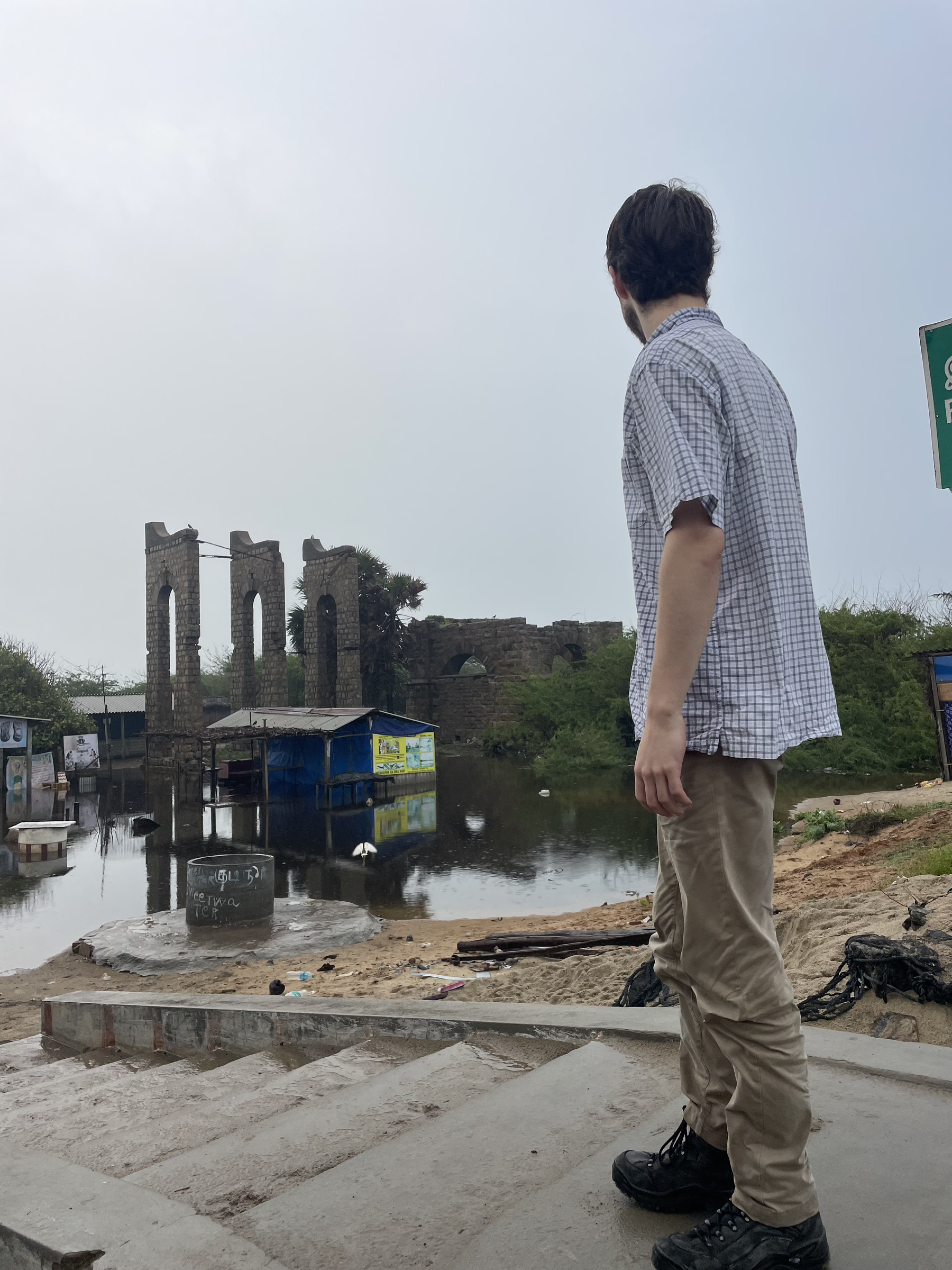
After some breakfast, I made my way to Madurai Junction to take the train to Rameswaram, another name for Rama-isvaram, “Lord of Rama”. This name hints at the deity of Rameswaram’s main Ramanathaswamy temple: the destructive Lord Shiva. The story goes that Rama prayed to Shiva before he went to war with Ravana, as he was a devotee of Shiva. Upon victory, Rama returned with Sita and worshipped again at Agni Teertham to absolve himself from Brahmahatya (Ravana was a Brahmin by birth). This 12th-century Pandya dynasty temple hosts, it is said, the longest temple corridors of 1.2 kilometers! Nowadays most people visit Rameswaram mostly by land, for example, as a pilgrimage to one of the four dhams. However, until 1964, Rameswaram remained a major transit point by sea, dating back to the colonial era. It used to connect Sri Lanka and India by a famous boat mail service, and operate as a relatively big sea port town. The Hindu reports that Bal Gangadhar Tilak and S. Kasturi Ranga Iyengar took the train, and also mentions the Alavadar Murder Case of 1952 on the train. While the train is still “active”, I took the Amritha Express on the same route. By coincidence, I was reading Savitri Devi’s travelogue L’Étang aux Lotus on the Amrita Express, she was both an Axis spy and a deep ecologist. Her first encounter with India at Rameswaram, like many firsts for travellers to India at the time, is described in it in third person: De toute façon, les préjugés que le missionnaire professe à son égard sont la barrière qui le sépare de l’Inde, à tout jamais.Mais, de temps en temps, perdu au milieu de la foule des touristes, des fonctionnaires anglais, et des gens d’affaires de toutes nationalités, débarque à Bombay, ou sur la plage déserte de Dhanuskodi, un inconnu sans prétentions : c’est un pèlerin… Tout l’exalte, mais rien ne l’étonne, pas même les grandioses corridors, les interminables enfilades de piliers, les immenses porches, incroyablement sculptés, du premier temple hindou qu’il voit de ses yeux, à Rameswaram. However, Dhanushkodi was no longer a transit point after 1964 when a major cyclone hit the area, which turned it into an eerie ghost town at the “last road of India”! At the time I was there, Ditwah was battering parts of Sri Lanka and approaching Tamil Nadu, and Dhanushkodi was already flooded by heavy rains…