Queen Huh (?) Memorial Park, History Foundling #1
Hei, god dag,
This is my first “History Foundling” in a series called Time’s Lost & Found. In these posts I share notes on things I find out about a place, object, or event that surprise me and I had no clue about before. Maybe you didn’t know it either, and if so, help with your memory so that it is not forgotten… The larger series Time’s Lost & Found of course also consists of people, but since humans cannot be history foundlings, this part is called “In Fellowship Across Time”.
20.10.2025
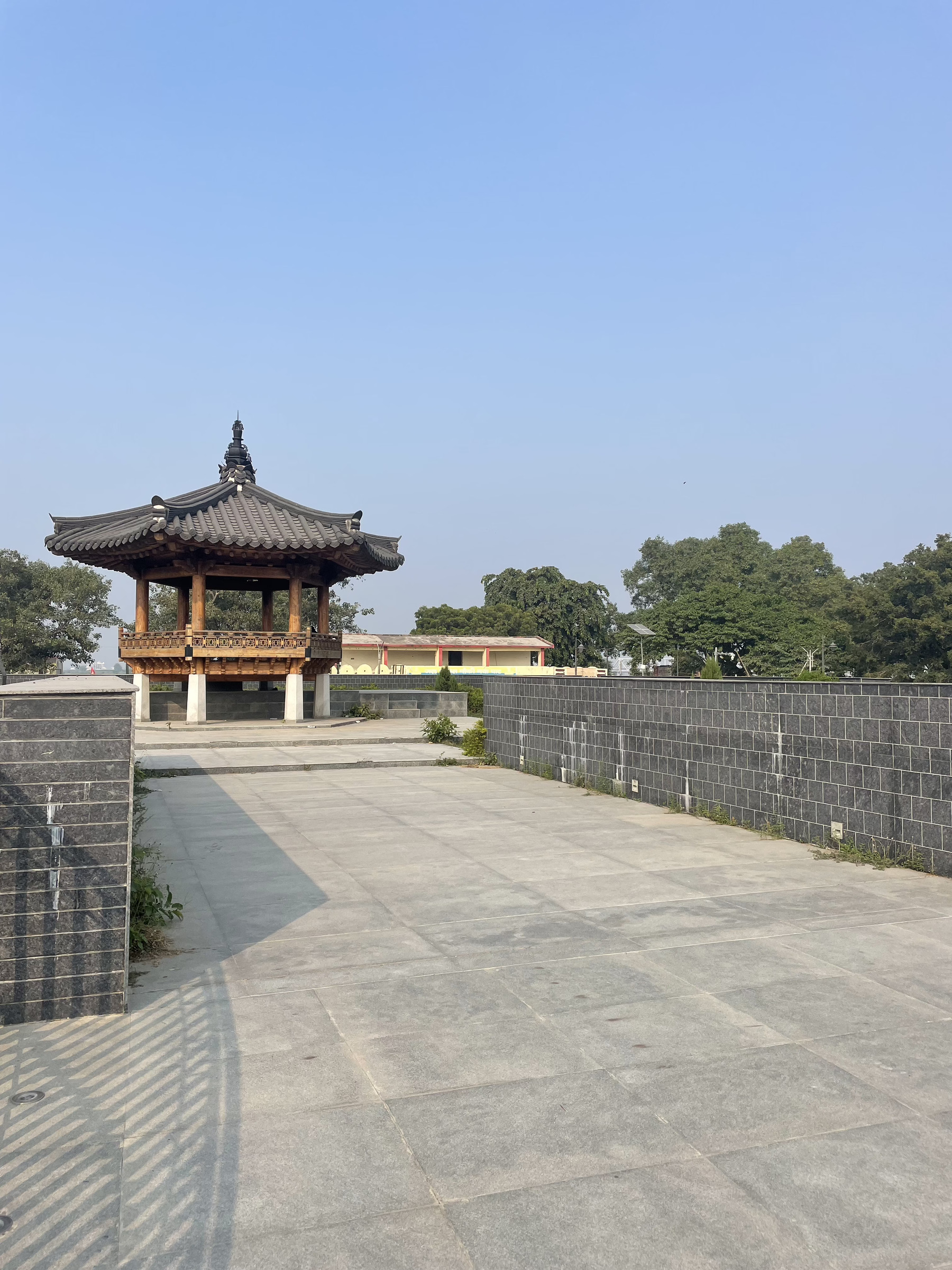
In between all the warm Diwali celebrations, I bumped into the first historical “foundling”, which is actually hard to miss when you are in Ayodhya: Queen Huh (?) Memorial Park. While Ayodhya is mostly visited now because of the new Ram Temple constructed on the site where the Babri Masjid stood until 1992. Nestled between the bustle of Sarayu Ghat, Ram Ki Paidi, and a new construction site for who knows what, there is a garden with a pavilion dedicated to Korea-India ties that, it is said, stretch back 2,000 years!
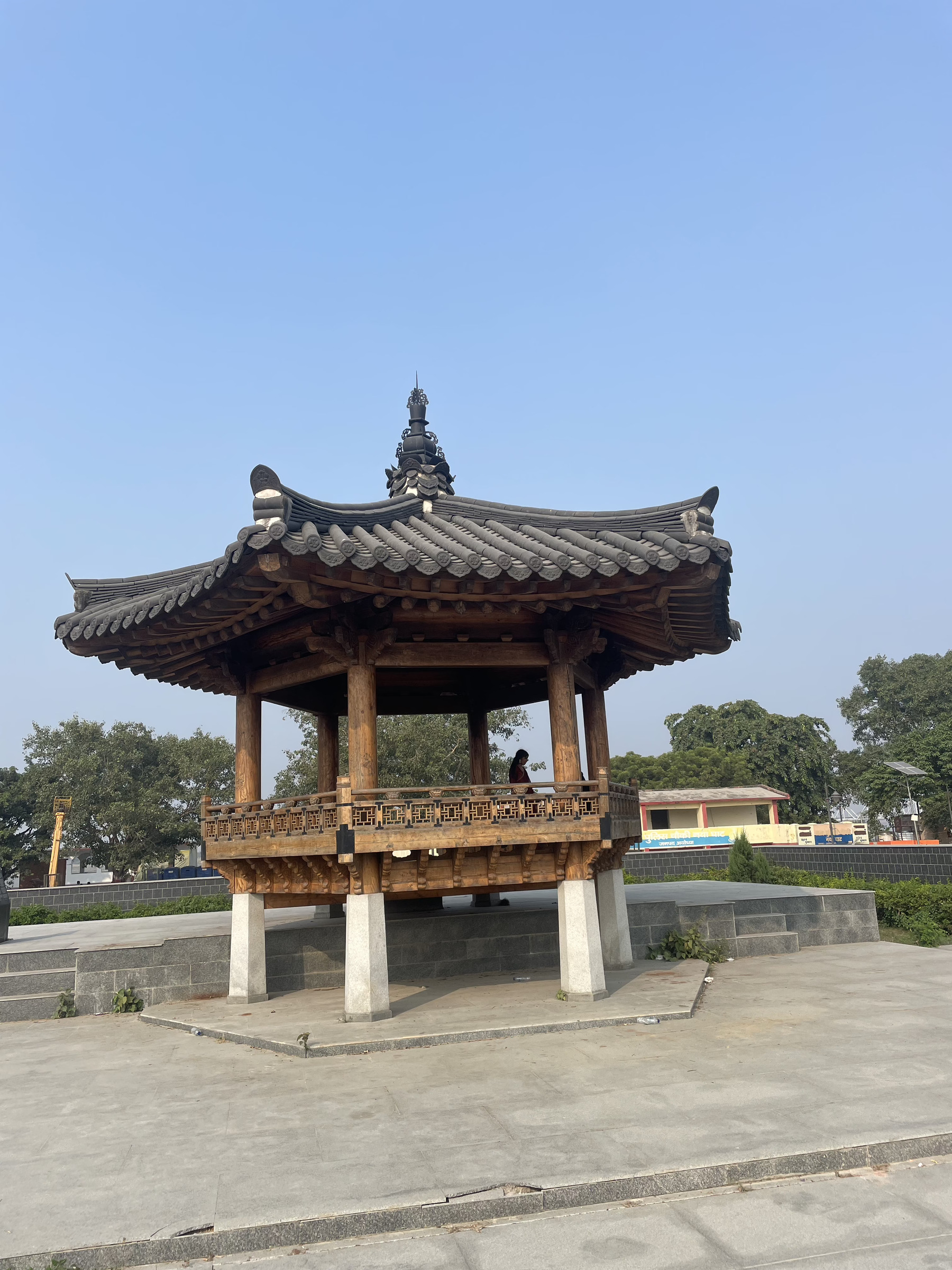
When I walked into the garden, the first thing I noticed is poor spatial harmony. But if you walk over the bridge, there sits a beautiful pavilion reflecting the Joseon-architectural style of Changdeok Palace! So many questions came to mind, but crucially: why is there, in the middle of Ayodhya, a Joseon-style pavilion?
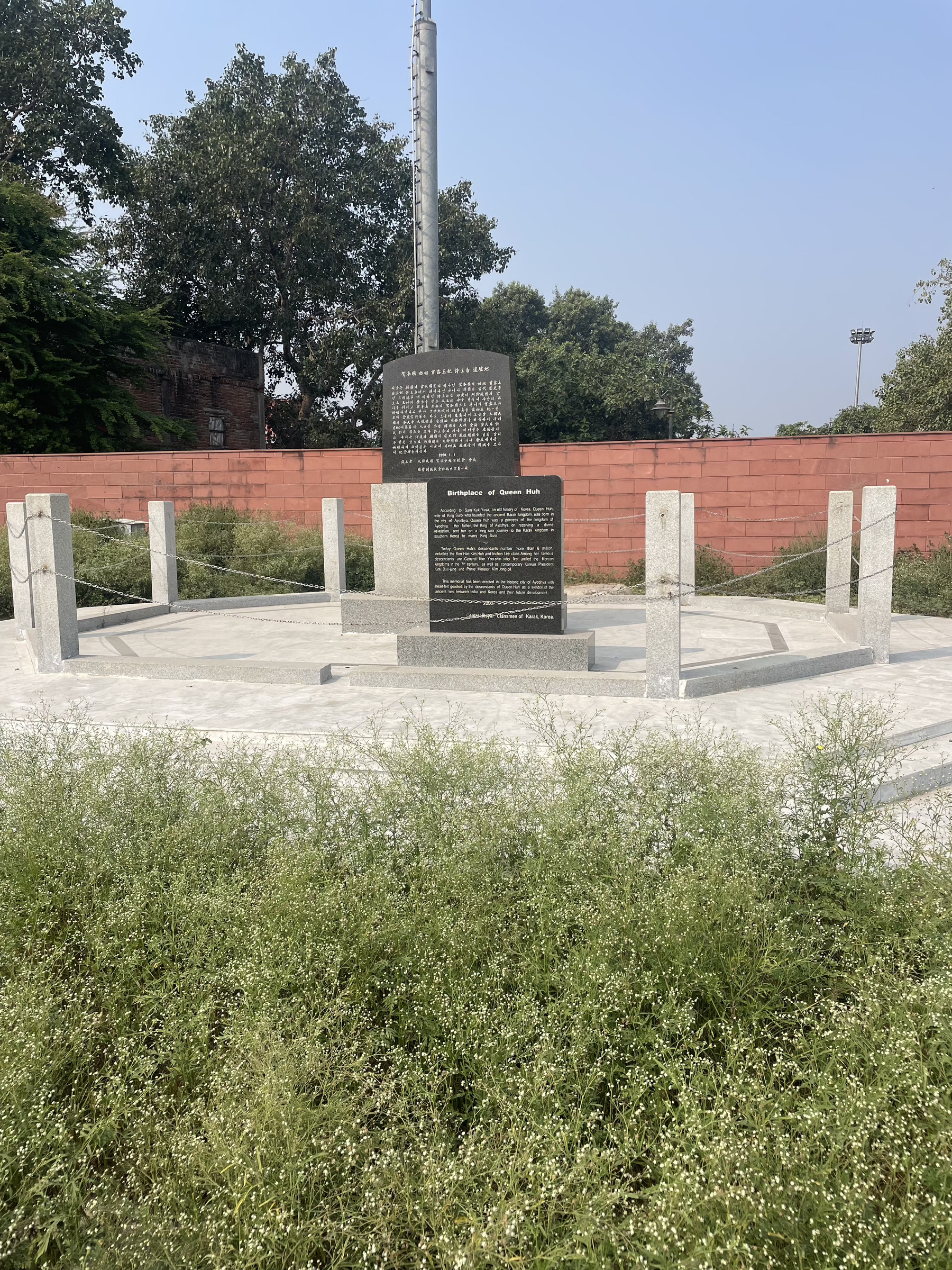
The answer merges myth with history. According to Il-Yeon’s “Samguk Yusa (1281)”, King Suro, the legendary founder of the Gaya confederacy 2,000 years ago on the Korean Peninsula, married Princess Suriratna of “Ayuttha”. The plaque next to the Korean Pavilion concludes, in Korean, Hindi, and English, that Suriratna, after a divine dream, must have sailed “4500 km across the sea to become the Queen of Garak”.
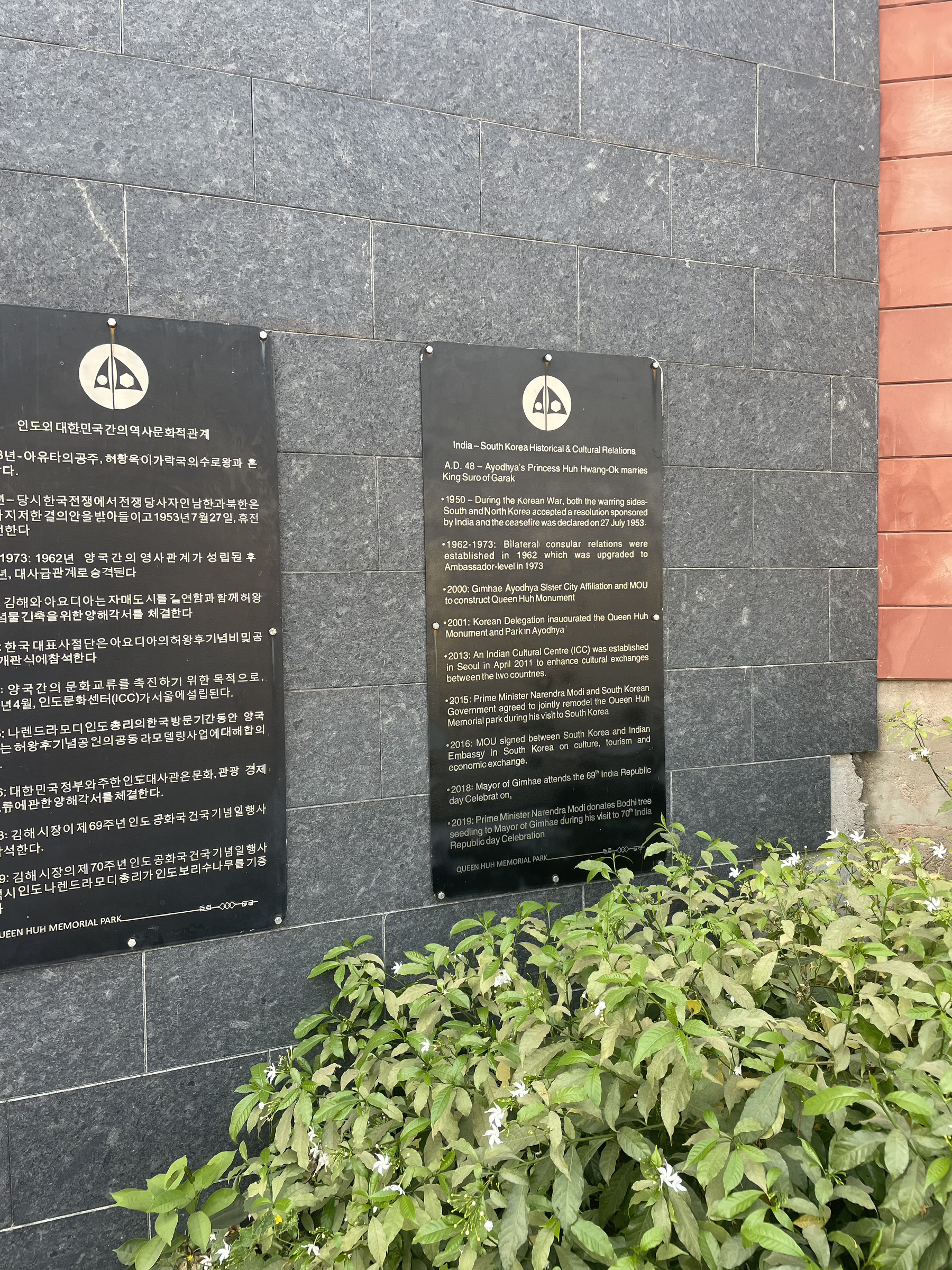
However, when I first heard the name Ayuttha, I immediately thought of an entirely different city almost 2000 km east of Ayodhya: Ayutthaya! It turns out there is an ongoing scholarly debate on where Queen Heo Hwang-ok truly came from. Rana P.B. Singh and Sarvesh Kumar give a nice overview of it in Interfacing Cultural Landscapes between India and Korea. In 2000, Ayodhya and Gimhae were designated as sister cities. In 2001, a Korean delegation allegedly accompanied by the North Korean ambassador to India came to inaugurate the memorial. As hinted at in the chronological overview, over the years the park has gone through various remodelings.